Prayer and Devotion
The Quiet Minutes After Mass: Learning to Stay with Jesus
A practical look at Eucharistic thanksgiving after Mass and how this simple habit can deepen reverence, gratitude, and prayer.
Site Admin | December 15, 2025 | 94 views
There is a holy stillness that can come after Mass, especially in the moments after Holy Communion. The words have been spoken, the sacrifice has been offered, and the faithful have received the Lord. Yet the liturgy does not ask the heart to rush away from that gift. In the Catholic tradition, the time after Mass is often called Eucharistic thanksgiving, a simple and beautiful practice of remaining with Jesus in prayer after receiving Him in the Eucharist.
The idea is not complicated. If we have just received the living Lord, it is fitting to remain for a while in gratitude, adoration, and quiet love. Like friends who linger after a treasured meeting, the soul can stay close to Christ and speak to Him from the heart. This is one reason the Eucharistic thanksgiving after Mass Catholic guide has such enduring value: it helps us recognize that Holy Communion is not something to be mentally checked off, but a real encounter with the Lord who gives Himself to us.
What Eucharistic thanksgiving after Mass means
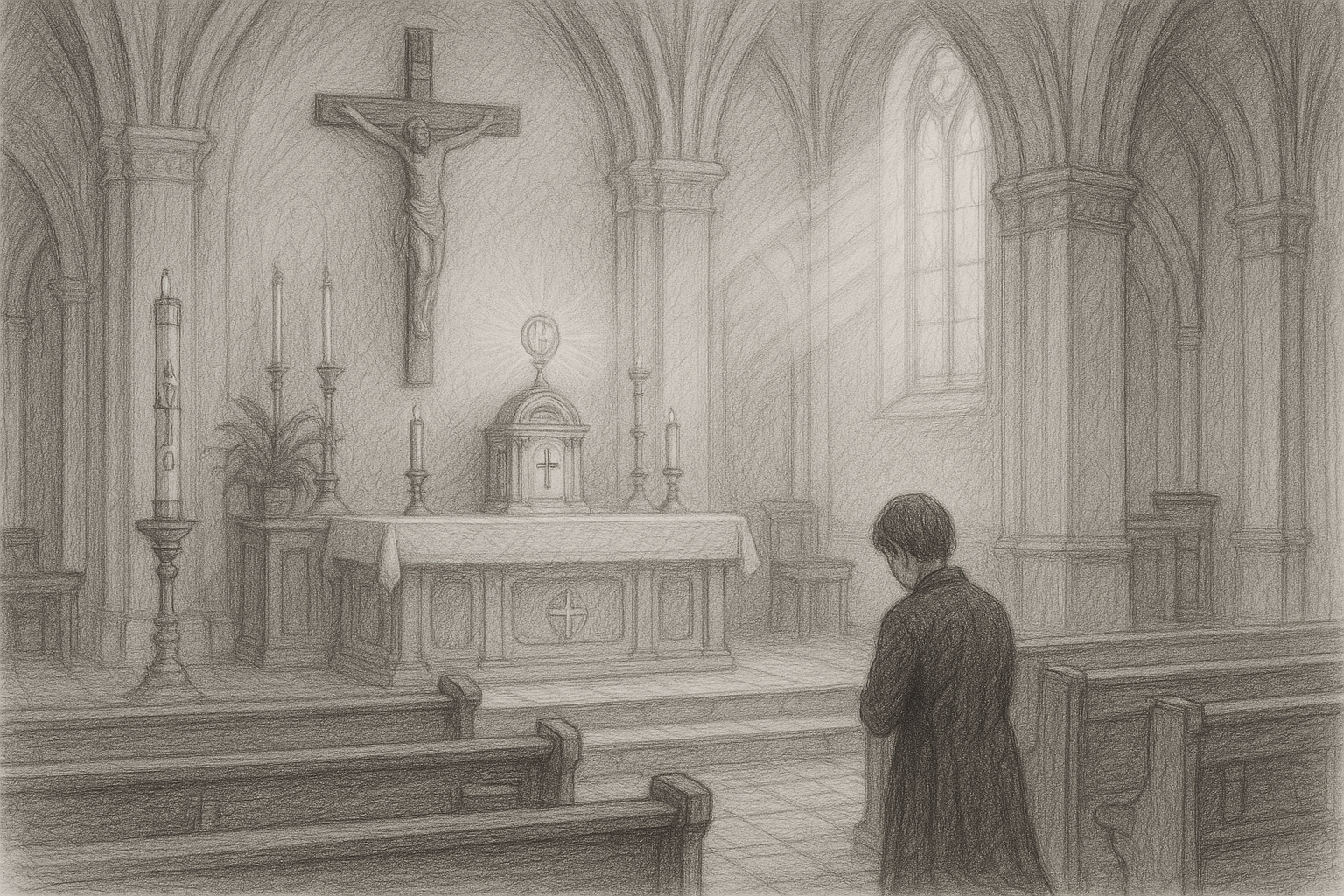
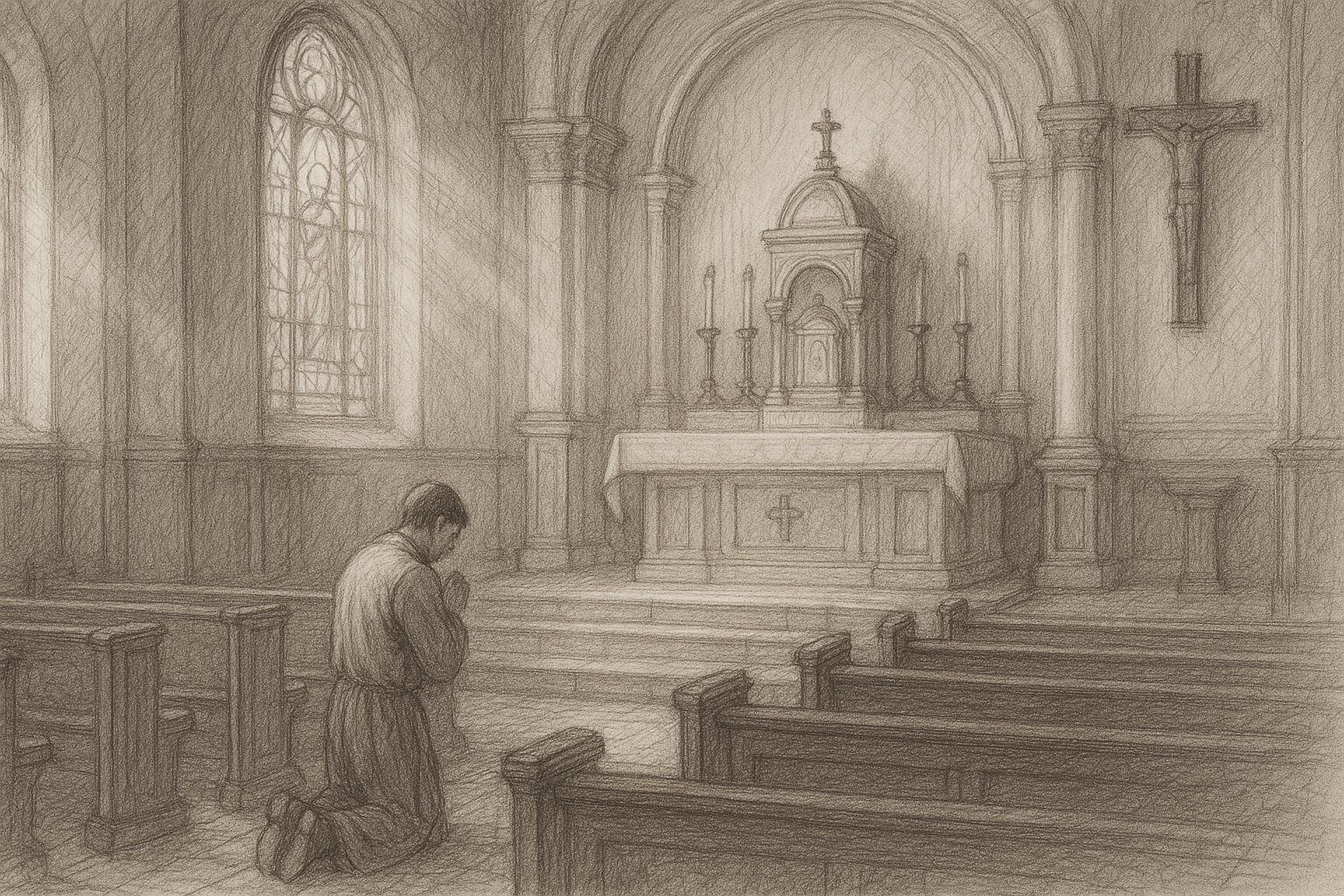
Eucharistic thanksgiving after Mass is the prayerful time that follows Holy Communion and the end of the liturgy. It is a personal response to the gift of the Eucharist. Sometimes it is brief and quiet. Sometimes it includes set prayers. Sometimes it is simply a reverent silence before the tabernacle or in the pew. The heart of the practice is gratitude, because the Mass is always a gift, and Communion is a gift beyond words.
The Church has long encouraged the faithful to give thanks after receiving the sacrament. This is not a pious extra added by private preference. It flows from the nature of the Eucharist itself. When Christ gives Himself to us, the appropriate response is worship, love, and thanksgiving. Scripture repeatedly joins these themes. Saint Paul tells the Thessalonians to give thanks in all circumstances give thanks in all circumstances. The psalmist echoes the same spirit: Enter his gates with thanksgiving Enter his gates with thanksgiving.
Thanksgiving after Mass can be outward and inward at the same time. Outwardly, it may involve kneeling, sitting in silence, or using a prayer book. Inwardly, it may include acts of faith, hope, love, repentance, praise, and petition. The important thing is not performance. It is attention to the Lord who has drawn near.
Why the Church has treasured this practice
Catholics believe that the Eucharist is truly the Body, Blood, Soul, and Divinity of Jesus Christ. That belief changes the way we receive Communion and the way we spend the moments after it. If the Lord of glory has entered the soul, then silence is not empty. It becomes full of presence. Thanksgiving becomes not merely polite but profoundly fitting.
Saint Thomas Aquinas expressed the logic of gratitude in one of the Church's most beloved hymns: Tantum Ergo. Though many Catholics know the words through Benediction, the same reverence belongs after Mass as well. We do not come to the altar as consumers of a religious service. We come as those saved by mercy, fed by grace, and invited into communion with God.
There is also a spiritual wisdom in not hurrying away. Modern life trains us to move on quickly, to think the next task is always more important than the present grace. But Eucharistic thanksgiving teaches the opposite. It teaches the soul to remain. It teaches that the best response to a gift is not haste, but gratitude. In that lingering, the heart becomes more attentive, more humble, and more peaceful.
Stay a little longer with the Lord you have received. What the world calls delay, the Church often recognizes as love.
A few graces that often grow from thanksgiving
Many Catholics discover that the time after Mass becomes spiritually fruitful in quiet ways. It may not feel dramatic. In fact, the more genuine the prayer, the less it usually advertises itself. Still, certain fruits often appear over time.
- Deeper reverence for the Eucharist, because the soul learns not to treat Communion casually.
- Greater gratitude for God's mercy, especially when the Mass is offered through ordinary weekdays and ordinary burdens.
- Interior peace, because silence before Christ can settle a restless mind.
- More honest prayer, since thanksgiving often opens naturally into confession of weakness and desire for help.
- Sharper awareness of grace, because the heart begins to notice that God's gifts continue beyond the church walls.
These graces are not guaranteed like mechanical results, but they are fitting fruits of an attentive Eucharistic life. The soul that learns to thank God after Mass often learns to see life itself as something received rather than controlled.
How to begin if you have never done it before
Many people assume thanksgiving after Mass requires a long prayer routine or special devotion. It does not. The simplest beginning is often the best. Stay for two or three minutes after Communion or after Mass ends. Sit or kneel quietly. Make the Sign of the Cross. Then speak to Jesus as you would to someone you love and trust.
You might begin with a short act of faith and gratitude such as: Lord Jesus, I believe You are truly present. Thank You for giving Yourself to me. Help me love You more. That is enough to start. If words do not come easily, remain in silence. Silence after Communion is not emptiness. It is a form of listening and adoration.
Some Catholics like to pray a traditional text, and that can be helpful. Others prefer to repeat a brief scripture verse. For example, My soul magnifies the Lord My soul magnifies the Lord or The Lord is my shepherd The Lord is my shepherd can become anchors for the heart. A prayer from the heart, even if plain and simple, is never wasted before God.
If you are unsure what to do, try this modest pattern:
- Remain in your place for a few minutes after Holy Communion or after the final blessing.
- Turn inward with gratitude, not distraction.
- Thank God for the Mass, for the gift of the Eucharist, and for any specific grace you need.
- Ask forgiveness for the ways you may have received carelessly or lived carelessly.
- Place your day, your work, and your burdens into the hands of Christ.
That small pattern can become a lasting habit. Over time, it may deepen the way you participate in the Mass itself.
How to deepen the practice
Once thanksgiving becomes familiar, it can grow in depth. Some Catholics choose to stay a little longer in church after Mass when circumstances allow. Others bring a prayer book, a missal, or a passage of Scripture. The point is not to accumulate devotional material but to give the soul room to respond to grace.
One fruitful way to deepen thanksgiving is to move through four movements: adoration, gratitude, contrition, and petition. First, adore Christ for who He is. Then thank Him for what He has done. Then ask pardon for your sins and distractions. Finally, entrust your needs to His mercy. These movements are not rigid steps. They simply help the heart remain honest before God.
Another helpful practice is to make thanksgiving concrete. Instead of only saying, thank You, Lord, name the gifts. Thank You for this Mass. Thank You for forgiving me. Thank You for giving me strength to endure this week. Thank You for my family. Thank You for the priest who celebrated. Specific gratitude keeps prayer from becoming vague and helps the mind notice the many ways God provides.
Some people also find it useful to connect thanksgiving after Mass with their daily examination of conscience. In that case, the prayer after Communion becomes not only praise, but a gentle reordering of the day. What needs to be surrendered? What sin needs confession? What task needs patience? What relationship needs mercy? The Eucharist, rightly received, does not leave us unchanged.
When silence feels difficult
For some Catholics, the hardest part of thanksgiving is not the lack of time but the lack of interior quiet. The mind wanders. Children need attention. The parking lot waits. A thousand ordinary concerns press in. In such moments, it helps to remember that prayer is not measured by the smoothness of our attention. A distracted act of love is still love.
If long silence feels impossible, start with one minute. If one minute feels impossible, start with a single sentence. Lord, I thank You. Lord, stay with me. Lord, teach me to love You. The Holy Spirit can work through what is small. Over time, the mind often learns from the body. When the body remains in prayerful stillness, the heart slowly follows.
Parents with young children, the elderly, the sick, and those whose schedules are demanding should not imagine that Eucharistic thanksgiving belongs only to the serene. It belongs to everyone who receives Christ. Sometimes thanksgiving after Mass is offered in the middle of fatigue, noise, or emotional dryness. That too has value. The Lord sees the offering, even when it is simple and unfinished.
Practical ways to make it part of ordinary life
Good habits are usually built by small, repeatable choices. If you want to deepen Eucharistic thanksgiving after Mass Catholic guide practices in your own life, consistency matters more than intensity. Consider a few ordinary supports:
- Arrive a little early for Mass so your heart is less rushed before Communion.
- Avoid unnecessary conversation immediately after receiving the Eucharist if silence is possible.
- Choose one brief prayer you can pray every time.
- Keep a small missal or prayer card in your pew book or missal.
- Teach children that the time after Communion is holy and should be treated with care.
- Stay for a short period after Mass whenever your obligations allow.
These habits are not meant to create anxiety or competition. They are simply ways of honoring a gift. A person does not need a perfect schedule to begin. Even a few reverent moments can change the tone of the rest of the day.
It is also wise to remember that thanksgiving after Mass is not separate from the Mass. It is an extension of it. The liturgy continues in the heart. What begins at the altar is carried into the week. The prayer after Communion becomes a bridge between worship and daily life, between sacrament and action, between receiving Christ and living for Him.
In that sense, Eucharistic thanksgiving trains us for Christian existence itself. The Christian life is one long act of receiving and returning. We receive grace, and we return praise. We receive mercy, and we return obedience. We receive Christ, and we return love. The quiet minutes after Mass teach that rhythm with special clarity, and they do so in the company of the One who has already given everything.
Keep Reading on Lets Read The Bible
Frequently Asked Questions
How long should Eucharistic thanksgiving after Mass last?
There is no fixed rule for everyone. Some people can remain in prayer for a few minutes, while others can stay longer. What matters is a sincere act of gratitude and reverence, even if the time is short.
Is it necessary to stay in church after Mass for thanksgiving?
It is not strictly required, but it is a beautiful and long-treasured practice. If circumstances make it difficult to remain, a person can still make a brief thanksgiving in the pew, on the way out, or later in the day.
What should I pray after receiving Holy Communion?
You can use a traditional prayer, a scripture verse, or your own words. Begin with gratitude, then adore Christ, ask forgiveness, and place your needs before Him. Simple and sincere prayer is enough.