Prayer and Devotion
Fasting That Frees the Heart: A Catholic Path to Clearer Prayer
A practical look at fasting as prayer, self-mastery, and a quiet way of making room for God
Site Admin | December 5, 2025 | 81 views
Fasting can sound severe at first, especially in a culture that prizes comfort and instant gratification. Yet the Church presents fasting not as a grim test of strength, but as a wise and merciful discipline. It is a way of telling the truth about our hunger. We are not self-sufficient. We need God. We need grace. We need the order that only love can give to the heart.
In the Catholic life, fasting is never separated from prayer and almsgiving. It belongs to a larger pattern of conversion. When practiced with faith, fasting helps us become more attentive, more disciplined, and more free. It can sharpen our prayer, reveal hidden attachments, and remind us that the deepest satisfaction comes not from consuming more, but from receiving God more fully.
What fasting is, and what it is not
Fasting is the voluntary reduction or abstinence from food, or sometimes from certain kinds of food, for a spiritual purpose. In Catholic practice, it is often linked to liturgical seasons like Lent, but it is not limited to them. Some people fast in a simple way before Mass or during times of discernment. Others take up a more deliberate pattern of fasting as part of ongoing conversion.
Fasting is not the same as dieting. A diet aims at health, appearance, or personal goals. Fasting aims at God. That does not mean the body is ignored. The body matters, and Christian asceticism respects it. But fasting is ordered toward charity, prayer, and freedom of heart. It is a discipline of love, not a display of willpower.
It is also not a spiritual competition. The Church does not ask the faithful to invent heroic acts that leave them exhausted or proud. The purpose is not to prove how much discomfort one can endure. The purpose is to remove what distracts us from God and to offer the hunger itself back to Him.
Scripture shows fasting as part of repentance and preparation. When Jesus speaks of fasting, He assumes His disciples will fast, but He calls them to do it in humility and sincerity, not for show. See Matthew 6:16, Matthew 6:17, and Matthew 6:18.
Why fasting matters spiritually
Human beings are shaped by their desires. We move toward what we love, what we imagine, what we repeatedly choose. If desire is left unchecked, it becomes scattered and weak. Fasting helps re-order desire. By freely accepting a small lack, we learn that not every appetite must be immediately satisfied. That lesson is spiritual gold.
Fasting also teaches us patience. Many sins grow out of impatience, especially the refusal to wait for God. When we fast, we practice a holy delay. We tell our bodies and our minds that they do not set the timetable. God does. This small act of surrender can soften pride and make room for trust.
There is another reason fasting matters: it helps us pray more honestly. When we feel hunger, restlessness, or weakness, we become aware of our neediness. That can be uncomfortable, but it can also be clarifying. Prayer often deepens when we stop pretending to be complete in ourselves. Fasting puts us in touch with that truth in a very concrete way.
The prophets speak this language often. God does not want empty gestures, but He does desire a converted heart. Fasting becomes meaningful when it is tied to justice, repentance, and mercy. Isaiah makes this plain when he challenges a fasting that remains closed in on itself and ignores the suffering of others. See Isaiah 58:6, Isaiah 58:7, and Isaiah 58:8.
This is one of the Church's great insights. Real fasting does not shrink the soul. It opens it. When food is set aside with prayer, space appears for almsgiving, attention, silence, and compassion. We notice others more readily because we are less absorbed in ourselves.
Fasting in the Catholic tradition
Catholics fast in many ways, but the Church has always treated fasting as a serious spiritual practice. The traditional discipline for Lent and other penitential days reminds us that bodily sacrifice can be a path to interior renewal. Over time, the Church's wisdom has balanced obligation with pastoral care, recognizing that age, health, pregnancy, work, and other circumstances affect what is possible for each person.
That balance matters. Catholic fasting is not meant to burden consciences beyond what is prudent. The point is fidelity, not spectacle. Some will be called to the Church's basic fasting norms. Others, because of age or condition, may be exempt from certain obligations but still invited to some form of voluntary fasting, such as giving up snacks, desserts, or a favorite comfort for a season.
It can help to remember that fasting belongs with the whole rhythm of Christian life. A person who fasts but does not pray has missed the center. A person who fasts and prays but remains uncharitable has also missed the center. The disciplines are meant to support one another. Prayer turns fasting into offering. Almsgiving turns fasting into love.
In Scripture, fasting is often connected to turning back to God in earnest. The people of Nineveh fasted in response to Jonah's preaching, and God showed mercy. See Jonah 3:5, Jonah 3:6, and Jonah 3:10. Moses fasted in preparation for receiving the law, and Christ fasted in the desert before beginning His public ministry. See Exodus 34:28 and Matthew 4:2.
How fasting clears the path for prayer
Many people discover that prayer becomes more focused on days of fasting. The reason is not mysterious. Hunger can silence some of the inner noise. It can expose how often we reach for small comforts whenever we feel tension, boredom, or unease. When those reflexes are interrupted, the soul has a better chance of becoming still before God.
Fasting can also increase gratitude. A simple meal after a period of abstinence can feel like a gift rather than a habit. That gift-awareness can spill over into prayer. We begin to notice that daily bread is daily mercy. Ordinary things, received humbly, become signs of divine generosity.
There is, however, an important caution. Fasting does not automatically produce holiness. It can make us more attentive, but it can also make us irritable if it is done carelessly. That is why the interior attitude matters so much. A good fast is marked by patience, gentleness, and recollection. If fasting makes a person harsh, proud, or self-absorbed, something has gone wrong.
The Lord's example gives balance. Jesus fasted, but He also dined with others. He withdrew to pray, but He also entered the ordinary life of people. Fasting is not a rejection of creation. It is a way of loving creation rightly, without letting it become an idol.
How to begin a fasting practice
Starting simply is usually best. A fasting Catholic guide does not need to begin with grand resolutions. In fact, modesty is often safer and more fruitful. Choose something manageable, clear, and specific. The goal is to begin a practice that can be kept with humility.
1. Begin with a spiritual intention
Ask why you are fasting. Is it for repentance, for clarity in prayer, for a loved one, for peace in a difficult season, or as preparation for a feast or sacrament? Naming the intention keeps fasting from becoming vague. You are not just giving something up. You are giving yourself to God in a particular need or desire.
2. Choose a realistic form of fasting
For some, this may mean fasting in the Church's prescribed way on penitential days. For others, it may mean skipping one meal, simplifying lunch, or avoiding desserts on certain days. If health or medical needs make food fasting unwise, consider another form of discipline, such as limiting unnecessary screens, cutting distractions, or refraining from a favorite comfort. The principle is the same: freedom through sacrifice.
3. Connect the fast to prayer
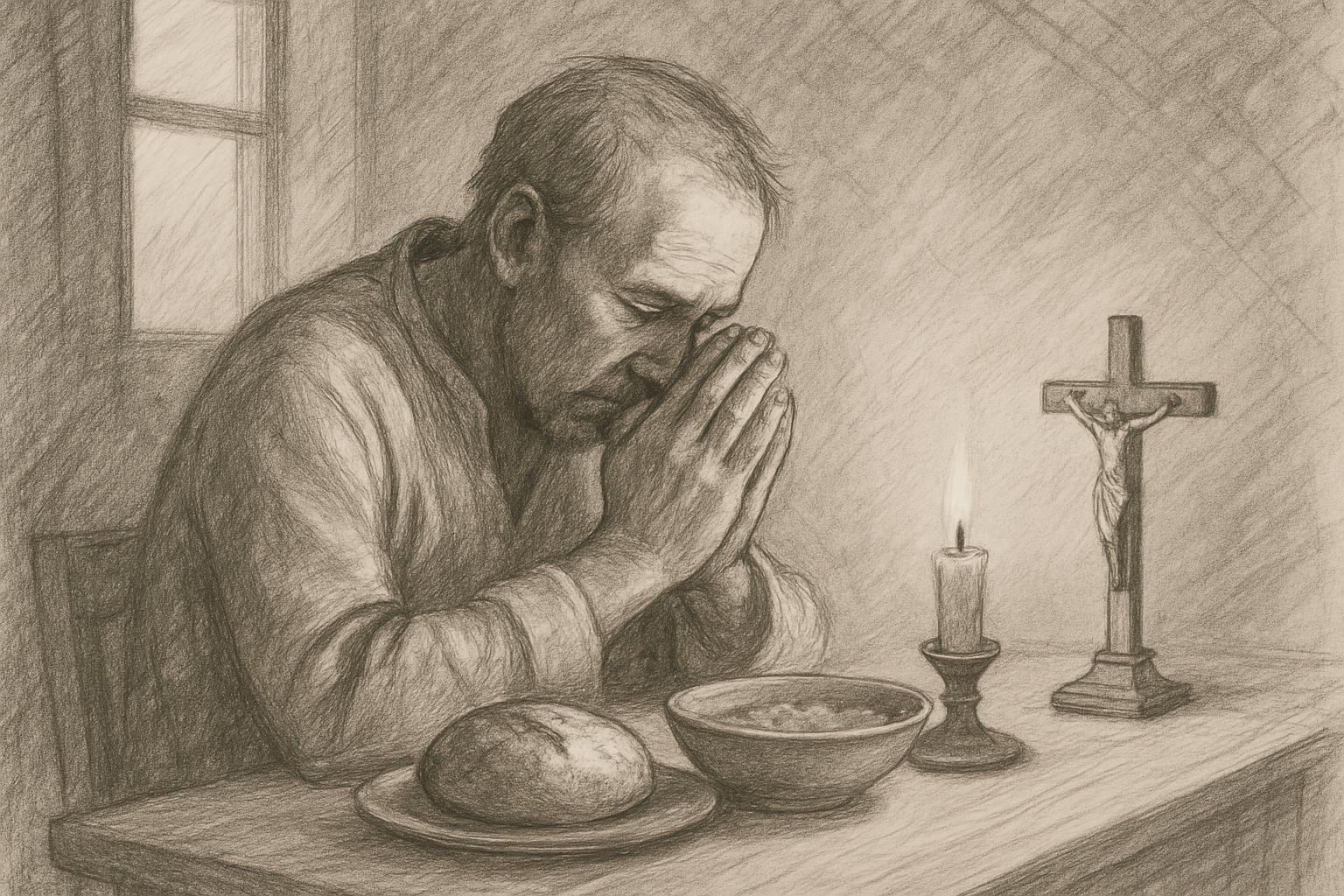
When hunger arises, do not just endure it. Turn it into prayer. Offer a brief petition, a psalm verse, or a quiet act of trust. Even a few words can transform discomfort into communion. A simple prayer like,
Keep Reading on Lets Read The Bible
Frequently Asked Questions
What is the main purpose of fasting in the Catholic life?
The main purpose of fasting is to turn the heart toward God. It helps Catholics practice self-mastery, grow in prayer, repent of sin, and detach from comforts that can quietly control the soul.
Do I have to fast only during Lent?
No. Lent is the most familiar season for fasting, but Catholics can fast at other times too, such as before an important decision, during a retreat, or in response to a personal intention. The Church also encourages voluntary penance beyond the minimum.
What if I cannot fast from food for health reasons?
If fasting from food is not wise because of health, age, pregnancy, medication, or other serious reasons, you can still practice a real form of fasting by giving up sweets, media, unnecessary spending, or other comforts. The Church values prudence and the intention of the heart.