Prayer and Devotion
Learning to Sit With God in Silence
A practical Catholic guide to silent prayer, where reverence, attention, and trust open the heart to God.
Site Admin | December 3, 2025 | 75 views
What silent prayer is and is not
Silent prayer is simple to describe and often difficult to practice. It is time deliberately given to God in quiet, with fewer words and more listening. In Catholic life, silent prayer is not a trick for reaching special feelings, and it is not a test of spiritual success. It is a way of standing before the Lord as one truly is, with faith, trust, and openness.
Many Catholics are used to vocal prayer, and rightly so. The Our Father, the Rosary, the Psalms, the Divine Mercy Chaplet, and many other prayers give shape to the life of faith. Silent prayer does not replace these prayers. Instead, it makes room for deeper interior receptivity. It is the pause in which the heart can rest in God rather than in its own activity.
At times, silence can feel uncomfortable. The mind wanders. Anxiety rises. Forgotten worries come forward. That does not mean the prayer is failing. In fact, such moments often reveal how noisy the soul has become. The first grace of silent prayer may be simply learning to remain present, not perfectly calm, but faithfully available.
Why silence matters in the Christian life
Scripture often presents silence as a place where God is encountered. Elijah did not find the Lord in the wind, the earthquake, or the fire, but in the still small voice, or gentle whisper, that followed 1 Kings 19:12. Before God, a soul does not need to perform. It needs to listen. Jesus Himself often withdrew to lonely places to pray Luke 5:16, showing that solitude and silence belong to a life rooted in the Father.
Silence helps expose what is most real. In ordinary life, many voices compete for attention: news, plans, fears, memory, self-criticism, and constant distractions. Silent prayer does not deny these things, but it places them under the light of God's presence. When a Catholic enters silence with humility, the heart slowly learns that God is not one concern among many. He is the center around which all else belongs.
There is also a healing dimension to silence. Words can be beautiful, but they can also become a refuge from truth. Silence allows a person to become honest before God. The soul can present its wounds, resistances, and unspoken desires without elaborate explanation. As the Psalms show, God already knows the heart, yet He invites us to bring it to Him. Silent prayer is not about informing God. It is about consenting to His loving gaze.
A Catholic way to begin
Beginning silent prayer does not require advanced technique. It requires a place, a time, and a willing heart. A person might begin with five minutes each day, perhaps after waking, before bed, or after a fixed vocal prayer. A small and faithful beginning is more fruitful than an ambitious plan that collapses after a few days.
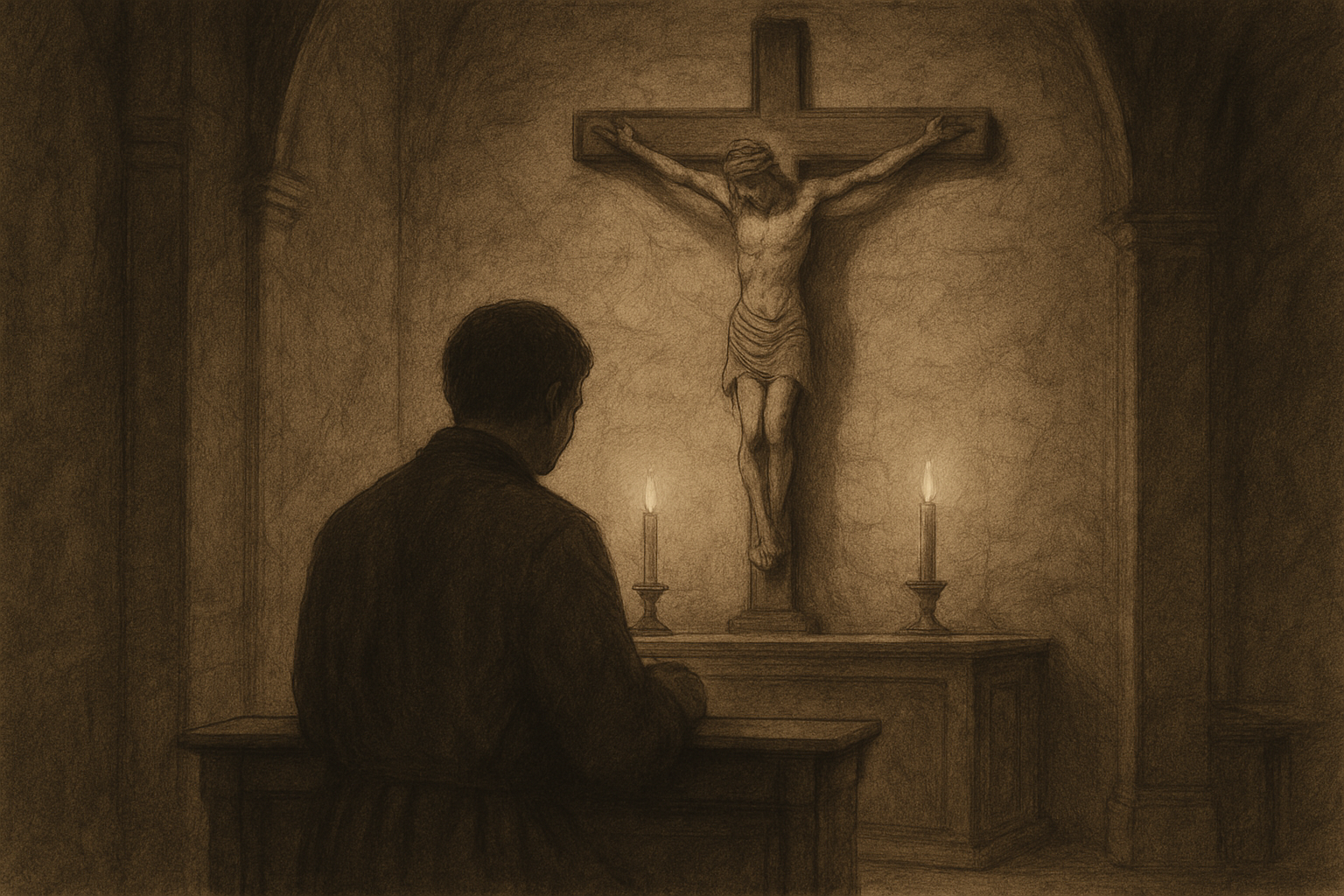
Choose a simple setting if possible. Sit before a crucifix, an image of Our Lord, or in a quiet corner of a room. Turn off distractions. If needed, light a candle. The goal is not atmosphere for its own sake, but a setting that helps the mind and body become attentive.
Then begin with an act of faith, such as, Lord, I am here. Teach me to be still before You. This opening need not be long. It only needs to be sincere. Some Catholics find it helpful to start with a slow recitation of a short Scripture verse, then allow the words to settle into silence. A passage like Psalm 46:10 is especially fitting: Be still, and know that I am God.
When distractions come, do not panic. Gently return to the Lord. Silent prayer is not the absence of every thought. It is the repeated act of coming back. A mother tending a child does not become discouraged every time the child wanders. She continues with patient love. In the same way, the soul learns prayer by returning again and again.
Helpful steps for the first weeks
- Set a small daily time, even five to ten minutes.
- Choose one place and one posture that support reverence.
- Begin with a brief invocation of the Holy Spirit.
- Use a short Scripture verse if the mind feels restless.
- Remain quietly present, even if you feel little or nothing.
- End with the Sign of the Cross and a simple act of thanksgiving.
What to do when the mind wanders
Almost everyone who tries silent prayer discovers the same thing: the mind wanders constantly. This is not a sign that the person is incapable of prayer. It is simply a sign of being human. The mind is not a machine that can be switched off at will.
When distraction comes, do not argue with it. Notice it, place it before God, and return to prayer. A gentle inward phrase can help, such as, Jesus, I trust in You, or, Speak, Lord, for Your servant is listening 1 Samuel 3:10. The purpose is not to create a perfect mental state, but to keep turning toward the Lord.
Some distractions will be practical concerns that need attention later. Others will be deeper anxieties, memories, or temptations. Silent prayer does not force these away. It offers them to God. Over time, many Catholics discover that the very things which once filled the soul with noise become material for surrender. The heart begins to say, Lord, I cannot carry this alone.
There may also be dry stretches in which prayer feels empty. This too belongs to the path. Spiritual dryness is not necessarily a sign of distance from God. Sometimes it is a purification of motives. We come to prefer God Himself rather than the consolations we hope to receive. Such a movement is quietly transformative, though it may not feel dramatic.
The place of the body in silent prayer
Catholic prayer is never only interior in a disembodied sense. We pray as persons made of body and soul. The way one sits, breathes, and holds the body can support recollection. A posture of reverence matters. Slouching into sleep is not the same as keeping a quiet and alert stillness.
That does not mean rigid perfection. Some may kneel, others may sit upright, and some may stand briefly before sitting down. What matters is a bodily disposition that supports attention. If the body is restless, it can help to begin by slowing the breath, relaxing the shoulders, and making the Sign of the Cross carefully.
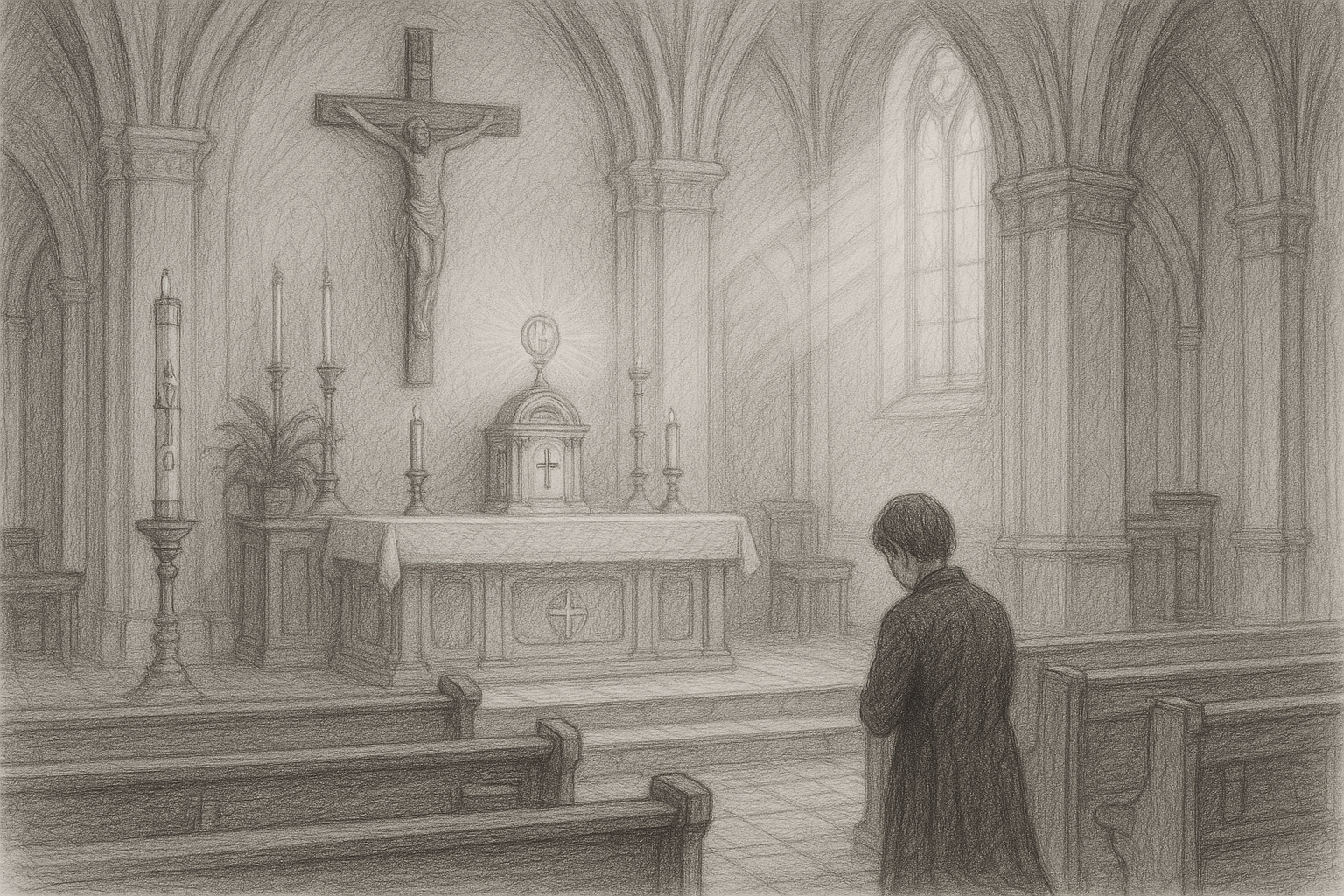
Many Catholics also find it fruitful to place silent prayer after the Eucharist, during a visit to a church, or in a quiet space at home where a crucifix reminds the heart of Christ's self-giving love. Silence is not emptiness. It is a reverent space filled by the presence of God, who is near even when unseen.
How silent prayer deepens faith
Silent prayer gradually changes the way a Catholic lives. It teaches patience, because growth in prayer cannot be forced. It teaches humility, because the soul discovers its own limits. It teaches trust, because one remains before God without controlling every moment.
It also purifies desire. In the beginning, a person may come to silence looking for peace, clarity, or relief. These are good desires. Yet, over time, silent prayer can lead beyond gifts to the Giver. The heart starts to want God for His own sake. That is a significant turning point in the spiritual life.
Saints and spiritual writers in the Catholic tradition often emphasize recollection, interior silence, and attentive love. Their witness reminds us that holiness is not built only through effort and many words. It is also formed in hidden fidelity. The Lord works in silence in the soul, often more deeply than we realize.
For some, silent prayer becomes a daily anchor. For others, it remains difficult but worthwhile. Either way, the practice trains the heart to live before God rather than before the noise of the world. That is a gift our age badly needs. In a culture that rewards constant reaction, silence becomes an act of faith.
Ways to deepen the practice over time
- Extend the time slowly once a small habit is established.
- Pair silence with a regular sacramental life, especially Sunday Mass and Confession when needed.
- Keep a steady rhythm, even when prayer feels ordinary.
- Use a brief Scripture verse at the start or end, rather than filling the whole time with words.
- Ask a confessor, spiritual director, or trusted priest for guidance if obstacles persist.
A gentle word of encouragement
Many Catholics imagine that prayer must always feel active, articulate, or emotionally rich. Silent prayer gently corrects that assumption. It teaches that love can be quiet. Faith can be simple. Presence can be enough. When a person sits before God in stillness, with all distractions and weaknesses included, that person is already offering something precious.
The silent prayer Catholic guide is not about mastering an inner method. It is about consenting to the living God, who sees in secret and draws the soul toward Himself. Some days will feel fruitful. Others will seem plain. Yet even in the plainness, grace is at work. The Lord is shaping a heart that can receive Him, listen to Him, and rest in Him. That quiet fidelity, repeated over time, becomes a hidden school of love.
So begin simply. Begin again if you have stopped. Begin with the truth that God is already near. Then sit in that nearness with patience, and let silence become a place where prayer can deepen one quiet moment at a time.
Keep Reading on Lets Read The Bible
Frequently Asked Questions
How long should silent prayer be for a beginner?
Start with five to ten minutes a day. A short daily commitment is easier to keep and can be extended gradually as the habit becomes steady.
What if I feel distracted the whole time during silent prayer?
That is very common. The practice is not about having a blank mind. It is about returning to God gently whenever you notice distraction.
Is silent prayer the same as meditation?
In Catholic use, silent prayer can include meditative attention, but it is ultimately prayer before God, not just relaxation or self-reflection. The focus remains on loving presence and receptivity to the Lord.