Marian Devotion
The Rosary as a School of Gospel Memory
How a simple chain of prayers draws Catholics into the life of Christ through the heart of Mary
Site Admin | April 14, 2026 | 90 views
Praying the Rosary in the light of the Gospel
The Rosary has long been one of the most beloved prayers in Catholic life, and for good reason. Its beauty lies in its simplicity. Catholics move through familiar prayers with the fingers, but the heart is meant to move through the Gospel with attention and love. The Rosary Catholic meaning is not found in repetition by itself. It is found in what the repetition serves: a steady contemplation of Christ with Mary, in the company of the Church.
To someone who meets the Rosary for the first time, it can seem almost too ordinary to be profound. A string of beads, a pattern of prayers, and repeated Hail Marys may look less like Bible meditation and more like habit. Yet the Church has always understood Christian prayer to involve the whole person, memory included. The Rosary gathers the great truths of salvation into a form that can be prayed anywhere, by anyone, in joy and sorrow, in peace and fear. It is a quiet school of discipleship.
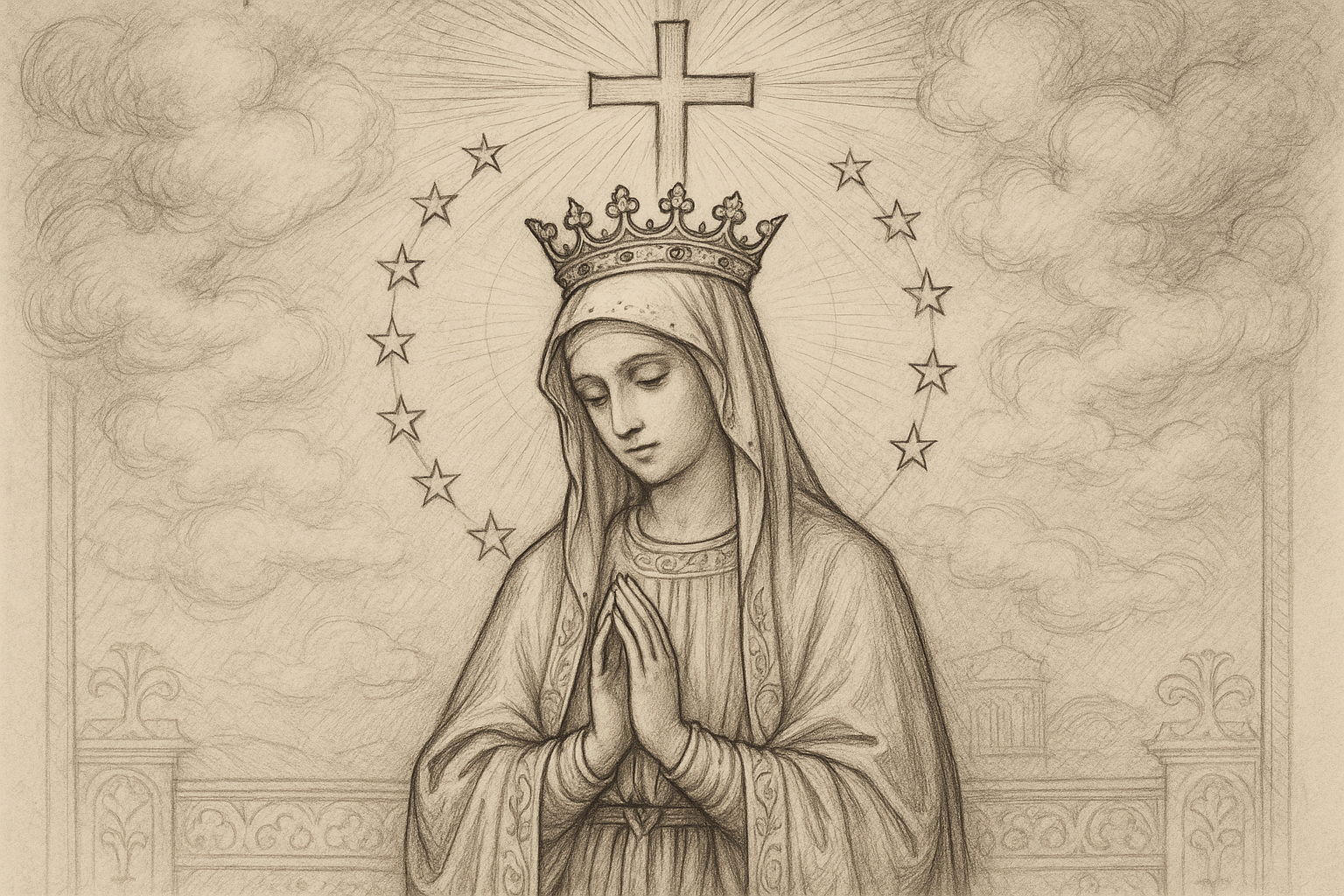
At its center is Jesus Christ. Every mystery of the Rosary brings the believer to some moment in the life, death, or glory of the Lord. Mary is not the end of the prayer. She is the one who helps us keep our eyes on her Son. That is the deepest Catholic instinct behind the Rosary: Mary leads us to Jesus, and Jesus is the one whom every Christian prayer must finally adore.
Its roots in Scripture and Christian memory
The Rosary is not a prayer found in one single biblical passage, but it is deeply shaped by Scripture. The opening words of the Hail Mary come directly from the Gospel of Luke. The angel greets Mary with grace-filled reverence: Hail, full of grace, the Lord is with you; Elizabeth, moved by the Holy Spirit, blesses her: Blessed are you among women, and blessed is the fruit of your womb. When Catholics pray these words, they are not inventing a new language. They are returning to the biblical words that first honored the Mother of the Lord.
The Rosary also reflects a very biblical practice: meditation on the works of God. The Psalms repeatedly call believers to remember, ponder, and proclaim the deeds of the Lord. Mary herself is described as one who treasured and reflected on the mysteries surrounding her Son: Mary kept all these things, reflecting on them in her heart. In that sense, the Rosary does not place Mary above Scripture. It places her at the center of a biblical way of remembering, one that listens, contemplates, and responds.
Christian tradition also helped shape the Rosary. Long before the prayer took its later, familiar form, monks and ordinary believers used repeated prayers as a way to keep their minds anchored in God. The Church did not invent repetition because she lacked better words. She embraced repetition because love often returns to the same truths with deeper attention. A child repeats the name of a beloved parent without boredom. In the same way, the Rosary allows the faithful to remain with the mysteries of Christ long enough for them to sink into the soul.
"When the Rosary is prayed in a genuinely meditative way, it becomes a school of contemplation."
This is one reason the prayer has endured across centuries and cultures. It is not complicated, but it is not shallow. Its simplicity makes it accessible, while its depth invites lifelong return. A new believer can pray it sincerely. A saint can pray it fruitfully. Both are drawn into the same mystery: the life of Christ revealed in the company of Mary.
Why Catholics pray with Mary
Some Christians worry that praying with Mary takes attention away from Christ. Catholic teaching sees the matter differently. Mary does not compete with the Lord. She magnifies him. Her own words at the Visitation express the entire logic of Marian devotion: My soul proclaims the greatness of the Lord. She is most herself when she points beyond herself. The Rosary follows that pattern.
In Catholic faith, asking Mary to pray for us is an act of confidence in the communion of saints. Death does not sever the Church, because those who are alive in Christ remain united in him. Scripture presents heaven as full of worship, intercession, and active love before God. To ask a holy person for prayer is not to bypass Christ, since all prayer reaches the Father through the Son in the Holy Spirit. Rather, it is to accept the family nature of the Church, where members bear one another up.
Mary's role is unique because her relationship to Jesus is unique. She is the Mother of God in the full Catholic sense, meaning she is the mother of the one who is truly God and truly man. The Rosary honors that mystery without exaggeration. Its prayers are carefully ordered so that Marian honor always remains subordinate to adoration of God. Catholics do not worship Mary. They venerate her, and they do so because God has done great things for her. Any authentic Marian devotion is finally about the greatness of divine grace.
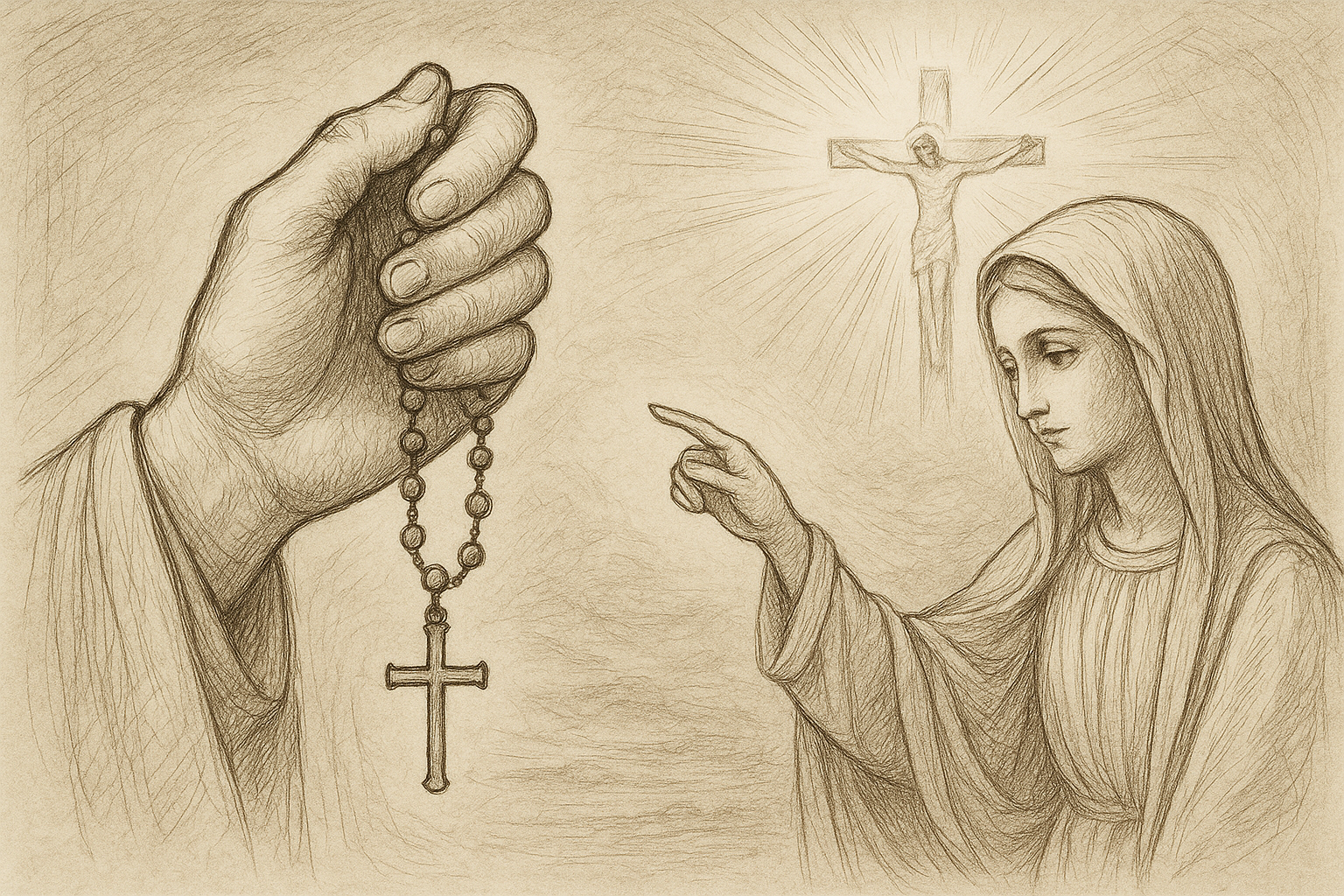
That is why the Rosary feels so fitting in Catholic life. It holds together two truths that should never be separated: Christ is the only Savior, and Mary is a real mother given to the Church in the order of grace. At Cana, she speaks with motherly concern and directs attention to her Son: Do whatever he tells you. That sentence could serve as a motto for the entire Rosary.
How the mysteries shape the Christian heart
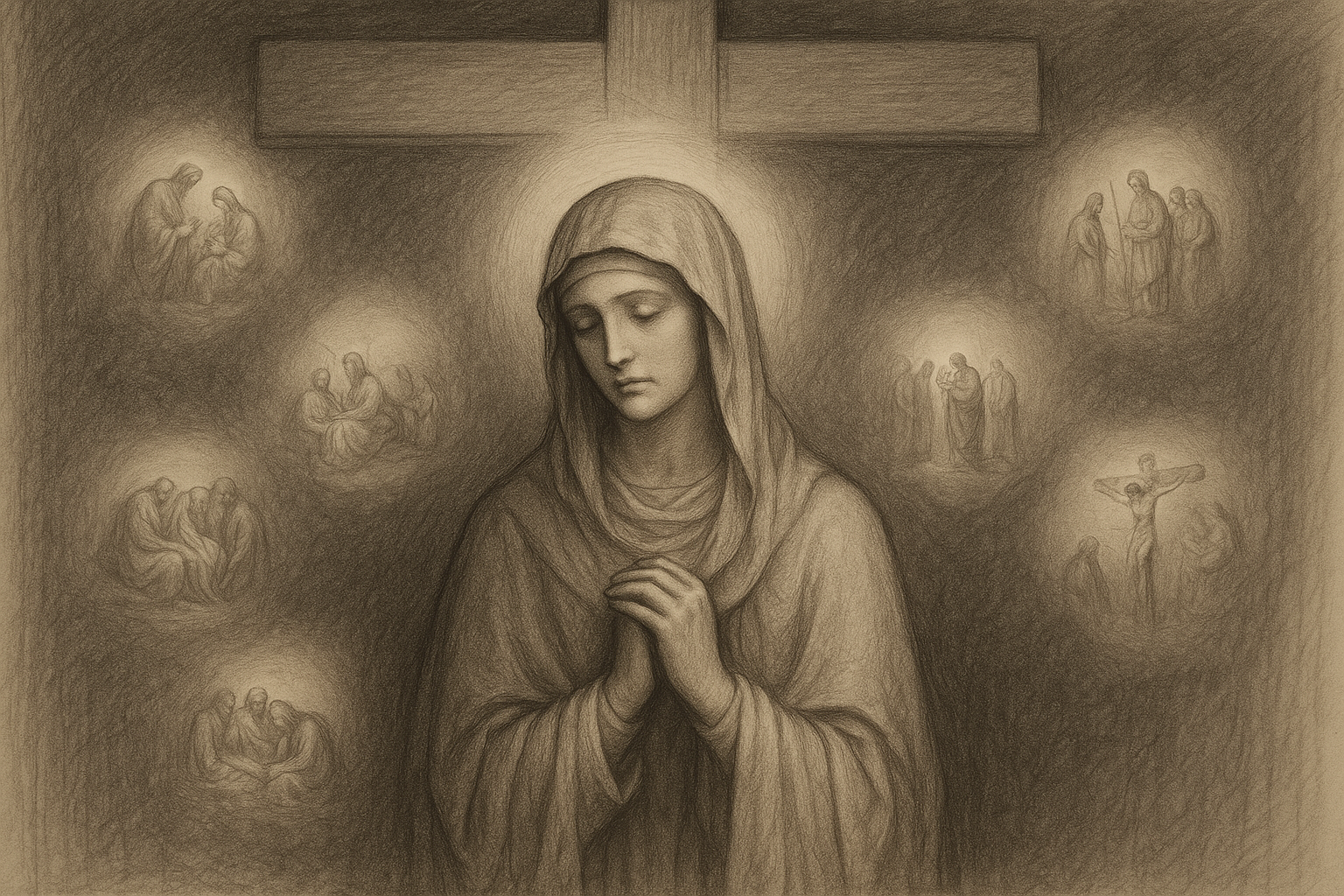
The Rosary is often called a contemplative prayer, and that word matters. Contemplation does not mean emptying the mind into vagueness. It means looking steadily at the face of Christ through the events of his life. The mysteries do this in an ordered way. They lead the believer from the Annunciation to the Resurrection, from Christ's hidden life to his public ministry, from his Passion to his glory. Prayer becomes a path through the Gospel.
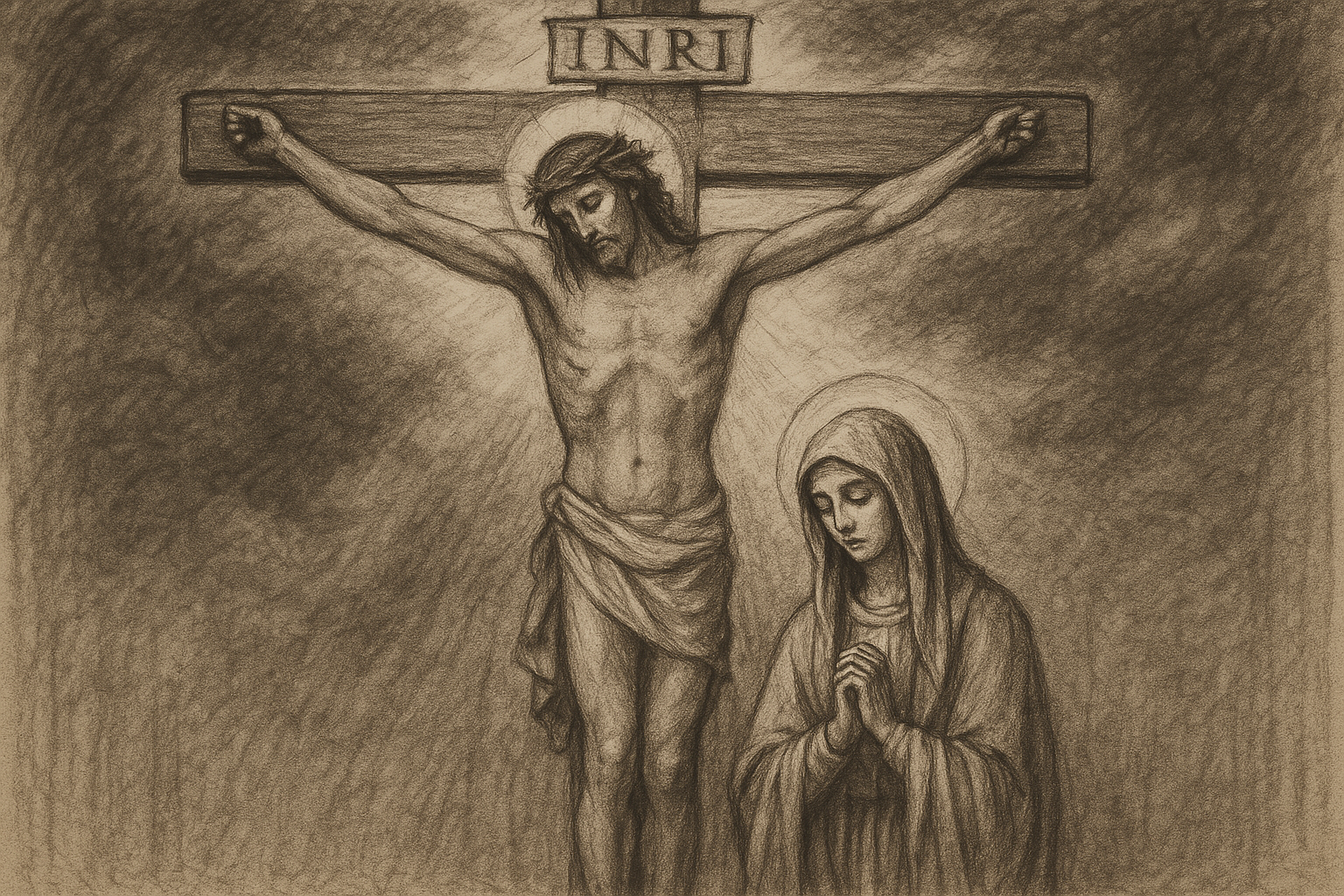
The Joyful Mysteries place the believer near the beginnings of redemption. The Luminous Mysteries, added by Saint John Paul II in 2002, draw attention to the public ministry of Jesus and his revelation of the Kingdom. The Sorrowful Mysteries place the soul at the foot of the Cross, where love is shown in sacrifice. The Glorious Mysteries lift the heart toward the Resurrection, Ascension, Pentecost, and Mary's sharing in the triumph of her Son. Taken together, these mysteries are not random scenes. They are a spiritual map of salvation.
Because the Rosary returns to these mysteries again and again, it forms more than memory. It forms character. The soul learns patience by waiting through the decades. It learns humility by accepting that prayer is received, not manufactured. It learns trust by placing itself before events larger than itself. The repetition becomes an act of surrender, and surrender becomes praise.
For many Catholics, the Rosary also becomes a companion in suffering. Its rhythm is steady when life is not. Grief, fear, illness, family burdens, and long seasons of uncertainty can all be brought into the prayer. The beads do not remove suffering, but they do place it near Christ's own wounded heart. The Sorrowful Mysteries especially remind believers that the Lord entered real pain, and that no suffering offered to him is wasted.
The Rosary as prayer for ordinary people
One of the Rosary's great gifts is that it belongs to ordinary Christian life. It does not require eloquence. It does not demand a special setting. It can be prayed in a church, on a walk, in a car before work, beside a hospital bed, or in the quiet of a kitchen after the dishes are done. That portability is not a small thing. It means the prayer can sanctify the hidden spaces of daily life.
In an age of distraction, the Rosary offers a disciplined way to gather the soul. The hands touch the beads, the lips say the prayers, and the mind returns to the mysteries. Some days that attention is vivid. Some days it is thin. Catholic tradition does not require every decade to feel the same. Faithfulness matters more than performance. The prayer remains fruitful even when it feels dry, because its power rests first in God's grace, not in emotional intensity.
It is also worth saying that the Rosary is not a substitute for the liturgy. The Mass remains the center of Catholic worship, the source and summit of the Christian life. The Rosary supports the life of faith by preparing the heart for the sacraments and extending the fruit of the liturgy into daily prayer. It is a companion to the Church's public worship, not a replacement for it.
For families, communities, and individuals, the Rosary can become a shared language of faith. Parents teach it to children. Friends pray it for one another. Religious communities and lay groups pray it in churches and homes. In all these settings, the prayer quietly witnesses that Christianity is not only an idea to be understood, but a life to be entered. The mysteries are not distant stories. They are living truths that still shape disciples.
What the Rosary teaches about devotion
At its best, devotion is not sentimental. It is ordered love. The Rosary teaches Catholics how to love Christ with Mary in a way that is humble, biblical, and persevering. It reminds believers that prayer is not only about speaking, but about receiving. It also reminds them that holiness is not built on novelty. Often it grows through faithful return to the same Gospel scenes, the same prayers, the same Lord.
That is why the Rosary Catholic meaning remains so enduring. It teaches memory, and memory is a form of gratitude. It teaches contemplation, and contemplation is a form of love. It teaches perseverance, and perseverance is a form of hope. In the end, the Rosary leads the believer to a simple but demanding truth: the Christian life is about staying close to Jesus, and Mary is one of God's greatest gifts in helping us do exactly that.
When Catholics take up the beads, they are not escaping the Gospel. They are stepping more deeply into it. They are joining Mary in pondering what God has done. They are walking with Christ through his mysteries. And they are allowing prayer, slowly and steadily, to make room in the heart for the One who is both the source of mercy and the fulfillment of every holy desire.
Keep Reading on Lets Read The Bible
Frequently Asked Questions
Is the Rosary mainly a prayer to Mary?
No. The Rosary is a Christ-centered prayer prayed with Mary. Catholics ask for her intercession, but the mysteries and the final goal of the prayer are always Jesus Christ.
Where does the Rosary come from in Scripture?
The Rosary draws especially from the Gospel of Luke, including the angel's greeting to Mary and Elizabeth's blessing. Its mysteries also meditate on scenes from the life, death, and glory of Jesus found across the Gospels.
Why do Catholics repeat the same prayers so often in the Rosary?
Repetition helps quiet the mind and keep attention on the mysteries of Christ. In Catholic prayer, repeated words are not empty when they are prayed with faith and love.