Church History
The Short Papacy That Still Speaks Softly: Pope John Paul I in Catholic Memory
A brief reign, a warm voice, and a quiet lesson for the modern Church
Site Admin | January 13, 2026 | 87 views
Pope John Paul I occupies a unique place in the memory of the Catholic Church. His papacy was extraordinarily brief, lasting only 33 days in 1978, yet the impression he left has endured far beyond that short span of time. In the story of modern Church history, he stands not as a footnote, but as a reminder that the measure of a papacy is not only its length. It is also the spiritual tone it sets, the witness it offers, and the truths it brings into sharper focus.
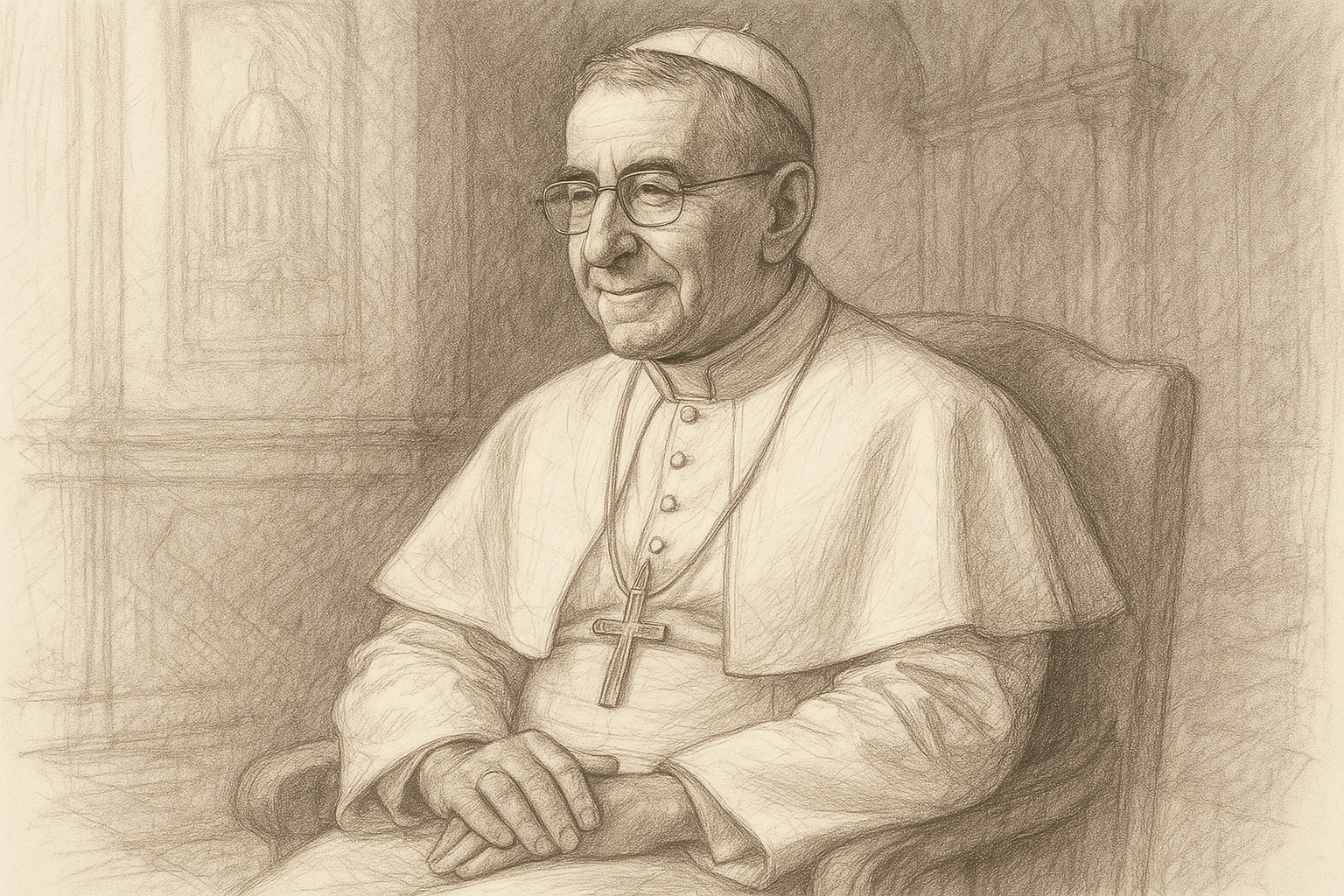
For Catholics who seek to understand Pope John Paul I Catholic history, his significance lies in more than the circumstances of his sudden death. He came to the papacy at a time of confusion, fatigue, and transition. The Church had already buried one pope and would soon elect another. In the midst of that turbulence, Albino Luciani appeared as a pastor with an unusually gentle manner, a plain speech, and a deep instinct for kindness. Many remembered him for his smile, but his deeper legacy lies in the Christian simplicity that shaped that smile.
A bishop formed by pastoral life, not by ambition
Albino Luciani was born in northern Italy in 1912 and spent much of his priesthood serving ordinary Catholics as a teacher, pastor, and bishop. He did not enter public life as a celebrity or a famous theologian. Rather, he was formed in the rhythms of parish life, catechesis, and patient pastoral care. That background mattered. It gave him a language that was direct and accessible, and it shaped his instinct to speak about the faith in terms people could carry into daily life.
As bishop and later as patriarch of Venice, he became known for clarity without harshness. His style was marked by simplicity, but never by superficiality. He could explain doctrine in a way that preserved its dignity while making it approachable. This is one reason Catholics still return to him. He showed that orthodoxy and gentleness do not belong to different worlds. They can belong together in the same shepherd.
His election to the papacy in August 1978 came as a surprise to many. He took the name John Paul, honoring both John XXIII and Paul VI, and with that choice he signaled continuity with the recent councils and the ongoing mission of the Church. The name itself pointed to unity and to the task of carrying the Church forward without losing her memory. In a moment when many Catholics were anxious about change, he offered the reassurance of a father who knew the importance of both tradition and mercy.
A papacy remembered for its human warmth
One reason Pope John Paul I Catholic history remains so compelling is that his papacy made holiness seem near and personal. He spoke in a way that felt less like a formal announcement and more like a conversation. He was remembered for small gestures, for a pastoral smile, and for an immediate refusal of the distant or theatrical style that can sometimes accompany power. None of this was accidental. It reflected a man who believed that the shepherd should look like one who belongs to the flock.
That warmth was not mere personality. It was a sign of a spiritual conviction. The Gospel presents Christ as the good shepherd who knows his sheep and calls them by name. John Paul I seemed to understand that a pope should not obscure that image but make it easier to see. In a world often tempted to confuse authority with severity, he reminded the Church that authentic authority can be gentle.
This is part of why his memory continues to resonate. Catholics do not only remember doctrines and documents. They also remember faces, voices, and examples of Christian love. John Paul I left behind few formal papal acts, but he left a vivid witness to the kind of leadership that begins with humility. That witness has continued to speak across the years, especially in a Church that still needs shepherds who are credible because they are compassionate.
"Blessed are the meek, for they shall inherit the earth." Matthew 5:5
The catechesis of simplicity
John Paul I was especially gifted at presenting the faith in simple terms without reducing its depth. His catechetical approach was marked by clarity, but also by spiritual imagination. He often used everyday language, examples from family life, and warm reflections on Christian virtues. This made him memorable, but it also made him useful for catechesis today.
In an age when public discourse can become dense, ideological, or aggressive, his example suggests another way. Catholic truth does not need to be guarded by coldness. It can be spoken with kindness. The faith is not weakened when it is explained in a way that ordinary believers can understand. On the contrary, the Gospel itself was preached in villages, homes, and public squares. The Lord often taught with images of seeds, bread, lamps, shepherds, and vineyards. John Paul I followed that same instinct for accessibility.
He also helped remind the Church that Christian teaching is meant to be lived, not merely memorized. Simplicity is not the same as shallowness. It can be the fruit of a soul that has learned to let the essentials shine through. For Catholics today, this is an important lesson. Faithful teaching is most persuasive when it sounds like someone who has prayed with what he says.
"The Lord is near to the brokenhearted, and saves the crushed in spirit." Psalm 34:18
The significance of his place in 1978
It is impossible to speak of John Paul I without recognizing the unusual year in which he was elected. 1978 was a moment of enormous historical significance for the Church. The death of Paul VI followed the election of John Paul I, and after his sudden passing, the cardinals would gather again and elect John Paul II. Those events made the year feel almost seismic in the life of the Church.
Yet John Paul I should not be remembered only as the bridge between two longer papacies. That description is partly true, but incomplete. He was not merely a transitional figure. He was a real pope with a real spiritual presence, one whose brief reign highlighted the human fragility of every office and the enduring steadiness of Christ's promise to guide his Church. The papacy is not sustained by the strength of any one man. It is sustained by the Lord who said, "I am with you always, to the close of the age." Matthew 28:20
In that sense, his short pontificate can make Catholics think more deeply about providence. A long reign can produce monuments, encyclicals, and major institutional developments. A short reign can produce something quieter but no less necessary: a reminder that the Church belongs to God. John Paul I's sudden death brought grief, questions, and a sense of interruption, but it also left Catholics facing a basic truth of Christian life. We do not control time. We are entrusted with it.
Lessons for Catholics in ordinary life
The practical value of Pope John Paul I Catholic history is that it teaches habits of heart that remain urgently relevant. His life encourages Catholics to value modesty, kindness, and joy in ways that are not dependent on status or visibility. In a culture that often prizes self-promotion, his witness suggests a different path.
First, he shows the beauty of humility in leadership. Whether in the family, parish, school, or workplace, authority is most credible when it serves. This is a lesson deeply rooted in the words of Christ: "Whoever would be great among you must be your servant." Matthew 20:26 John Paul I seemed to embody that principle without needing to announce it.
Second, he reminds believers that faith can be joyful without being careless. His gentle public presence was not an escape from seriousness. It was a witness that Christian hope is not grim. A Catholic can speak truth clearly and still be approachable. A Catholic can defend the faith and still smile. Indeed, a holy life often makes room for both reverence and warmth.
Third, he points to the value of trust in God's providence. His pontificate ended abruptly, and that abrupt ending has long been part of how people remember him. For believers, this can become an invitation to surrender our plans more fully to God. Life rarely unfolds according to our expectations. Yet the Lord remains faithful even when our schedules are broken and our certainties are shaken.
Fourth, his life encourages a renewed love for the ordinary means of sanctification. Prayer, catechesis, pastoral service, and attentiveness to others are not small things. They are the daily fabric of holiness. John Paul I never needed a long papacy to teach that. His whole life already said it.
Why his memory endures in the modern Church
The memory of John Paul I endures because Catholics continue to recognize something refreshing in his example. He was not impressive in the worldly sense. He did not have time to produce a vast program. He did not dominate an era. Yet he offered a striking image of what episcopal and papal service can look like when it is rooted in prayer and simplicity.
His papacy also stands as a quiet challenge to the modern Church. It is easy to become fascinated by scale, influence, and visible results. But holiness often works more slowly and more deeply than public success can measure. The Lord himself spent hidden years before public ministry, and even his public ministry was marked by humility, suffering, and sacrifice. John Paul I's brief service as pope fits that pattern of divine paradox: what is short in human terms can still be large in grace.
For this reason, remembering him is not merely an exercise in nostalgia. It is a way of renewing the Church's awareness that every shepherd is called first to be a disciple. The pope is a successor of Peter, but Peter himself was a man shaped by weakness, repentance, and grace. John Paul I seemed to understand that spiritual leadership begins there.
When Catholics remember him today, they remember a face that seemed to say that the Church can be both ancient and kind, doctrinally serious and personally close. His life invites believers to ask whether their own discipleship has room for the same qualities. If the answer is yes, then his brief papacy has already borne fruit beyond what its length could have suggested.
Keep Reading on Lets Read The Bible
- A Brief Pontificate with a Lasting Echo: Pope John Paul I in the Life of the Modern Church
- A Pope for the Threshold: John Paul II and the Church's Courage in a Changing Age
- John Paul II in History: A Papacy Shaped by Courage, Prayer, and the New Evangelization
- Pope St. John XXIII and the Gentle Courage That Changed the Church
Frequently Asked Questions
Why is Pope John Paul I important in Church history despite his short papacy?
He mattered because his brief pontificate offered a powerful witness to humility, pastoral warmth, and accessible teaching. He also stood at a pivotal moment in 1978, helping Catholics see the papacy as a service rooted in Christ rather than in personality or power.
What was Pope John Paul I known for as pope?
He was known for his gentle manner, simple speech, and emphasis on Christian kindness. Many Catholics remember him for his smile and for a style of leadership that felt personal, prayerful, and unassuming.
What can Catholics learn from Pope John Paul I today?
Catholics can learn that holiness does not require visibility or influence. His life points to the value of humility, trust in God, clear teaching, and a joyful faith that serves others without seeking attention.