Catholic Living
When Fear Enters the Moral Life: Learning to Trust God Without Denying the Wound
An honest Catholic look at anxiety, conscience, and the quiet work of grace
Site Admin | August 26, 2025 | 86 views
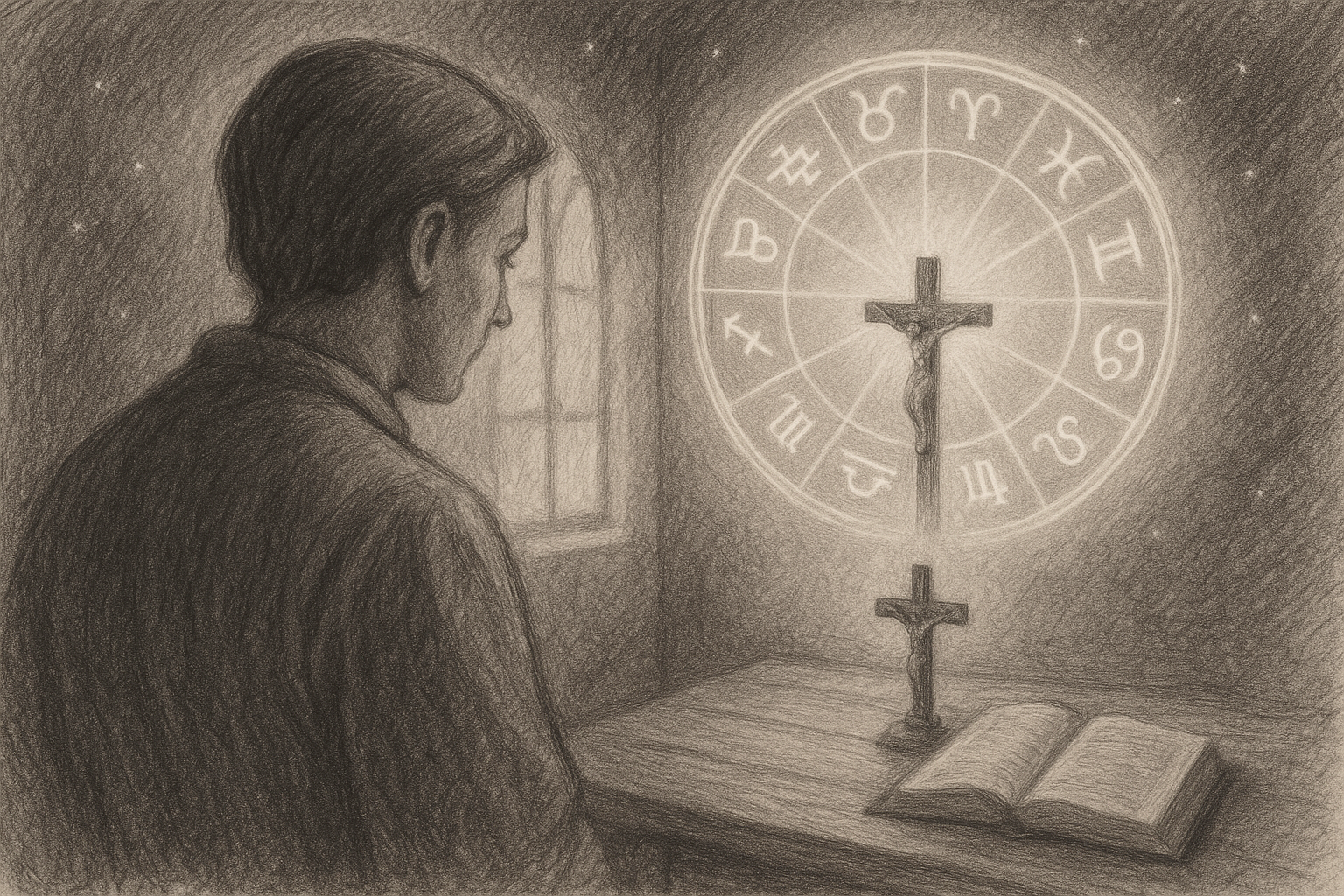
Anxiety and fear are not only emotional experiences. In Catholic life, they can shape choices, color conscience, and either open the heart to God or close it in self-protection. Scripture never treats fear as a trivial matter. It appears in moments of trial, temptation, cowardice, and hope. Sometimes fear warns us of real danger. At other times it becomes a habit of the heart, teaching us to cling to control, avoid truth, or shrink from the demands of love.
That is why anxiety and fear and Catholic life belong in the same conversation. The Church does not ask us to pretend that we are untroubled. She asks us to bring our troubled hearts to Christ. The moral life is not lived by willpower alone, nor is it a cold inventory of right and wrong. It is a school of trust, where grace gradually frees us from the lies that fear tells.
Fear is real, but it is not the final word
Fear can arise from many places. Some fears are connected to illness, trauma, family stress, financial pressure, or uncertainty about the future. Others are tied to moral choices. We fear being misunderstood, rejected, corrected, or asked to surrender something we want. Sometimes fear makes us morally timid. Sometimes it makes us harsh. Either way, it can distort the way we see God, ourselves, and other people.
In the Gospels, Jesus repeatedly meets fearful hearts with the same quiet command: do not be afraid. He says this not because fear is imaginary, but because his presence is stronger than the powers that unsettle us. When the disciples tremble in the storm, Christ does not shame them for being afraid. He speaks peace into the chaos and reveals his authority over the waters Do not be afraid Peace, be still.
This matters morally because fear can push us toward sins of omission. We may remain silent when truth needs to be spoken. We may avoid reconciliation because it feels risky. We may refuse to forgive because the wound still feels too close. Fear can also tempt us to act impulsively, choosing control over patience, or resentment over mercy. In each case, the heart is pulled away from trust in God.
The moral damage fear can do
Catholic teaching on conscience assumes that a person should act freely and knowingly before God. Fear can weaken that freedom. It can narrow our attention until we can think only of immediate relief. It can make us overly concerned with appearances or safety, while neglecting what is true and good. A fearful person may tell half truths, postpone confession, or resist a call to amend life because facing reality feels overwhelming.
Fear also affects charity. When I am ruled by anxiety, I often become less able to listen well. I may interpret a correction as an attack, a request as a threat, or another person's need as an interruption. The result is not always dramatic sin. Often it is a thousand small retreats from love. I protect myself, but I become less generous. I become less available. I begin to treat life as something to survive rather than a gift to offer back to God.
Here the tradition of the Church is realistic and merciful. It recognizes that not every fearful response carries the same moral weight. A panicked reaction is not the same as deliberate malice. Yet fear still matters, because repeated fear can form habits. Those habits can make it harder to choose courage, truth, and peace. What begins as a burden can, over time, become a way of living.
Do not be anxious about anything, but in everything by prayer and supplication with thanksgiving let your requests be made known to God. Do not be anxious about anything
St. Paul is not demanding a superficial calm. He is teaching a deeper movement of the soul: bring everything to God. Fear loses some of its power when it is no longer hidden. Prayer does not deny the problem. It places the problem where it belongs, in the hands of the Father.
Trust is not wishful thinking
Christian trust is not the claim that nothing painful will happen. It is the conviction that God remains faithful in every circumstance. That conviction is not built on sentiment, but on revelation. The Father has already shown his love in Christ, who entered human suffering, carried sin, and rose victorious. A heart that remembers this can begin to resist panic.
The Psalms teach this form of trust with remarkable honesty. They do not sanitize fear. They give it language. Again and again the psalmist says the Lord is refuge, helper, shepherd, and light The Lord is my shepherd The Lord is my light and my salvation. These are not poetic decorations. They are acts of faith spoken against the grain of dread.
Trust, then, is a moral act. It chooses God over self-absorption. It chooses prayer over spiraling. It chooses obedience over the illusion of control. Sometimes trust looks ordinary: making the next right choice, keeping a promise, telling the truth, asking for help, going to confession, or simply staying present when everything in us wants to flee.
Repentance begins when fear is named
Healing in Catholic life often begins with honesty. If fear has been governing my choices, I need to say so without self-justification. This is not despair. It is the beginning of conversion. Fear can be a hidden motive behind many sins, including pride, resentment, sloth, and detachment. Naming the fear helps uncover the deeper need for mercy.
A practical examination of conscience can ask questions such as: Where have I failed to trust God? When have I withheld good because I was afraid? Have I allowed anxiety to excuse impatience, dishonesty, or withdrawal from prayer? Have I treated other people as threats instead of neighbors?
Such questions are not meant to trap the soul. They are meant to open it. When we see fear clearly, we can bring it into confession and ask for grace that is specific, not vague. The sacrament of Penance is especially healing here because it joins truth and mercy. We speak our sin plainly, and the Lord meets us not with contempt, but with forgiveness and a call to begin again.
It can also be useful to distinguish between fear that arises from a wounded nervous system and fear that has become a moral habit. Both deserve care. A person may need rest, counsel, medical attention, spiritual direction, or practical support. Catholic prudence does not reduce every struggle to a moral failure. Still, whatever the source, we are invited to bring the burden to Christ rather than let it secretly rule the life of the soul.
Virtue grows in small acts
Courage is not the absence of fear. It is the ability to do the good while fear is still present. That is why virtue often grows in small, repeated acts rather than in sudden transformation. A frightened person may begin by staying faithful to morning prayer for five minutes. Another may choose not to send the angry message. Another may ask a trusted priest, friend, or counselor for help instead of carrying everything alone.
These small acts matter because they retrain the heart. They say, with patience, that fear is not sovereign. They make space for peace to return. Over time, the soul learns that obedience is safer than anxiety suggests, and that God's commands are not cruel. They are ordered to life.
The same is true in relationships. Fear often makes us defensive, but charity asks us to remain open. We may need to apologize sooner, listen longer, or refrain from assuming the worst. We may need to give up the need to control another person's response. This kind of humility is difficult, yet it is one of the clearest signs that grace is at work.
Practical steps that fit Catholic life
- Begin the day with a short act of surrender, such as offering the day to Christ before checking messages or news.
- Use a simple prayer when fear rises: Jesus, I trust in You.
- Read one Psalm slowly and pray it as your own voice before God.
- Go to confession regularly, especially if fear has led you into sins of omission or resentment.
- Seek wise human help when anxiety is persistent, overwhelming, or tied to trauma. Grace does not compete with good care.
- Practice acts of courage in ordinary life, such as speaking truth kindly, keeping commitments, and serving others even when you feel unsettled.
None of these steps is magical. But together they create a life in which fear has less room to dominate. They also remind us that holiness is not built in one great leap. It is formed through faithful repetition.
Mary and the saints show another way
The Blessed Virgin Mary is one of the Church's clearest witnesses to trust under pressure. Her life was not easy or predictable. From the Annunciation to the Cross, she lived with uncertainty, sorrow, and obedience. Yet her response remained open: Let it be to me according to your word Let it be to me according to your word. Mary does not erase fear by force. She answers God with faith.
The saints show that holiness and nervousness are not opposites in the simple way we often imagine. Many saints knew deep anguish, interior dryness, or fear. What made them luminous was not perfection of feeling, but steadfastness of will united to grace. They kept turning toward God. They kept receiving mercy. They kept loving.
That is encouraging for ordinary Catholics. We do not need to wait until we feel fearless before we begin to live well. We begin where we are, with the heart we have, and ask God to purify what fear has tangled.
When fear becomes a place of prayer
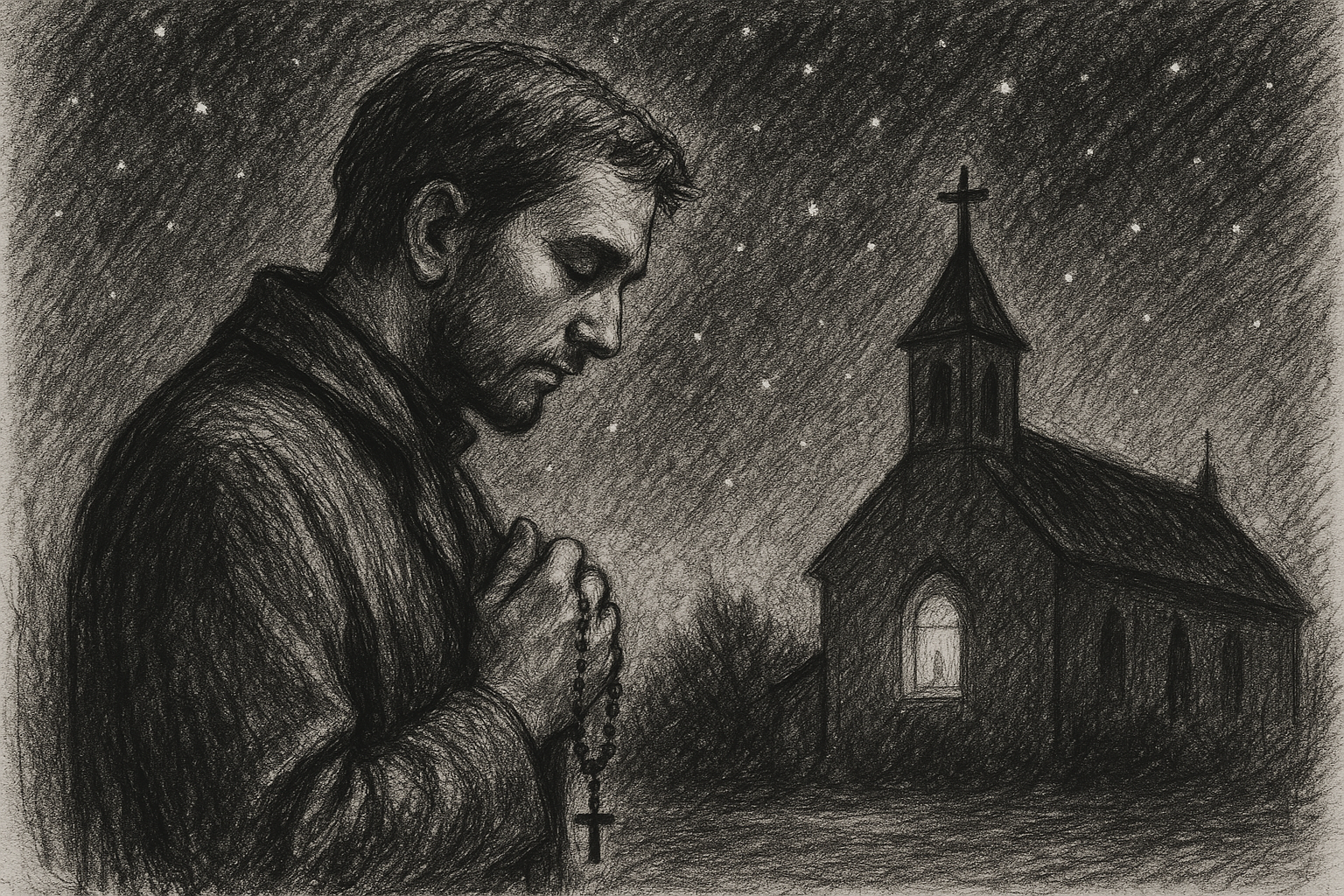
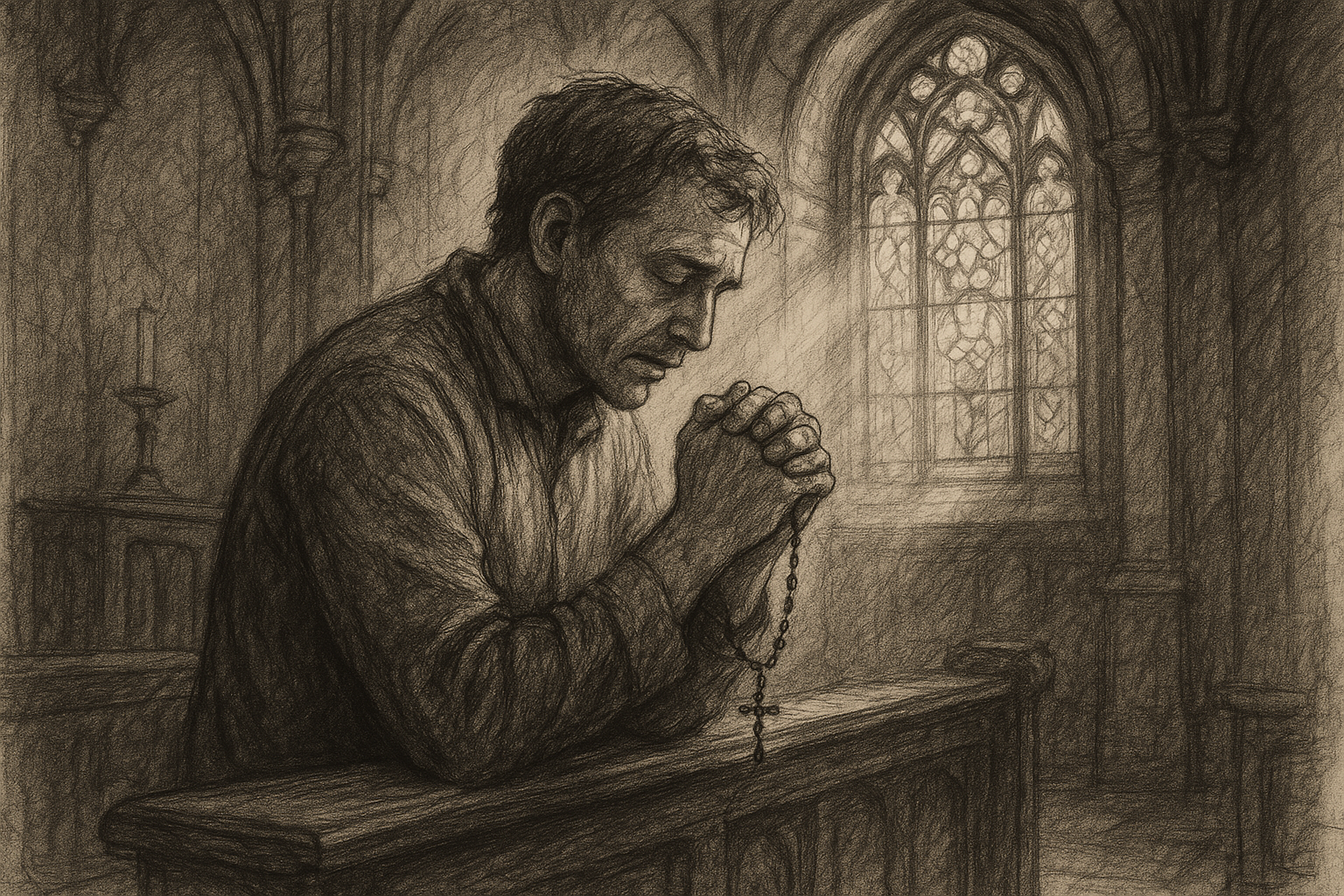
Fear can become a strange doorway into deeper prayer. Left alone, it spirals. Placed before God, it can become an occasion for surrender. A frightened soul may pray more honestly than a confident one, because it knows its need. The point is not to romanticize suffering, but to allow God to meet us in it.
If anxiety and fear and Catholic life are to be spoken of together truthfully, then we must say both that fear can wound moral freedom and that grace can heal it. Christ does not wait for us to become calm before he helps us. He enters the storm, speaks peace, and teaches the heart to trust. The path forward is often slow, but it is real. One confession, one prayer, one act of courage, one deliberate surrender at a time, the soul learns that it is held.
And when fear returns, as it often does, we do not need to begin from the start. We begin again, with the same Lord who has already shown that his mercy is stronger than our anxiety.
Keep Reading on Lets Read The Bible
Frequently Asked Questions
Is anxiety always a sin in Catholic teaching?
No. Anxiety is not automatically a sin. Some anxiety comes from illness, stress, trauma, or natural human weakness. It becomes morally significant when it leads us to choose against truth, charity, or trust in God, or when we freely let fear govern our decisions.
How can I tell whether fear is affecting my conscience?
A sign is repeated avoidance: delaying confession, refusing a hard conversation, telling partial truths, or withdrawing from prayer because facing God feels too exposing. If fear keeps shaping your choices, it is worth bringing honestly to confession, prayer, and, if needed, wise pastoral or professional help.
What is a simple Catholic practice for moments of panic?
A brief act of surrender can help: make the Sign of the Cross, breathe slowly, and pray, Jesus, I trust in You. Then, if possible, say one Psalm verse or ask for the intercession of Mary or your guardian angel. The goal is not instant perfection, but turning the heart back toward God.