Family and Vocation
When Suffering Enters the Home, Grace Does Not Leave
A Catholic look at pain, patience, and the quiet work of grace in ordinary family life
Site Admin | November 5, 2025 | 66 views
Suffering has a way of changing the mood of a home. A diagnosis can turn an ordinary week into a season of fear. Financial strain can make small decisions feel heavy. A child's illness, a spouse's depression, the loneliness of grief, or the daily wear of chronic pain can leave a family feeling as if it is living under a cloud that does not lift. The Catholic faith does not pretend this is easy. It does not ask people to smile through tears or to call pain good in itself. It asks something more honest and more demanding: to bring suffering to Christ and to trust that he is still at work in the middle of it.
The suffering Catholic perspective begins with a simple truth. God is not distant from human pain. In Jesus Christ, he entered it. The Son of God knew hunger, misunderstanding, rejection, exhaustion, sorrow, betrayal, and death. The Cross is not a symbol placed far from ordinary life. It stands at the center of it. Because of that, Catholics do not see suffering as a sign that God has abandoned them. They see it as a place where his love can be revealed in a deeper and more costly way.
Scripture does not hide suffering
The Bible speaks with remarkable realism about affliction. The Psalms are filled with cries of distress, bewilderment, and trust. Job sits in ashes and asks questions that many wounded hearts still ask. The prophets speak to people who know exile, loss, and fear. Even the apostles are not spared pain. St. Paul writes of hardship, persecution, and weakness without softening any of it. Yet he also says, "We know that in everything God works for good with those who love him" (Romans 8:28).
That verse does not mean every painful event is good in itself. Cancer is not good. Abuse is not good. A broken marriage is not good. Death is not good. But God can work within these realities to bring about a greater good than we can see at the moment. Sometimes that good is patience. Sometimes it is repentance. Sometimes it is reconciliation. Sometimes it is a more humble dependence on God. Often, the good is hidden for a long time, and the family that suffers must walk by faith before it can understand anything clearly.
Jesus himself gives this same pattern. Before raising Lazarus, he meets Martha and Mary in grief. The shortest verse in Scripture says, "Jesus wept" (John 11:35). Those tears matter. They show that divine compassion is not cold. Christ does not stand apart from mourning as if he were merely observing it. He enters it. And when he says, "I am the resurrection and the life" (John 11:25), he does not erase the sorrow of the sisters. He places their sorrow inside a larger hope.
The Cross gives suffering a new meaning
Catholic teaching does not claim that suffering is pleasant or easy to explain. It teaches that, united to Christ, suffering can become fruitful. This is one of the hardest truths in the Christian life, because it asks us to believe that love can be shown not only in comfort but also in endurance. When a person carries illness, disappointment, or loss with faith, that suffering is no longer meaningless. It can be joined to the sacrifice of Christ and offered for others.
St. Paul speaks with striking clarity about this mystery: "I rejoice in my sufferings for your sake, and in my flesh I complete what is lacking in Christ's afflictions for the sake of his body, that is, the church" (Colossians 1:24). This does not mean Christ's sacrifice was insufficient. Rather, it means that the Lord allows his members to participate in his saving work. The Christian does not merely endure suffering as a passive victim. By grace, he or she can offer it with Christ for the Church, for the family, for sinners, and for the world.
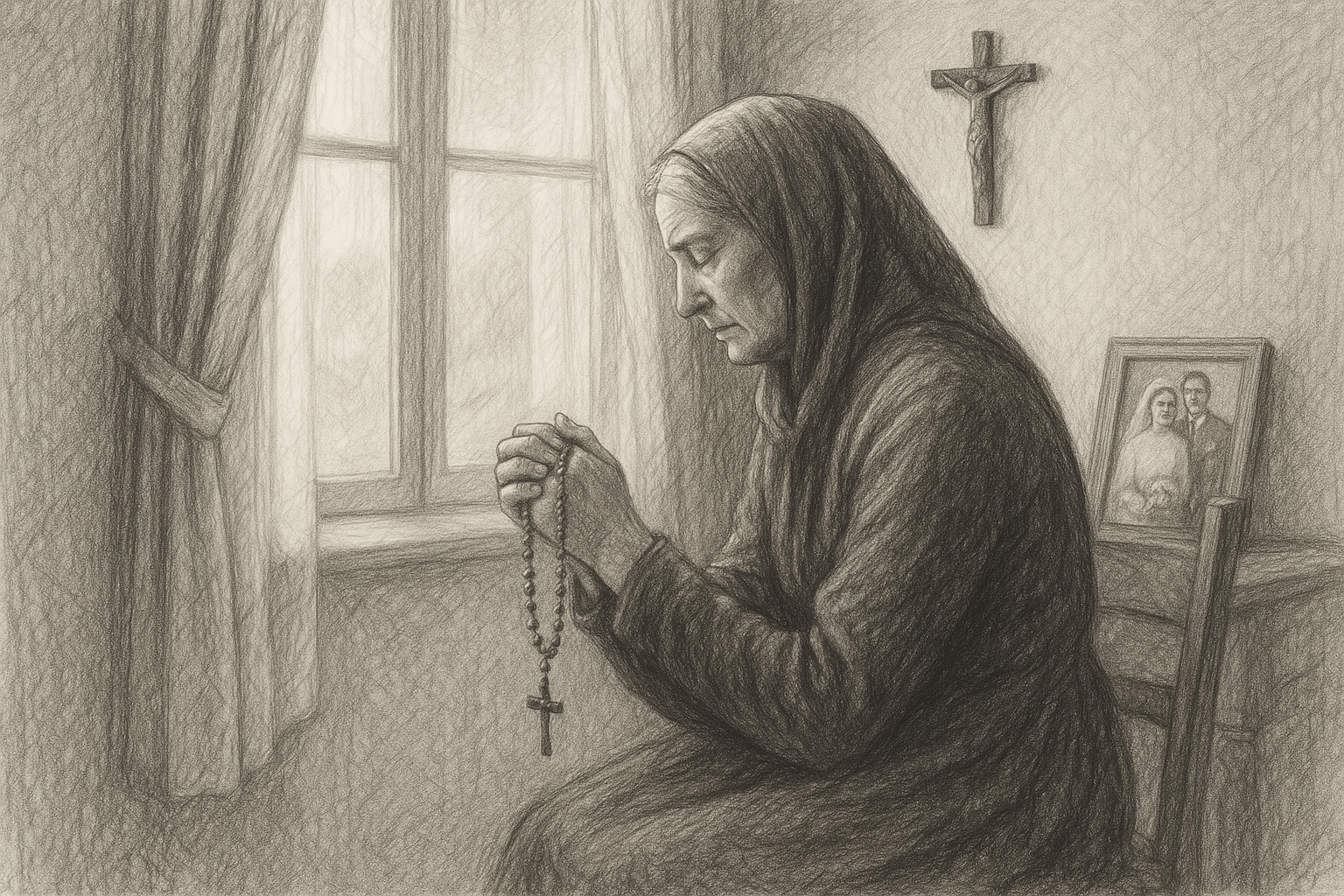
That idea may sound lofty, but it begins in very ordinary places. A mother who stays patient while caring for a sick child. A father who keeps working while carrying private grief. A teenager who refuses bitterness when life feels unfair. An elderly grandmother who prays through loneliness. These hidden sacrifices matter. They are not wasted when offered to God.
"Take up your cross, and follow me" (Matthew 16:24).
Jesus does not say this to crush his disciples. He says it because the way of love in a fallen world always involves sacrifice. In family life, that sacrifice often appears in the form of ordinary fidelity: getting up one more time, forgiving one more time, listening one more time, beginning again one more time.
Families suffer together, and they can also hope together
Suffering rarely affects only one person. A spouse's illness changes routines, finances, emotional energy, and even the way a home sounds at night. A child's anxiety can spread tension through the whole household. A parent's unemployment can shape the atmosphere of every meal. Because of this, families need more than private resilience. They need shared habits of prayer, honesty, and mutual care.
One of the most painful temptations in suffering is isolation. A person may think, no one understands, or, I do not want to burden the family, or, I should be stronger than this. But Catholic life is not built on solitary heroism. It is built on communion. The family is meant to be a little school of charity, where burdens are carried together and where weakness does not cancel dignity.
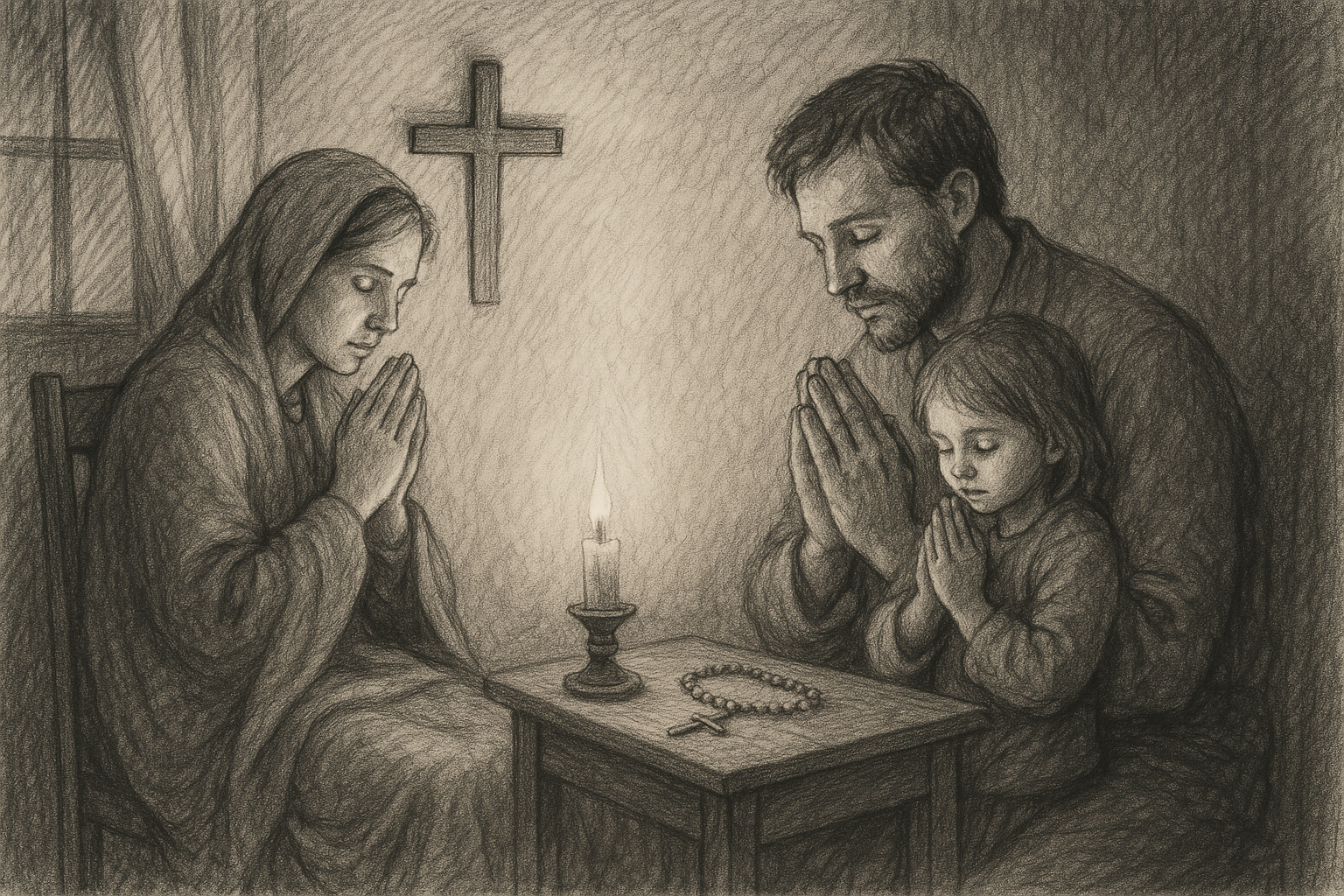
St. Paul gives practical direction for this kind of life: "Bear one another's burdens, and so fulfil the law of Christ" (Galatians 6:2). In a suffering household, this can mean speaking plainly about what is happening, asking for help, accepting help, and making room for tears. It can also mean protecting time for prayer when the family would rather numb itself with busyness or distraction.
Hope in Catholic life is not the same as optimism. Optimism says things may improve. Hope says that even if the road is dark, Christ is faithful, and the last word belongs to him. That kind of hope can coexist with grief. A family can weep and still believe. It can feel afraid and still pray. It can be exhausted and still love.
Grace meets people where daily life is hardest
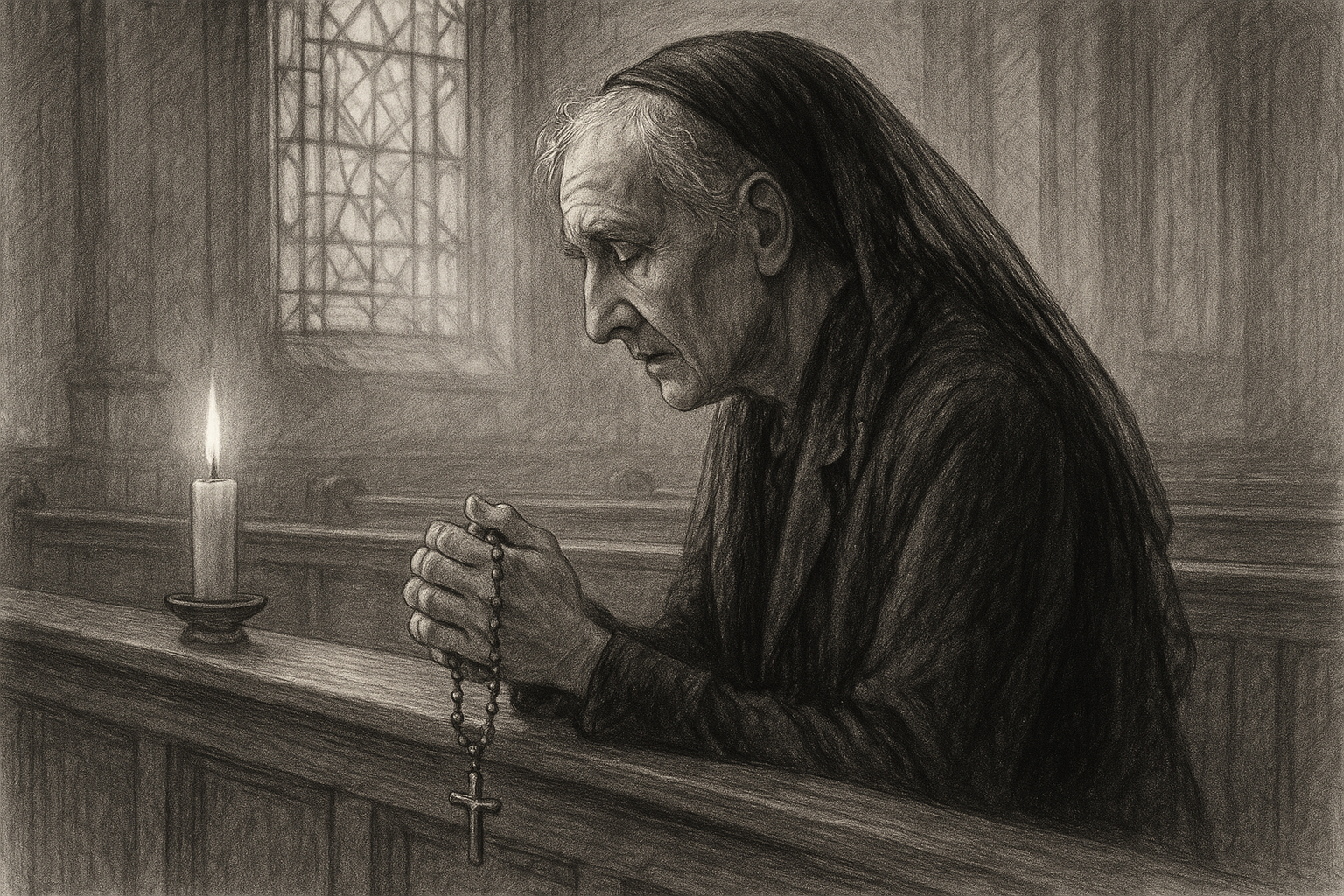
Many people imagine grace as something distant and dramatic. In reality, grace often works through the smallest acts. A deep breath before answering harshly. A rosary prayed slowly in a hospital room. A meal delivered to a tired neighbor. A visit to the sacraments after weeks of dryness. A decision to forgive when resentment seems easier. These are not small things in the spiritual life. They are often the very places where God strengthens a soul.
When suffering is prolonged, people may begin to fear that they are failing because they do not feel strong. But strength in Christian life is not the absence of sorrow. It is fidelity in sorrow. The Lord gives enough grace for the present hour, not always enough for the whole journey at once. That is why Jesus teaches his disciples to pray for daily bread. Life is lived one day at a time, and grace is usually received that way as well.
The sacraments are especially important here. The Eucharist unites us to Christ's self-giving love. Confession brings mercy where guilt and confusion have piled up. Anointing of the Sick brings the comfort and strength of Christ to those who suffer seriously in body or mind. These are not symbolic gestures. They are acts of the living Lord who remains near his people.
Prayer also becomes simpler in suffering. A person may no longer have the energy for long devotions or elaborate words. That is all right. The sigh of the heart can be prayer. So can a quiet, Lord, help me. So can the repeated offering of a painful situation into God's hands. The Psalms give language for this: "The Lord is near to the brokenhearted, and saves the crushed in spirit" (Psalm 34:18).
What suffering asks of parents, spouses, and children
Every vocation carries its own burdens, and suffering tends to reveal them. In marriage, one spouse may be called to carry more for a time. That can be a hidden crucifixion, but it can also become a profound act of love when it is united to Christ. Spouses are not simply companions in good weather. They are called to fidelity in sickness and health, in joy and sorrow, in abundance and want.
Parents, too, often discover that children learn more from suffering lived faithfully than from perfect explanations. A child does not need a parent who has all the answers. A child needs a parent who is truthful, prayerful, and steady. When a father or mother says, in effect, We do not understand this fully, but we trust God and we will stay close to one another, that itself is a lesson in faith.
Children and adolescents can suffer in ways adults overlook. They may feel guilt, confusion, or fear they cannot name. They may also watch the adults around them and decide whether faith seems real. That is why it matters for families to speak of God not only when life is easy but also when life is hard. A home that prays through suffering teaches that God is not a luxury for good days. He is the center of the house.
At the same time, suffering can expose old wounds and strained relationships. In such moments, the Christian response is not to deny conflict but to seek healing with humility. Forgiveness does not mean pretending injury never happened. It means refusing to let injury have the final word. That is often slow work. Sometimes it requires counseling, pastoral support, medical care, or a careful change in family habits. Grace does not remove human responsibility. It strengthens it.
Hope looks like presence before it looks like answers
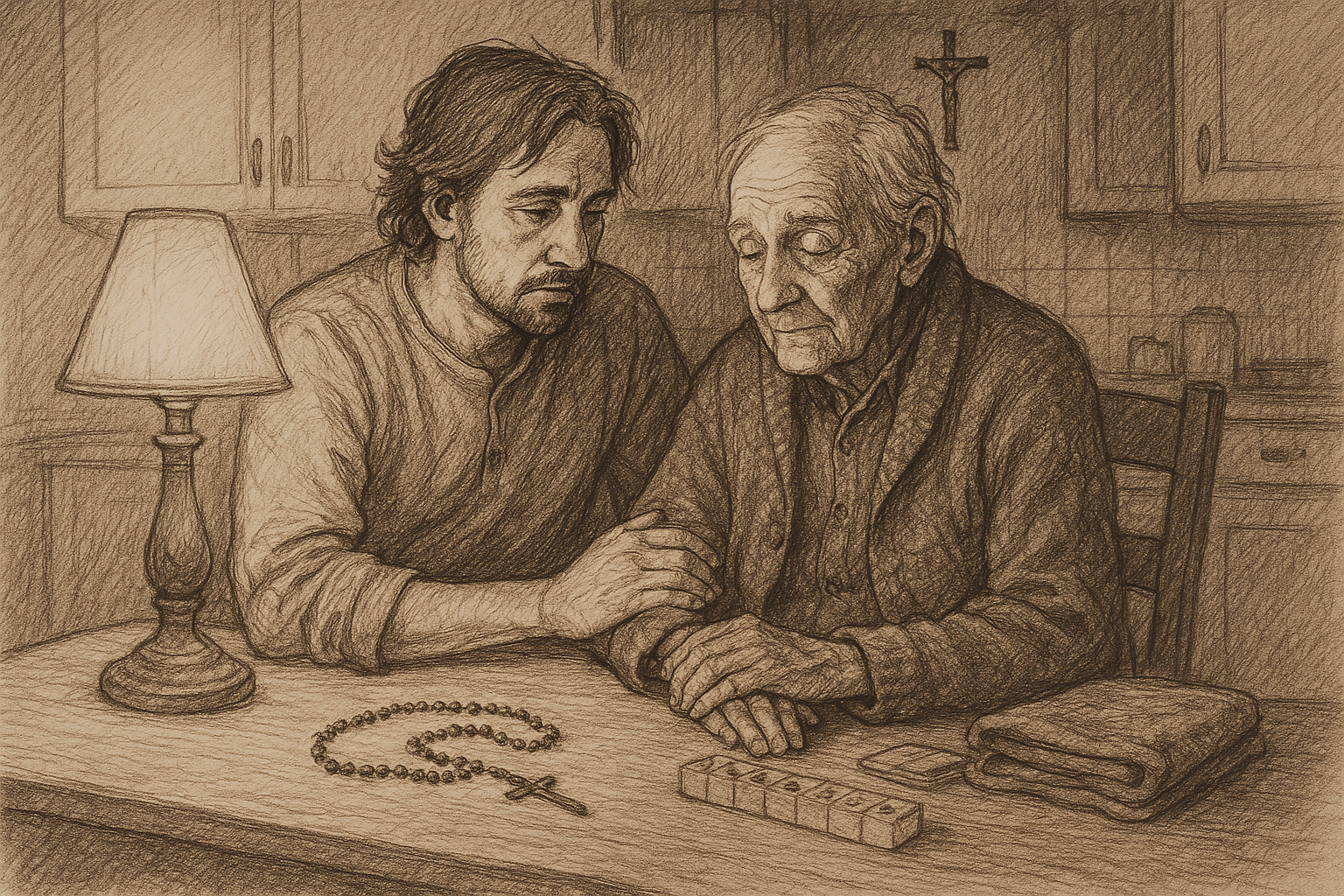
One of the most beautiful lessons of Christian suffering is that presence matters deeply. When words fail, staying close is an act of love. Mary stood at the Cross. John stood near her. The women remained. They could not stop the suffering, but they could refuse to abandon the Lord in his hour of pain. Families often need that same quiet courage.
In practical terms, this means that when someone in the household suffers, the first duty is often not explanation but presence. Sit with the sick. Answer the phone. Make the meal. Keep the appointment. Pray at the bedside. Listen without rushing. These are small mercies, but they are real mercies.
And when the suffering is invisible, such as depression, fear, or spiritual dryness, presence can be even more important. A loved one who says, I am here, may be doing more than he realizes. God often uses human presence as a channel of his own tenderness.
In the end, the Christian does not hope because pain is small. The Christian hopes because Christ is risen. Resurrection does not deny the Cross. It answers it. So the suffering Catholic perspective is not a theory built to make life neat. It is a way of living with open eyes and a steadfast heart, trusting that the Lord who entered sorrow will also bring his people home. Until then, grace keeps meeting families in kitchens, hospital rooms, parish churches, and quiet evenings when all they can do is pray.
Keep Reading on Lets Read The Bible
Frequently Asked Questions
Does the Catholic Church teach that suffering is good?
No. Catholic teaching does not call evil or pain good in itself. It teaches that God can bring good out of suffering and that, united to Christ, suffering can become fruitful through grace.
How can a family pray when suffering feels overwhelming?
Families can begin simply, with a short prayer, a Psalm, a decade of the Rosary, or even a shared petition such as, Lord, help us. In hard seasons, faithful simplicity is often better than elaborate prayers that cannot be sustained.
What is the role of the sacraments in suffering?
The sacraments are a real source of grace in suffering. The Eucharist unites us to Christ, Confession brings mercy and peace, and Anointing of the Sick offers spiritual strength and comfort to those who are seriously ill or weakened.