Sacraments and Liturgy
A Clear Heart Before God: Preparing Well for Confession
A practical Catholic reflection on the sacrament of Penance, from honest self-examination to the grace of absolution.
Site Admin | September 8, 2025 | 65 views
Coming to Confession as a Sinner in Need of Mercy
Many Catholics know the uneasy feeling that can come before Confession. We want to go, but we also hesitate. We may fear embarrassment, forget what to say, or wonder whether our sins are too ordinary to matter. Yet the sacrament of Penance is not built on spiritual confidence. It is built on mercy.
To make a good confession is first to come honestly before God. The Church does not ask us to invent a polished account of our lives. She asks us to tell the truth about our sins, trust in Christ, and receive the grace He offers through the priest. The sacrament is both deeply personal and unmistakably ecclesial. We speak to God, but we do so in the presence of His Church, through the ministry of a priest who acts in the person of Christ.
This is why Confession is never merely a psychological exercise. It is a sacramental meeting with the risen Lord, who still speaks peace to sinners. After His Resurrection, Jesus breathed on the apostles and said, Receive the Holy Spirit, then gave them authority to forgive sins in His name. The Church has always seen in that moment the foundation of sacramental confession and absolution.
Where Confession Comes From in the Life of the Church
The sacrament of Penance flows from the ministry Christ gave to the apostles. He entrusted them with a real authority, not merely a symbolic role. The Gospel of John records that Jesus said to the apostles, Whose sins you forgive are forgiven them. In Matthew, He speaks of binding and loosing, a language of spiritual authority and pastoral judgment: Bind and Loose. The Church reads these words as Christ's gift of a sacramental ministry that continues in her priests.
From the earliest centuries, Christians understood that grave sins were not simply a private matter between the soul and God. Sin wounds communion. It harms the person who sins, but it also disturbs the Body of Christ. Therefore repentance needed to be real, outward, and ecclesial. The form of the sacrament developed over time, but its heart remained the same: confession of sins, sorrow for them, absolution, and penance.
That is why the sacrament is sometimes called Penance and sometimes Reconciliation. Both names are true. Penance points to the conversion of heart and the loving discipline that follows. Reconciliation points to the restored friendship with God and, by grace, with the Church. Confession is not the whole Christian life, but it is one of the clearest moments in which the mercy of Christ becomes visible and audible.
What a Good Confession Actually Requires
A good confession is not measured by eloquence. It is measured by truthfulness, contrition, and openness to grace. The essential elements are simple:
- an honest examination of conscience,
- sincere sorrow for sins,
- full confession of serious sins in kind and number as best one can,
- a willingness to accept the penance given,
- and a firm purpose of amendment.
The heart of the sacrament is contrition. We must be sorry not only because sin brings consequences, but because sin offends God, who is good and merciful. The old prayer of Act of Contrition captures this well: the sinner asks pardon because he has offended God, whom he should love above all things.
The Church teaches that mortal sin must be confessed in kind and number. This does not mean that every confession must sound exhaustive or dramatic. It means we should name grave sins clearly and simply, without disguising them or turning them into abstractions. If we are uncertain whether something is mortal, a priest can help us discern. But if we know that we have sinned gravely, we should not hide it out of fear or shame.
Venial sins may also be confessed, and it is spiritually fruitful to do so. Regular confession of venial faults helps the soul grow in humility and sensitivity. It trains the conscience to notice the smaller ways pride, impatience, greed, envy, lust, and laziness enter daily life. Over time, the sacrament becomes a school of honesty.
How to Examine Your Conscience Without Anxiety
An examination of conscience is not an exercise in scrupulous self-surveillance. It is a prayerful review of life in the light of God's law and mercy. The point is not to become obsessed with fault, but to ask the Holy Spirit to show what needs healing.
A simple examination can begin with the commandments, the Beatitudes, or the duties of one's state in life. A married person, a parent, a single adult, a student, or a priest will all have distinct responsibilities. The same sin may appear differently in each life. What matters is not comparing ourselves with others, but asking where we have failed in love.
It often helps to examine the major areas of the Christian life:
- love of God: prayer, worship, trust, reverence, and fidelity to Sunday Mass,
- love of neighbor: charity, patience, honesty, justice, mercy, and forgiveness,
- love of self in the right sense: chastity, temperance, sobriety, and stewardship of time and gifts,
- duties of vocation: family life, work, study, and responsibilities entrusted to us.
Asking a few direct questions can make the examination concrete. Did I miss Mass without a serious reason? Did I receive the Eucharist in a state of serious sin? Did I lie, gossip, or deceive? Did I nurse resentment? Did I give in to impure thoughts or actions? Did I neglect prayer? Did I fail to care for someone who depended on me? These questions are not meant to condemn. They are meant to clarify.
If a conscience becomes trapped in fear, repetition, or doubt, it may need pastoral guidance. The sacrament is meant to free the soul, not paralyze it. A wise confessor can help a person distinguish real guilt from scrupulosity and can offer peace without minimizing sin.
Before You Enter the Confessional
Preparation makes the sacrament more fruitful. Before going, it helps to pray briefly and ask for light. Many Catholics find it useful to make a quiet act of faith: Lord, show me my sins, give me sorrow for them, and help me confess them well.
It also helps to write down sins beforehand, especially if fear or forgetfulness usually gets in the way. A simple list can keep the mind from wandering. Once in the confessional, there is no need to tell a long story unless the priest asks for clarification. Confession is not a spiritual autobiography. It is a humble naming of sins and a reception of mercy.
Be brief, clear, and direct. A good confession sounds like a person who has stopped defending himself. One might say, for example: I sinned against charity by speaking harshly to my spouse. I was impatient with my children. I missed Sunday Mass once without a serious reason. I lied at work. I fell into impure behavior. Then, if needed, one can mention the number of times or any circumstances that change the gravity of the sin.
If memory fails, confess what you remember sincerely. If a mortal sin is truly forgotten, the sacrament still forgives it if there was no deliberate hiding. Later, if it comes to mind, it should be mentioned in the next confession. God is not looking for tricks. He is looking for honesty and repentance.
What Happens in the Confessional
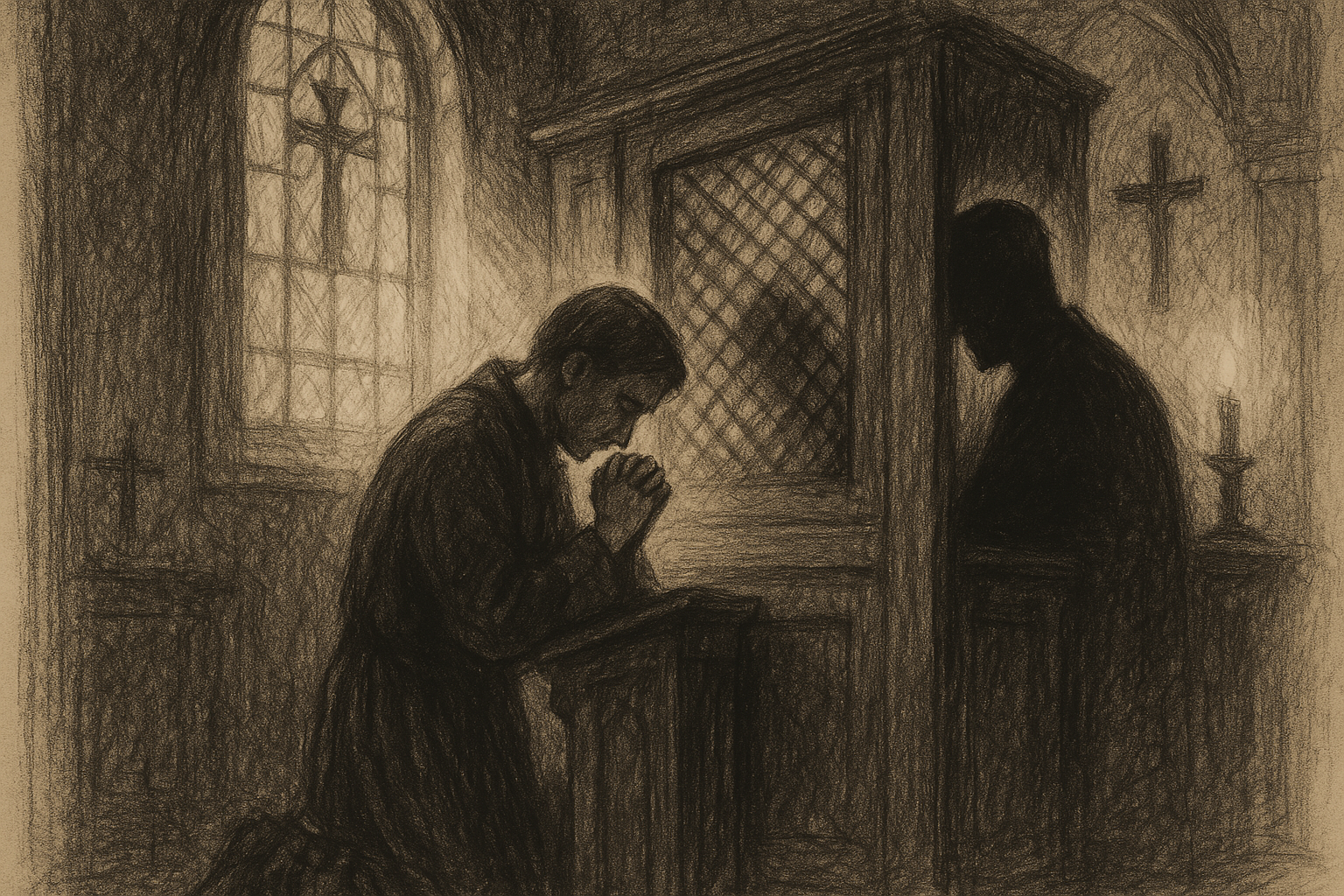
Many people imagine the confessional as a place of humiliation. In reality, it is meant to be a place of liberation. The priest is not there to be shocked or impressed. He is there as a minister of Christ's mercy. The encounter may be brief, but grace can be profound.
The usual pattern is simple. The penitent makes the sign of the cross and begins with a customary greeting. Then he states how long it has been since the last confession. After that, he confesses his sins clearly. The priest may offer brief counsel, assign a penance, and then pronounce absolution. The words of absolution are the great moment of the sacrament, because it is Christ who forgives through His Church.
The penance given is not a payment for sin. Nothing we do can purchase God's forgiveness. Rather, the penance is a small, healing response to grace. It may include prayer, Scripture, an act of charity, or another spiritual practice. We should receive it gratefully, because it helps begin the work of reordering the heart.
By confession, the soul returns not to an idea of mercy, but to mercy itself.
After Confession: Living the Grace You Have Received
The sacrament does not end when the penance is completed. It begins there. Grace received in Confession is meant to become grace lived. A person who has been absolved is called to new vigilance, deeper prayer, and practical amendment of life.
This does not mean living in fear of falling again. It means cooperating with grace. If a particular sin returns repeatedly, it may be wise to remove temptations, change habits, seek accountability, and ask for help. A recurring sin is often not conquered by remorse alone. It may require structure, discipline, and patience. The Lord heals, but He often heals through steady conversion.
Frequent confession can be a great support even for Catholics who are not burdened by serious sin. Many saints recommended regular confession because it sharpens the conscience and strengthens humility. It keeps the soul from drifting into self-justification. It reminds us that holiness is not self-invention. It is surrender to grace.
The fruits of the sacrament are beautiful but often quiet. There may be peace, relief, or clarity. There may also be a renewed sense of responsibility. A good confession does not erase the struggle of the spiritual life, but it gives the soul a cleaner starting point. It restores confidence in God's mercy and strengthens the will to begin again.
Making Confession Part of Ordinary Catholic Life
Many Catholics treat Confession as an emergency room rather than a normal part of spiritual health. Yet the rhythm of the Church invites us to something steadier. Regular confession, even when not required by grave sin, can become one of the most practical habits of the Christian life. It keeps the conscience awake. It teaches gratitude. It makes repentance familiar rather than frightening.
The best preparation for Confession is a life already turned toward God. Prayer, Sunday Mass, Scripture, works of mercy, fasting, and honesty in daily duties all support the sacrament. Confession should never be isolated from the rest of Christian life. It is part of a larger pattern of conversion in which God slowly reshapes the soul.
For the ordinary Catholic, then, making a good confession means more than memorizing a method. It means approaching Christ with humility, telling the truth without excuses, receiving forgiveness with faith, and leaving determined to love more faithfully. That is the path of peace. It is also the path by which the Lord patiently makes sinners new.
Keep Reading on Lets Read The Bible
- Listening at Mass: The Liturgy of the Word and the Church's Living Voice
- At the Table of the Word: Meeting Christ in the Scriptures at Mass
- Entering the Mystery: The Introductory Rites of Mass and the Art of Beginning Well
- At the Heart of the Mass: Living the Liturgy of the Eucharist with Attention and Faith
Frequently Asked Questions
How often should a Catholic go to Confession?
The Church requires confession of grave sin before receiving Communion, and many Catholics benefit from regular confession even when not strictly required. A monthly pattern is common, though the right frequency can vary with a person's conscience, vocation, and spiritual needs.
What if I forget a sin during Confession?
If you forget a sin in good faith, the sacrament still remains valid, and the forgotten sin is forgiven if you did not intentionally conceal it. If it later comes to mind, mention it in your next confession.
Do I need to confess every venial sin?
No, venial sins do not have to be confessed individually, but doing so can be very helpful for spiritual growth. Regular confession of venial sins helps form the conscience and strengthen habits of repentance.