Church History
A Pope Who Stood Firm When the World Was Shaking: St. Leo the Great and the Courage of Catholic Memory
In a century of turmoil, St. Leo the Great defended the faith, strengthened the papacy, and gave the Church a lasting example of clear teaching under pressure.
Site Admin | December 22, 2025 | 86 views
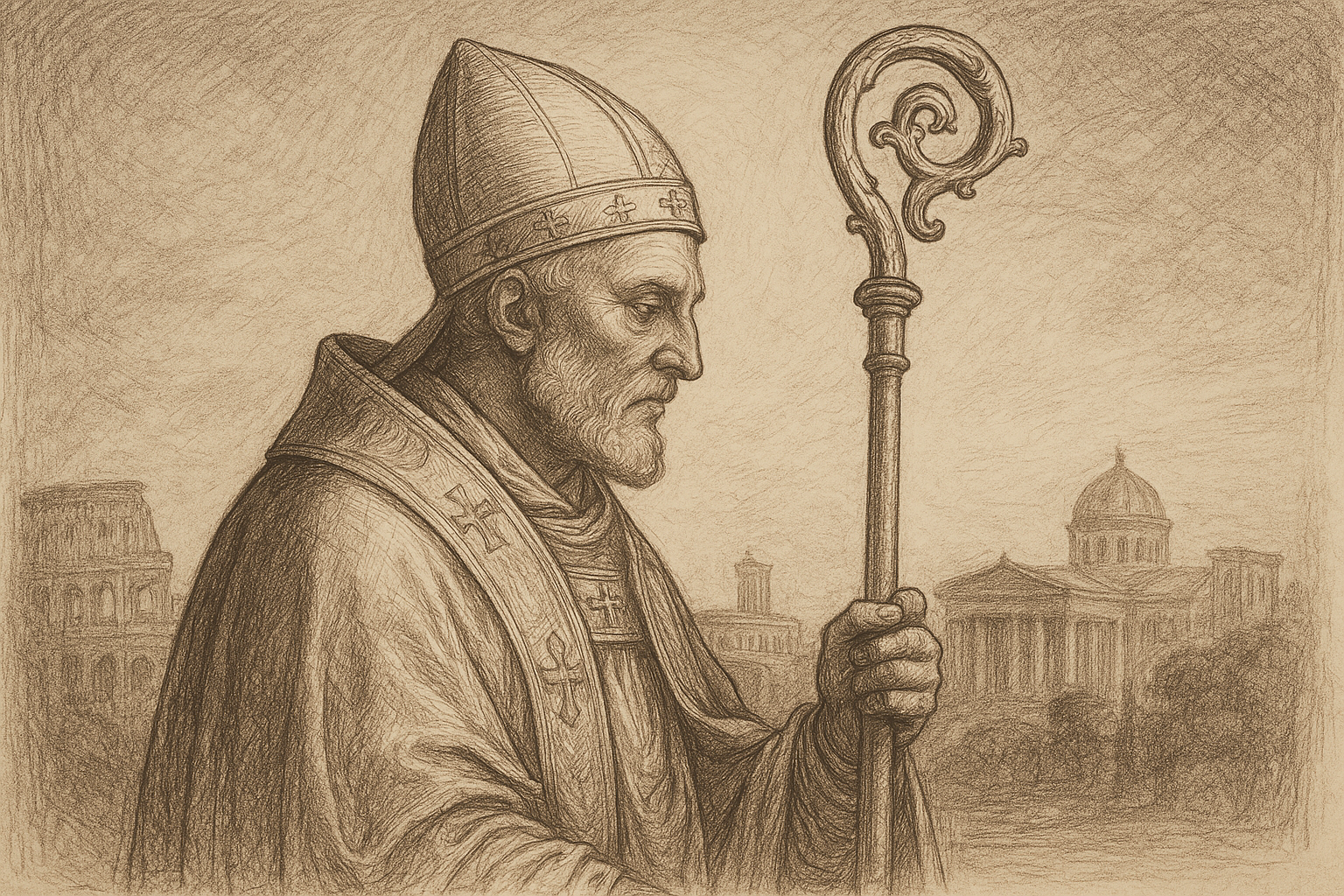
St. Leo the Great does not belong to the category of church figures who can be admired from a distance and then left behind. He belongs to the sort of saint whose life becomes more legible the more unstable the age feels. In the fifth century, the Roman world was under strain from political collapse, military threat, doctrinal confusion, and pastoral need. Leo did not solve every problem of his era, but he gave the Church something rare and enduring: a steady papal mind, a firm hand in defense of the faith, and a vision of Christian leadership rooted in both truth and mercy.
For Catholics today, St. Leo the Great Catholic history is not just a chapter in ecclesiastical biography. It is a witness to how the Church can speak clearly when the world is unsettled. Leo reminds us that holiness is not always quiet, and leadership is not always gentle in tone. Sometimes it means drawing firm lines, naming error, protecting the flock, and trusting that the truth of Christ can withstand every pressure placed against it.
A Shepherd for a Troubled Century
Leo became bishop of Rome in 440, during a period when the Western Roman Empire was weakening rapidly. Imperial structures were fraying, communication was difficult, and local communities often depended on bishops for more than spiritual guidance. They looked to them for moral direction, social stability, and theological clarity. Leo entered the papacy in that tense setting and spent the rest of his life strengthening the Church's confidence in the apostolic office entrusted to Peter and his successors.
This was not a time for vague piety. The Church faced serious doctrinal disputes, especially over the person of Christ. The question was not academic. If Jesus Christ is not fully God and fully man, then salvation itself is at stake. Leo understood that right doctrine is not a luxury. It protects the Gospel. He wrote with precision because souls depended on precision.
At the same time, the streets and fields of Italy were not safe. The famous meeting between Leo and Attila the Hun in 452 became one of the best-known moments in his life. The historical details are not always easy to reconstruct with certainty, but the tradition preserves what matters: Leo stepped forward as a spiritual father seeking to spare his people from devastation. Even where political factors were involved, the image is powerful. The bishop of Rome did not retreat into abstraction while danger approached. He acted.
His Most Enduring Teaching: Christ Is Truly God and Truly Man
Leo's most famous theological contribution is often associated with the Council of Chalcedon in 451. His Tome, a letter explaining the orthodox faith about Christ, helped the bishops gathered there articulate the Church's teaching with renewed clarity. The Council confessed that Jesus Christ is one person in two natures, without confusion, change, division, or separation. That formula sounds technical, but its meaning is deeply pastoral. The Church was defending the mystery that the Son of God truly entered human history and truly redeemed it.
Leo insisted that what is true of Christ's divinity remains true of his humanity, and what is true of his humanity does not erase his divinity. He was guarding both the transcendence of God and the nearness of the Savior. This matters because Christians do not worship an idea or a moral example. We worship the living Lord who became flesh, suffered, died, and rose. The credibility of Christian hope depends on this reality.
Scripture itself shows why Leo's clarity mattered so much. The Word became flesh and dwelt among us, John 1:14. In the fullness of time, God sent his Son, born of a woman, Galatians 4:4. Christ, though he was in the form of God, humbled himself and took the form of a servant, Philippians 2:6-7. Leo's teaching gave theological language to these truths without reducing their mystery.
One of the reasons Leo still matters is that modern Catholics still need help keeping Christ whole. It is easy to drift toward a Jesus who is only a teacher, or only a symbol, or only a comforting presence. Leo refuses all reduction. The Church must proclaim the Son of God who became man for our salvation, and she must do so without softening either his divinity or his humanity.
The Strength of the Papacy in a Time of Need
Leo also helped shape how Catholics understand the Roman pontiff. He was not inventing papal authority from nothing. Rather, he was articulating and strengthening an office that already carried apostolic significance. He saw the bishop of Rome as serving the unity of the Church in a unique way, not as a worldly ruler but as a guardian of communion and orthodoxy.
That conviction appears throughout his letters and sermons. Leo believed that the successor of Peter had a duty to confirm the brethren, preserve discipline, and speak with authority when the faith was threatened. This was not self-importance. It was responsibility. The stronger the storm, the more the Church needed a visible center of unity.
Catholics often notice that the papacy can become a source of tension even within the household of faith. Leo helps us see that such tension is not new. The Church has always needed to distinguish between the personality of a pope and the office he holds. A saintly pope does not erase the burdens of office, but he shows how that office can be exercised in service of truth. Leo's legacy is one of disciplined authority ordered to the good of the whole Church.
What this means for Catholics now
In ordinary parish life, many struggles are smaller than the fifth-century crises Leo faced, but they are real all the same. Confusion about doctrine, weariness in prayer, and uncertainty about moral questions can make the faithful long for a clearer voice. Leo offers a lesson in how to respond: do not abandon conviction, and do not separate conviction from charity.
His example suggests at least three habits for Catholics today:
- Love the truth enough to learn it. Leo studied, wrote, and taught because he knew the faith deserves our attention.
- Stay rooted in communion. He never treated unity as a sentiment. For him, communion was a concrete ecclesial reality.
- Speak clearly when clarity serves souls. Charity does not require vagueness, especially where the Gospel is at stake.
His Sermons Reveal a Pastor, Not Only a Defender
Leo was not only a theologian and administrator. He was also a preacher of spiritual depth. His sermons for the liturgical year reveal a pastor who wanted Christians to see the mystery of Christ as present in the Church's worship and in daily conversion. He preached on the Nativity, the Passion, fasting, almsgiving, humility, and the dignity of baptism. His preaching is marked by sobriety and confidence. He does not try to entertain. He tries to form.
That is important because doctrines are often remembered better when they are tied to worship and moral life. Leo knew that the truth about Christ should change how Christians pray, fast, forgive, and give. He treated the liturgy as a place where doctrine becomes prayer and prayer becomes life. In this, he speaks to a modern Church that can be tempted to separate belief from devotion, or devotion from action.
His Christmas preaching, in particular, has remained beloved because it insists on the dignity of the human person redeemed in Christ. If the Son of God has taken our nature, then human life is not disposable or spiritually insignificant. Grace does not destroy nature. It heals and elevates it. Leo's theology of the Incarnation therefore has moral consequences. Christians should live as people whose humanity has been touched by God.
The Lord whom Leo preached is the same Lord the Church adores in every age: not remote, not divided, and not diminished, but truly present in the mystery of the Word made flesh.
Learning from Leo's Courage Without Romanticizing His Age
It would be easy to turn Leo into a heroic statue and miss the point. He lived amid real political complexity, incomplete historical records, and the ordinary limits every bishop faces. He was not a magician of history. He was a shepherd who believed that God works through offices, words, sacraments, and patient governance. That realism makes his witness more useful, not less.
Modern Catholics can be tempted to imagine that faithfulness should always produce immediate visible success. Leo suggests something different. Faithfulness often means holding the line when outcomes are uncertain. It means preparing sound teaching even when the cultural climate is unstable. It means trusting that truth itself has a power greater than any single era can see.
His example also warns against a shallow view of Christian leadership. Authority in the Church is not meant to impress the world. It is meant to protect communion and preserve the apostolic faith. A bishop, a priest, a catechist, or a parent can all learn from Leo that leadership without clarity is not love, and clarity without humility is not enough. The saint combines both.
Why Catholics Still Return to St. Leo
St. Leo the Great remains compelling because he stands at the meeting point of doctrine, worship, and history. He saw that Christology is not abstract speculation. It is the heart of salvation. He saw that the papacy must serve unity. He saw that preaching should shape souls. He saw that a Christian can face chaos without surrendering to fear.
In an age when Catholics often feel pulled between confusion and defensiveness, Leo offers a more ancient and more stable response. Know the faith. Love the Church. Speak the truth. Trust Christ. Those four movements sound simple, but they demand discipline. Leo lived them at a time when Rome itself seemed to tremble.
That is why his memory continues to matter. He teaches that the Church does not endure because her leaders are always comfortable or because history is kind. She endures because Christ remains faithful, and because saints like Leo refuse to let the truth be diluted when the world most needs it.
For Catholics seeking steadiness in uncertain times, St. Leo the Great is not merely a figure from the past. He is a witness that firm doctrine and pastoral courage can belong together, and that the Church is strongest when her shepherds remember both Peter's charge and the Lord who gave it.
Keep Reading on Lets Read The Bible
Frequently Asked Questions
Who was St. Leo the Great?
St. Leo the Great was Pope from 440 to 461 and is remembered as a Doctor of the Church for his strong defense of Catholic teaching, especially the truth that Jesus Christ is fully God and fully man.
Why is St. Leo the Great important in Church history?
He helped guide the Church through doctrinal controversy and political instability, strengthened the role of the papacy, and contributed to the teaching later confirmed at the Council of Chalcedon.
What can Catholics learn from St. Leo the Great today?
Catholics can learn to love clear doctrine, trust the Church's apostolic authority, and practice courageous, charitable leadership in difficult times.