Church History
Peter and the Shape of Catholic Memory
From the shores of Galilee to the life of the Church, St. Peter remains a witness to grace, leadership, and conversion.
Site Admin | December 20, 2025 | 89 views
St. Peter Catholic history is not the story of a remote religious founder or a polished saint with no rough edges. It is the story of a fisherman called by Christ, shaped by mercy, and placed at the center of the Church's early life. Peter was not chosen because he was impressive in the world's eyes. He was chosen because Jesus saw in him a man who could be formed, corrected, and strengthened for the sake of others.
For Catholics, Peter still matters because the Church still lives from the same pattern. Christ calls ordinary people, gives them real responsibilities, and sustains them through grace. Peter's life shows that weakness does not cancel vocation. In fact, it often becomes the very place where God's power is made known.
Peter in the Gospel story
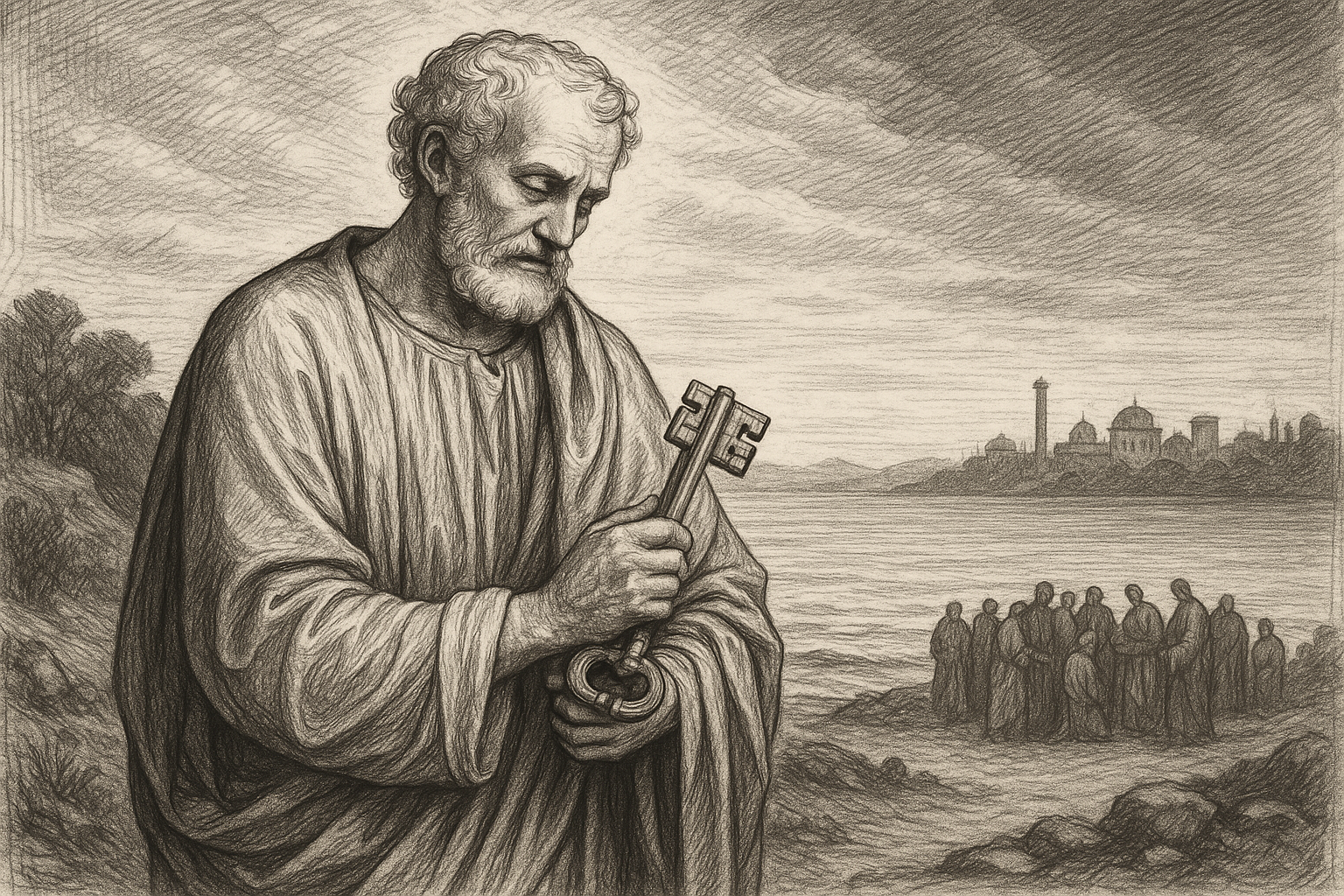
Peter first appears in the Gospels as Simon, a fisherman from Galilee. Jesus encounters him in the midst of daily labor and gives him a new name and a new mission. This is important. In Scripture, a new name often signals a new vocation. Peter's call was not self-chosen. It came from Christ.
At the lakeside, Jesus tells Simon to put out into deep water, and the miraculous catch follows. Peter responds not with pride, but with awe and confession. Depart from me, Lord, for I am a sinful man This moment captures one of the deepest themes in Peter's life. He is drawn toward Christ and at the same time made painfully aware of his own limits.
Peter also becomes one of the inner circle who witness key moments of the Lord's public ministry. He is present at the Transfiguration, he walks on the water and falters, and he speaks on behalf of the apostles with both sincerity and haste. He is often first to act and often first to need correction. That combination makes him deeply human and, for Catholics, deeply believable.
Confession, commission, and promise
The heart of Peter's role comes into view at Caesarea Philippi. When Jesus asks the disciples who they say he is, Peter answers with clarity: You are the Christ, the Son of the living God Jesus then gives Peter a promise that has echoed through Christian history: You are Peter, and on this rock I will build my church
Catholics read this passage as foundational for the papacy. Christ is the true foundation of the Church, yet he chooses to build in a visible way through Peter and, by extension, through the apostolic office that continues in the bishops in communion with the Bishop of Rome. The point is not that Peter becomes a rival to Christ. The point is that Christ works through human instruments.
Peter's confession matters because it is not merely intellectual. It is an act of faith that recognizes Jesus as more than a prophet, teacher, or political figure. For the Church, this confession remains the center of everything. Peter's authority is never separate from that confession. It exists to serve it.
Peter's failures are part of his witness
It would be easy to admire Peter if his story ended with his great confession. But Scripture does not hide his failures. He objects when Jesus speaks of the cross. He promises fidelity and then denies the Lord three times. He hesitates, misjudges, and acts from fear. These are not minor details. They are central to his credibility.
After the Resurrection, Jesus restores Peter in a scene of quiet mercy by the Sea of Tiberias. Three times Peter is asked whether he loves the Lord, and three times he answers yes. Then comes the charge: Feed my sheep This restoration is not only personal. It is pastoral. Peter is forgiven and then entrusted with care for Christ's flock.
This is one reason Catholics continue to value Peter so deeply. The Church is not led by people who are flawless. She is led by sinners who have been forgiven and commissioned. Peter reminds us that holiness in the Church is not the absence of weakness. It is fidelity under grace.
Peter in the Acts of the Apostles
After Pentecost, Peter emerges as a leading voice in the early Church. In the Acts of the Apostles, he preaches boldly, heals in the name of Jesus, and helps guide the first Christian community through questions of mission and identity. He is no longer the man who cowered before a servant girl. He is a shepherd strengthened by the Holy Spirit.
Peter's sermon at Pentecost announces the death and Resurrection of Christ and calls listeners to repent and be baptized. The Church's public life begins not with a strategy but with proclamation. Peter stands at the center of that proclamation. He also receives visions that help open the Church to the Gentiles, showing that the Gospel is for all nations.
One of the most important moments in Acts is Peter's encounter with Cornelius. This episode reveals that the Spirit is leading the Church beyond inherited boundaries. Peter does not simply defend custom. He discerns what God is doing. That willingness to listen remains a major lesson for Catholic life. Authority in the Church is not meant to freeze the Spirit's work. It is meant to serve discernment in fidelity to the Lord.
Peter and the early shape of the papacy
The Catholic understanding of Peter does not begin with later office structures alone. It begins with the New Testament witness and the Church's earliest life. Peter is repeatedly shown taking initiative, speaking for the apostles, and acting in a way that suggests a real primacy among them.
This primacy is not domination. It is service. The Church has always needed a visible principle of unity, someone whose ministry helps preserve communion in truth and charity. Catholics believe Christ gave that role to Peter in a unique way and that this ministry continues in the successors of Peter, the popes.
That does not mean every question in Church history has been simple or every papal era has been admirable. Human weakness remains part of the Church's visible life. But Peter himself makes that unsurprising. The papacy is not a claim that the Church belongs to the strong. It is a sign that Christ holds the Church together through an office rooted in mercy, mission, and continuity.
What Peter teaches Catholics today
Peter's life speaks to Catholics in practical ways, especially when faith feels fragile or leadership seems imperfect. His story teaches at least four enduring lessons.
1. Christ calls real people, not idealized ones
Peter was impulsive, courageous, uncertain, and at times afraid. None of that prevented Jesus from calling him. Catholics today can take comfort in this. The Lord does not wait for us to become self-sufficient before he works through us.
2. Repentance is not the end of the road
Peter denied Jesus, but he did not remain a denier. He wept, was restored, and continued in service. This is a powerful witness for anyone burdened by sin or regret. The Christian life is not built on pretending we never fell. It is built on returning to Christ.
3. Authority in the Church is for communion
Peter's role was never about personal glory. It was about holding the brethren together and strengthening the faithful. Catholics can remember this when thinking about Church leadership at any level. Authority is authentic when it serves unity, truth, and the salvation of souls.
4. Boldness and humility belong together
Peter speaks boldly after Pentecost, yet he remains a man who knows he has been forgiven. That balance matters. Christian confidence is not arrogance. It is trust in the Lord who raises up the humble.
Peter, martyrdom, and the memory of Rome
Tradition holds that Peter died a martyr in Rome during the persecution of Christians. The Church in Rome became especially associated with his witness, and the tomb of Peter has long been venerated there. Catholics do not see this memory as mere sentiment. It is part of the Church's historical identity.
Martyrdom seals Peter's testimony. He did not simply speak about Christ from a distance. He gave his life in witness to him. In this sense, Peter completes what his confession began. He became a shepherd who would not abandon the flock even at the cost of death.
The memory of Peter in Rome also helps explain why the Bishop of Rome has a particular role in the Catholic Church. The connection is historical, theological, and spiritual. It links the present Church to the apostolic age and reminds the faithful that their communion is not invented anew in each generation.
St. Peter in prayer and daily discipleship
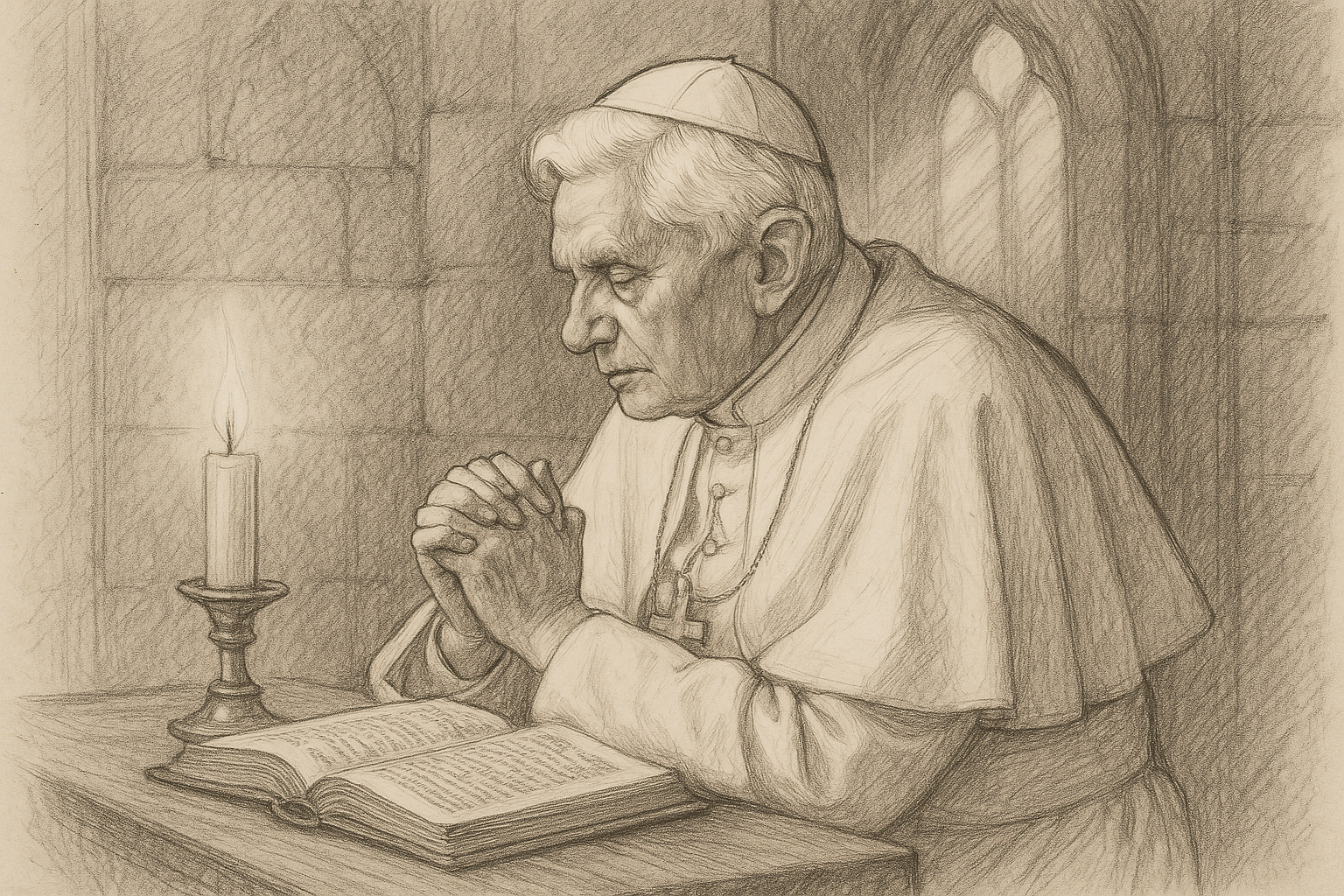
Peter is often most helpful when Catholics are tempted to think holiness belongs only to the naturally strong. He shows another way. We can pray honestly, stumble, repent, and begin again. We can speak the truth about Christ even when we know our own inconsistency. We can trust that grace is stronger than failure.
In ordinary Catholic life, that means Peter can accompany us in confession, in moments of self-doubt, and in the slow work of spiritual growth. He also reminds us to pray for the Church's shepherds, that they may lead with clarity, courage, and humility.
To remember Peter is to remember that the Lord did not abandon his Church to abstraction. He built it on witness, sacrament, memory, and living authority. That is why St. Peter Catholic history still matters. It is not simply about the past. It is about the way Christ continues to gather, forgive, and strengthen his people through the Church he founded.
Peter's story tells the Church that grace does not erase human weakness by denial. It transforms weakness through fidelity.
Keep Reading on Lets Read The Bible
Frequently Asked Questions
Why is St. Peter important in Catholic history?
St. Peter is important because Jesus chose him for a unique role among the apostles, gave him a special commission, and Catholics believe his ministry continues in the papacy as a sign of unity in the Church.
Did St. Peter make mistakes in Scripture?
Yes. Peter was impulsive, misunderstood Jesus at times, and denied him before the Passion. His failures matter because they show that Christ builds the Church through forgiven sinners rather than perfect people.
How does St. Peter help Catholics today?
Peter encourages Catholics to trust Christ, repent after failure, love the Church, and accept that faithful leadership is meant to serve communion and mission rather than personal status.