Sacraments and Liturgy
Ashes and Hunger: Learning to Fast with a Catholic Heart
Lent invites Catholics into a disciplined hunger that clears space for prayer, repentance, and charity.
Site Admin | August 30, 2026 | 197 views
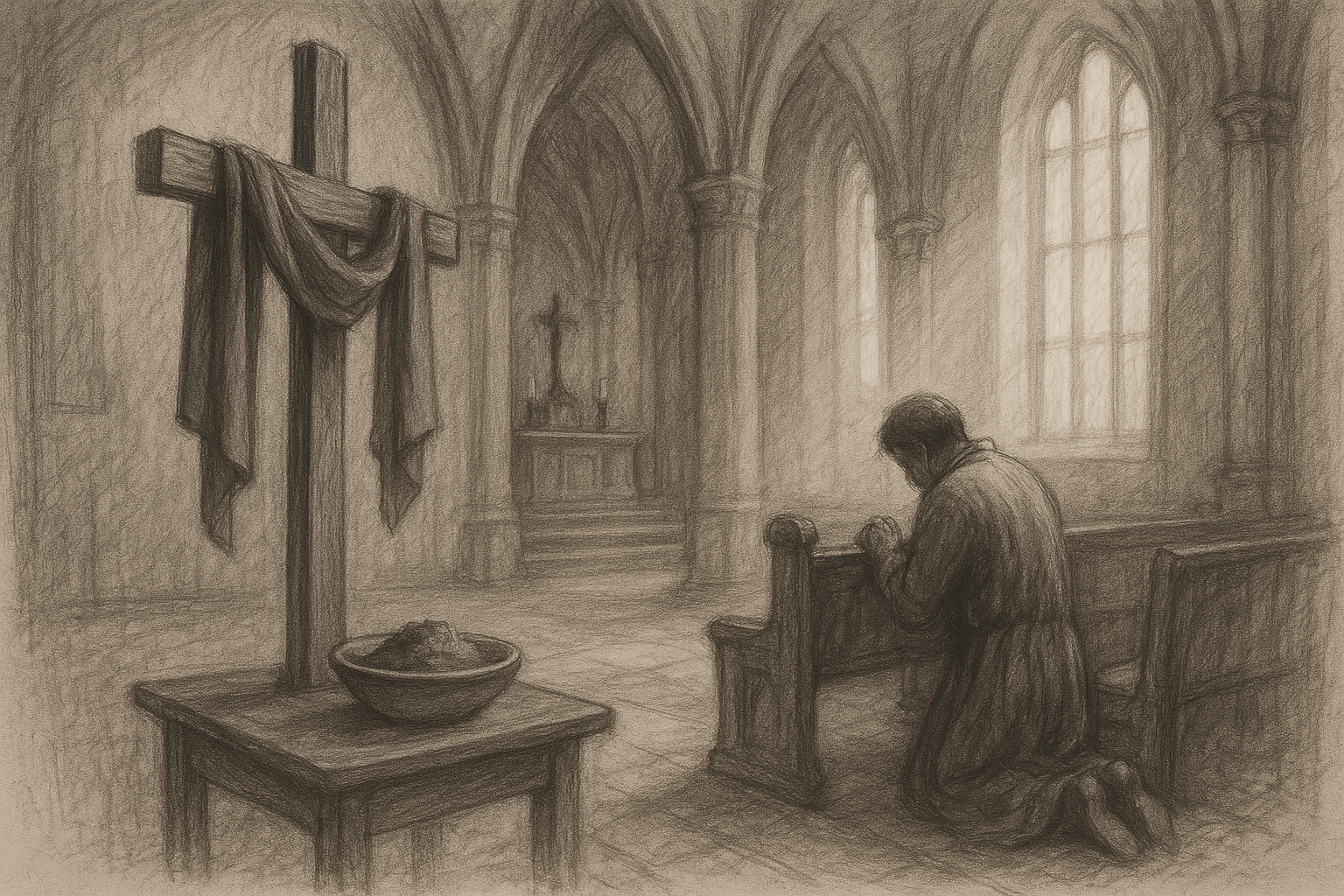
Lent arrives each year with a quiet seriousness. The color changes, the liturgy slows, and the Church places ashes on our foreheads to remind us that we are dust, and to dust we shall return. Yet Lent is not meant to be a gloomy season of self improvement. It is a school of conversion. It teaches Catholics to hunger in a new way, to let the body remember what the soul most needs, and to see fasting not as a private project, but as a response to the mercy of God.
For many Catholics, fasting can feel difficult to explain. Some remember it as a rule from childhood. Others know they should do it, but are unsure what it is for. In truth, the Church's practice of Lent and fasting is deeply human and profoundly biblical. It reaches into the oldest patterns of repentance in Scripture and the life of Christ Himself. The point is not to punish the body. The point is to order the heart.
What Lent is for
Lent is the Church's forty day preparation for Easter. The number forty echoes the great biblical pattern of waiting, testing, and renewal. Israel spent forty years in the desert, Moses fasted forty days on the mountain, Elijah journeyed forty days to Horeb, and Jesus fasted forty days in the wilderness before beginning His public ministry. The Lenten season places Catholics inside that same pattern of spiritual renewal. It is a time to be purified, instructed, and made ready to celebrate the Paschal Mystery with greater faith.
At its center, Lent is about repentance. The Church does not ask us to look inward merely so that we can feel worse about ourselves. She asks us to look inward so that grace can reach the places we usually avoid. Scripture repeatedly joins fasting with conversion of heart. The prophet Joel says, "Return to me with your whole heart, with fasting, weeping, and mourning" (Joel 2:12). Jesus Himself begins His public teaching with the call, "Repent, and believe in the gospel" (Mark 1:15). Lent takes that command seriously.
Fasting also makes room for desire. In ordinary life, many of us are surrounded by constant stimulation. We snack, scroll, sip, and distract ourselves before we have time to notice what is missing. A faithful fast interrupts that pattern. It reveals that not every appetite should be obeyed immediately. More importantly, it teaches us that the deepest hunger of the human person is not for comfort, but for God.
Where fasting comes from
Catholic fasting is not a late invention. It belongs to the life of God's people from the beginning. In the Old Testament, fasting often accompanies sorrow for sin, danger, or earnest prayer. David fasted in repentance. Esther called her people to fast in a time of peril. The people of Nineveh fasted when they heard Jonah's warning, and the Lord showed mercy. Fasting appears whenever the human person acknowledges weakness before God and asks for help that cannot be earned.
In the New Testament, Jesus does not abolish fasting. He assumes it. In the Sermon on the Mount, He says, "When you fast", not if you fast, and He teaches His disciples to fast without performance or vanity ([[VERSE|matthew|6|16-18|Matthew 6:16-18]]). He also explains that after the Bridegroom is taken away, His followers will fast (Matthew 9:15). The early Church took this seriously. Catholics fast because Christians have always understood that bodily discipline can serve spiritual freedom.
St. Paul gives the same sense in another key when he says, "I discipline my body and keep it under control" (1 Corinthians 9:27). This is not contempt for the body. It is the recognition that the body is part of the whole person and must be educated in holiness. The Christian does not seek escape from embodiment. He seeks its redemption.
The Church's liturgical year also shaped fasting. Lent developed as a time of preparation for baptism and for the renewal of the baptized. Those preparing for Easter learned that conversion is not just a feeling. It has a rhythm, a cost, and a grace. The discipline of fasting belonged to that rhythm, along with prayer and almsgiving, because these three together form a single act of turning back to God.
Why fasting matters now
Modern life often rewards ease, speed, and satisfaction on demand. That is one reason fasting remains so valuable. It pushes against the habit of instant gratification. It reminds us that freedom is not the same as indulgence. In fact, a person can become less free by always doing what feels easiest. Fasting restores a little space between desire and action, and in that space, prayer can breathe.
Fasting also helps expose what rules us. It is easy to imagine that we are calm, reasonable people until we are asked to give up a favorite habit. Then impatience appears. Resentment appears. Anxiety appears. These reactions are not failures of Lent. They are often part of its lesson. The fast is like a mirror. It shows us where our hearts have become attached to what cannot save us.
There is also a hidden joy in fasting when it is joined to Christ. The Catholic fast is not a self made ordeal. It is an act of communion with the Lord who fasted in the wilderness, suffered in His body, and offered Himself completely on the Cross. When we fast with faith, we do not simply practice self denial. We join our small sacrifice to His great offering. We say, in effect, that our lives belong to Him and that our appetites must learn their proper place before the Cross.
The Church has always understood fasting as a form of worship. It is a bodily way of saying that God is God, and I am not.
How the Church asks Catholics to fast
The Church gives Catholics a basic Lenten discipline so that the season is not left entirely to personal improvisation. On Ash Wednesday and Good Friday, Catholics from the age established by the Church are asked to fast, and to abstain from meat on those days. On the Fridays of Lent, Catholics are also asked to abstain from meat. These practices are not meant as mere external rules. They are a common school of penance shared by the whole Church.
At the same time, the Church leaves room for prudence. Those who are ill, pregnant, elderly, or otherwise unable to fast should not endanger their health. The point is never to perform holiness at the expense of charity or common sense. Real fasting is humble. It accepts the concrete limits of the body and seeks to serve God within them.
It is also helpful to remember that fasting is broader than food. The Church's tradition includes other kinds of discipline, such as limiting entertainment, cutting back on unnecessary noise, and being more deliberate with speech, spending, and screen time. These are not replacements for liturgical fasting, but they can support it. A person who fasts from excess in one area often becomes more alert to excess in others.
How to live Lent and fasting more deeply
For the ordinary Catholic, the best Lenten fast is usually simple enough to keep and serious enough to matter. A useful question is not, What can I prove? but, What helps me turn toward God? A fast should be honest, sustainable, and connected to prayer. If it becomes a performance, it loses its spiritual purpose.
One good place to begin is with food. Choose one or two specific practices and keep them faithfully. That may mean eating less, skipping dessert, giving up snacks, or simplifying meals on certain days. The goal is not dramatic discomfort. The goal is to feel, in some small way, that you depend on God more than on pleasure. Small sacrifices made steadily can be more fruitful than large promises that collapse after a week.
Prayer should accompany the fast. If fasting is detached from prayer, it can become self help or self pride. Try beginning the day with a short offering. Read a passage of the Passion. Pray the Stations of the Cross. Spend a few more minutes in silence after Mass. The fast becomes more Christian when it leads the heart toward Christ rather than toward mere self management.
Almsgiving belongs here as well. Lent is not meant to turn inward in a narrow way. It opens outward in mercy. What we refrain from consuming can become something we share. A simple meal can make room for generosity. Less spending can make room for giving. Time saved from distraction can become time given to someone in need. In this way, fasting becomes love in concrete form.
Confession is another natural companion to Lent. The season asks us not only to give up something, but to examine what must be surrendered in the heart. Regular sacramental confession during Lent can clarify what our fasting is really for. It reminds us that penance is not self improvement but reconciliation. The Lord is not merely asking us to be stronger. He is asking us to come home.
For families, Lent should be realistic and shared. Children do not need elaborate rules that they cannot understand. They benefit from simple patterns that link sacrifice to prayer and joy. A family might fast from sweets on Fridays, pray together after dinner, read a Gospel account of the Passion, or give a portion of what they save to charity. The point is to let the household learn, together, that love can be expressed through restraint.
Those who are new to fasting should start modestly. A small, faithful discipline is far better than an ambitious plan that vanishes in a few days. The purpose is not to impress anyone. It is to create a truthful rhythm of repentance. Lent is long enough to teach patience, but not so long that grace is absent. It is a season designed to carry us, one day at a time, toward the joy of Easter.
Fasting as Eucharistic preparation
There is a deep connection between fasting and the Mass. Catholics fast because they know they are hungry for a feast that the world cannot give. The Eucharist is not a reward for perfect people. It is the food of pilgrims. Fasting can help us approach the altar with greater reverence, greater awareness, and greater gratitude. It says that Communion is not one more thing to consume, but a gift to receive.
In this sense, Lent teaches us Eucharistic longing. When we deny ourselves in little ways, the gift of the Lord's Body and Blood becomes even more precious. Hunger, rightly ordered, can awaken worship. The Christian fast does not end in emptiness. It ends in desire made ready for fulfillment, in a soul trained to say, with patience and hope, that Christ alone satisfies.
So Lent is not about becoming stern or impressive. It is about becoming available. By fasting, praying, and giving, Catholics create a little more room for grace. We learn to live with less noise and more truth. We learn that the body can serve the soul, that desire can be purified, and that every hunger is finally a sign pointing toward God. And when Easter comes, the feast will taste more like a gift because we have learned, however imperfectly, how to wait for it.
Keep Reading on Lets Read The Bible
Frequently Asked Questions
What is the main purpose of fasting during Lent?
The main purpose is conversion. Lent uses bodily discipline to help Catholics repent, pray more deeply, and make room for God.
Do Catholics have to fast every day of Lent?
No. The Church requires fasting on Ash Wednesday and Good Friday for those bound by the discipline, and abstinence from meat on those days and on the Fridays of Lent. Many Catholics also choose additional voluntary penances.
Can fasting be more than giving up food?
Yes. While food fasting is central, Catholics often also fast from entertainment, excess spending, social media, or other distractions so that prayer and charity have more room to grow.