Jesus and the Gospels
Bartimaeus at the Roadside: A Gospel Scene of Faith, Mercy, and Courage
The blind beggar who would not be silenced reveals how the Lord hears faith that calls out from the margins.
Site Admin | February 2, 2026 | 99 views
Among the many healing scenes in the Gospels, the healing of blind Bartimaeus in the Gospel stands out for its clarity and force. The story is brief, but it carries a great deal of spiritual weight. Bartimaeus is not a distant figure in a crowd. He is named, he is heard, and he is changed. He sits by the road as Jesus passes, and by the end of the encounter he is no longer begging on the roadside but following the Lord on the way.
The account is found in the Synoptic Gospels, especially in Mark 10:46-52 and Matthew 20:29-34, with Luke offering a closely related scene in Luke 18:35-43. In Mark, Bartimaeus is called by name and cries out, "Jesus, Son of David, have mercy on me!" That cry is the heart of the passage. It is simple, direct, and filled with faith. He sees more clearly than many who still have physical sight, because he recognizes who Jesus is.
The scene on the road
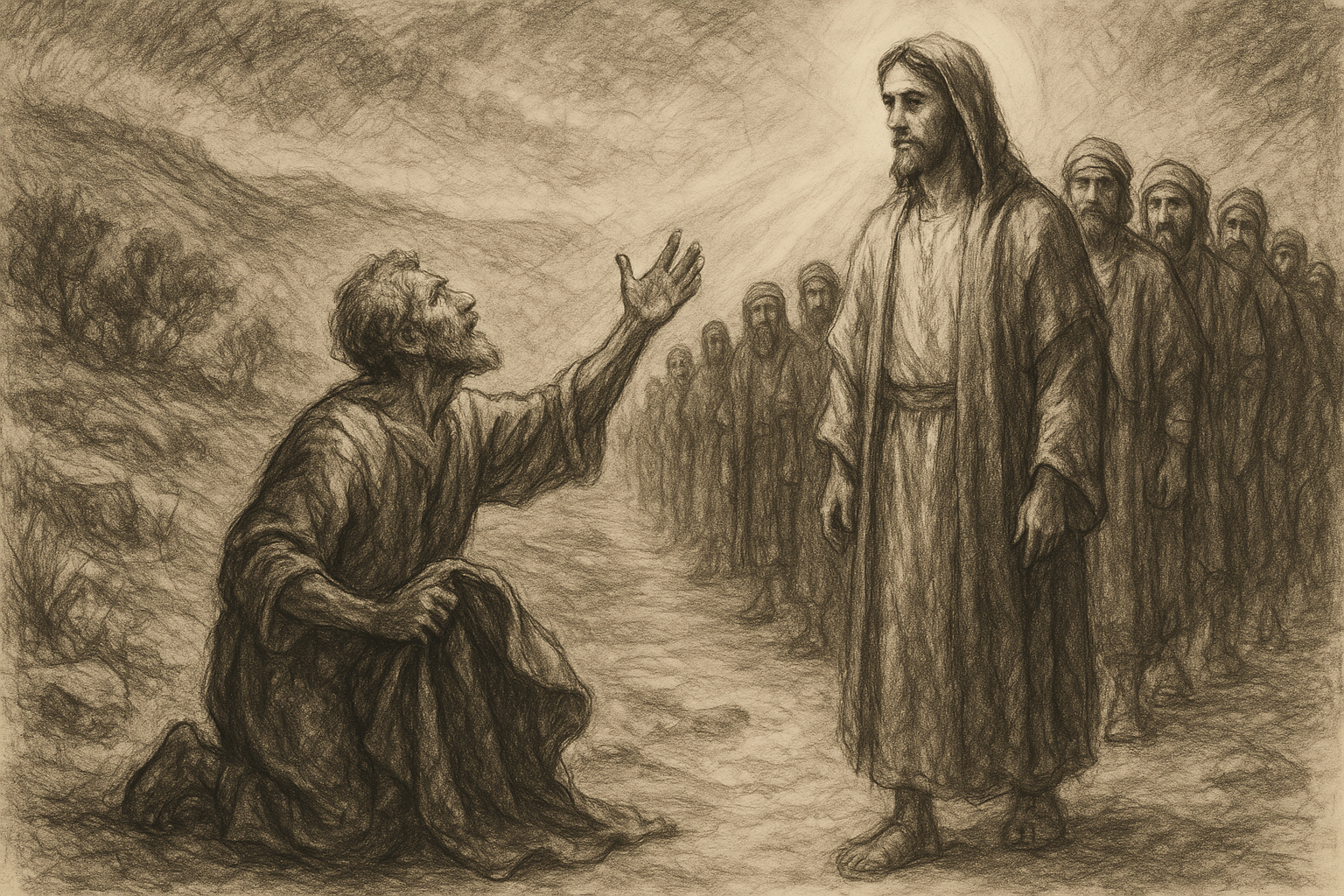
Mark places Bartimaeus outside Jericho as Jesus is leaving the city with his disciples and a large crowd. The setting matters. Roads in the Gospel are often places of transition, where one life meets another and where the Lord reveals himself on the way. Bartimaeus is seated beside that road, not moving with the procession, not included among the travelers, but waiting in a condition of need.
His blindness is not only a personal suffering. In the biblical world, blindness often signified vulnerability, dependence, and exclusion from ordinary work and public life. Bartimaeus lives by begging. He is socially at the edge, seen by many but honored by few. Yet the Gospel does not treat him as a background figure. Jesus stops for him. That alone tells us something about divine mercy. The Lord is never too busy for the person whom others overlook.
When Bartimaeus hears that Jesus of Nazareth is passing by, he begins to cry out. The crowd tries to silence him, but he cries out all the more. This detail is important. Faith is not always quiet in the beginning. Sometimes it is urgent. Sometimes it has to speak over the voices that tell it to wait, to be ashamed, or to accept its condition as permanent. Bartimaeus refuses to let the crowd decide his destiny.
His cry reveals his faith
Bartimaeus addresses Jesus as "Son of David," a title loaded with messianic meaning. He is not merely asking a healer for help. He is confessing that Jesus is the promised one, the king from David's line, the One in whom Israel's hope is fulfilled. His words are an act of faith before they are an appeal for relief.
He also pleads for mercy, not entitlement. That is another mark of true prayer. Bartimaeus does not present a list of merits. He comes in need. The Church has long treasured that posture of the heart. In the liturgy, in the penitential life, and especially in prayer of the poor in spirit, we learn to say, in effect, that our hope is in the mercy of God, not in our own strength. Bartimaeus becomes a model of the soul that knows how to beg rightly.
The crowd's rebuke is part of the story too. Human beings often get in the way of grace, even without intending to. A discouraged person may need only one more reason to stop praying. Bartimaeus receives the opposite. He is told to take courage because Jesus is calling him. The same voice that the crowd tried to drown out is now drawing him near.
And throwing off his cloak, he sprang up and came to Jesus. Mark 10:50
That detail of the cloak is memorable. For a beggar, the cloak may have been his outer covering, his place to gather alms, and perhaps one of the few possessions he could call his own. Leaving it behind suggests readiness, trust, and decisive movement. When Christ calls, Bartimaeus does not negotiate from a distance. He rises.
Jesus asks a question that opens the heart
Jesus' question seems almost unnecessary: "What do you want me to do for you?" Mark 10:51 Yet in the Gospels, Christ often asks questions not because he lacks information, but because he wants the person before him to name his desire. Prayer becomes more honest when it is specific.
Bartimaeus answers plainly: "Master, let me receive my sight." The request is direct, and so is the healing. Jesus says, "Go your way; your faith has made you well." In Luke's account, Jesus adds, "Receive your sight." The miracle is not presented as technique, spectacle, or force. It is the fruit of faith meeting mercy.
Catholic readers may notice that the healing is both physical and spiritual in its resonance. The Gospel never reduces salvation to interior feeling alone, but it also never treats bodily healing as merely practical. Jesus is Lord of the whole person. He cares for eyes, bodies, souls, consciences, and destinies. Bartimaeus' restored sight is a sign of the kingdom in which Christ makes all things new.
The meaning of Bartimaeus for Catholic discipleship
The Church does not read this story only as a record of a miracle from long ago. It remains a living image of discipleship. Bartimaeus shows what it looks like to come to Christ with persistence, humility, and trust. He also shows what happens when a person accepts the mercy of Jesus and follows him without hesitation.
One of the strongest lines in Mark's account comes after the healing: "And immediately he received his sight and followed him on the way." Mark 10:52 That is the real end of the story. Sight is restored so that discipleship can begin anew. Healing is not an endpoint in itself. It is a doorway.
This is a good correction for modern religious thinking, which sometimes imagines that Jesus exists mainly to solve immediate problems. The Gospel is bigger than that. Christ heals in order to bring people into communion with himself. The healed person is called not just to enjoy relief, but to walk after the Lord.
The Catholic tradition has often reflected on the deeper meaning of blindness and sight. Physical blindness in Scripture can point to the soul's need for illumination. Many people have functioning eyes and still struggle to see God at work, to recognize sin honestly, or to understand their vocation. In that sense, Bartimaeus is not unlike any Christian who must ask the Lord for clearer vision. We need grace to see ourselves truthfully, to see others with charity, and to see Christ as the treasure above every other good.
What this Gospel teaches about prayer
Bartimaeus offers several lessons for prayer that remain practical and accessible.
First, pray from need without embarrassment. Bartimaeus does not hide his poverty. He names it. Many prayers are weak because they are vague, but the Lord meets us in honest need. Prayer is not performance. It is dependence.
Second, keep praying when resistance comes. The crowd tells Bartimaeus to be silent, yet he cries out more loudly. A Catholic life of prayer will always encounter distractions, discouragement, and the temptation to quit. Persistence is not stubbornness for its own sake. It is trust that Jesus is worth the effort.
Third, listen when Christ calls. Bartimaeus moves from crying out to rising up. Prayer is not only speech. It is also readiness. When the Lord invites, delays can become disobedience.
Fourth, name your desire clearly. Jesus asks what Bartimaeus wants. The man does not answer with generalities. Many of us know we need help, but we struggle to say what kind. Prayer becomes more disciplined when we bring our concrete needs before God: conversion, healing, peace, patience, forgiveness, or the courage to begin again.
Fifth, let healing lead to following. The gift is never meant to end with ourselves. The restored disciple belongs on the road with Christ, not back in isolation.
A Church shaped by mercy
Bartimaeus also helps us understand the Church's missionary and sacramental life. The Church exists to announce the mercy of Jesus and to lead people toward him. She is at her best when she makes room for the poor, the suffering, and the inconvenient cry that others might ignore. The Gospel does not permit the faithful to be comfortable with indifference.
The story also echoes the sacramental imagination of Catholic life. God works through visible signs to confer invisible grace. In this passage, a word, a call, and a healing act all come together. The Lord does not disdain material reality. He uses it to save. That pattern is familiar in the sacraments, where water, oil, words, touch, bread, and wine become instruments of divine life by Christ's own power.
At the same time, the healing of Bartimaeus reminds us that suffering is not always removed at once, and not every prayer for bodily healing is answered in the way or time we expect. The Church never promises an easy road. But she does promise that Christ hears, that his mercy is real, and that no suffering is wasted when united to him. Bartimaeus shows us how to pray when we do not have control over the outcome: with confidence, humility, and continued trust.
Seeing the Lord on the way
There is a quiet beauty in the final image. Bartimaeus is no longer alone by the roadside. He is following Jesus. The one who had been unable to see now walks behind the One who is the light of the world. That is the pattern of Christian life in miniature. We begin in poverty. We cry out for mercy. Christ hears us. He opens what is closed. Then he leads us onward.
For Catholics, the healing of blind Bartimaeus in the Gospel remains an invitation to live with that same boldness. The Lord still passes by. He still listens to the cry of faith. And he still gathers the healed into his company, not as spectators, but as disciples who know where to look and whom to follow.
Keep Reading on Lets Read The Bible
Frequently Asked Questions
Why does Bartimaeus call Jesus the Son of David?
Bartimaeus uses a messianic title that identifies Jesus as the promised heir of David and the one who brings God's saving reign. His cry is already an act of faith, not just a request for help.
What is the Catholic significance of Bartimaeus throwing off his cloak?
The cloak suggests Bartimaeus is leaving behind what once defined his old life and moving toward Christ with trust. Catholics often see in this a sign of readiness, detachment, and sincere conversion.
How can Catholics pray with the example of Bartimaeus today?
We can pray honestly about our needs, persist when distractions or discouragement arise, and remain open to following Jesus after we ask for help. Bartimaeus teaches prayer that is humble, specific, and persevering.