Family and Vocation
Forgiveness at Home: The Quiet Work That Repairs a Family
In the daily life of a Christian household, mercy is not an ideal reserved for rare moments. It is a practice that steadies love after disappointment, hurt, and grief.
Site Admin | November 14, 2025 | 66 views
Forgiveness Begins Where Love Is Tested
Families are meant to be places of tenderness, but they are also places where wounds are easily given. The people who know us best can also wound us most deeply, not always through great betrayals, but through repeated neglect, sharp words, favoritism, silence, or old resentments that harden over time. A forgiveness inside the family reflection must begin with this plain truth: love at home is real, but it is often bruised by ordinary sin.
Scripture does not idealize family life. It shows brothers who resent one another, parents who grieve their children, and households that struggle under sin and misunderstanding. Yet the Bible also reveals that God works within imperfect families, not outside them. Joseph is betrayed by his brothers, then later given the grace to speak mercifully to them. He says, Genesis 50:20: "As for you, you meant evil against me, but God meant it for good." That is not denial of the wrong. It is a sign that grace can enter even the most painful family history.
Mercy at Home Is Rooted in Christ
Christian forgiveness is never a matter of pretending that hurt does not matter. It is a response to the mercy we ourselves have received in Christ. The Lord teaches us to pray, Matthew 6:12: "forgive us our debts, as we also have forgiven our debtors." That line is simple, but it reaches into the heart of family life. If I ask God to treat me with mercy, I must be willing to let that mercy shape how I treat those who live under my roof.
St. Paul gives the same pattern in practical terms: Ephesians 4:32 says, "be kind to one another, compassionate, forgiving one another as God has forgiven you in Christ." The order matters. We forgive not because the offense was small, but because God's forgiveness is greater. In Catholic life, this is not a merely private sentiment. It is part of sanctification, the slow remaking of the human heart by grace.
The Catechism teaches that forgiveness is deeply linked to Christian prayer and reconciliation. To say the Our Father sincerely is to place our own unwillingness to forgive under judgment. That can feel uncomfortable, especially when the wound is old. Yet discomfort is often where conversion begins. God does not ask families to manufacture peace by themselves. He asks them to receive His peace and let it take shape in concrete acts.
The Family Is a School of Mercy
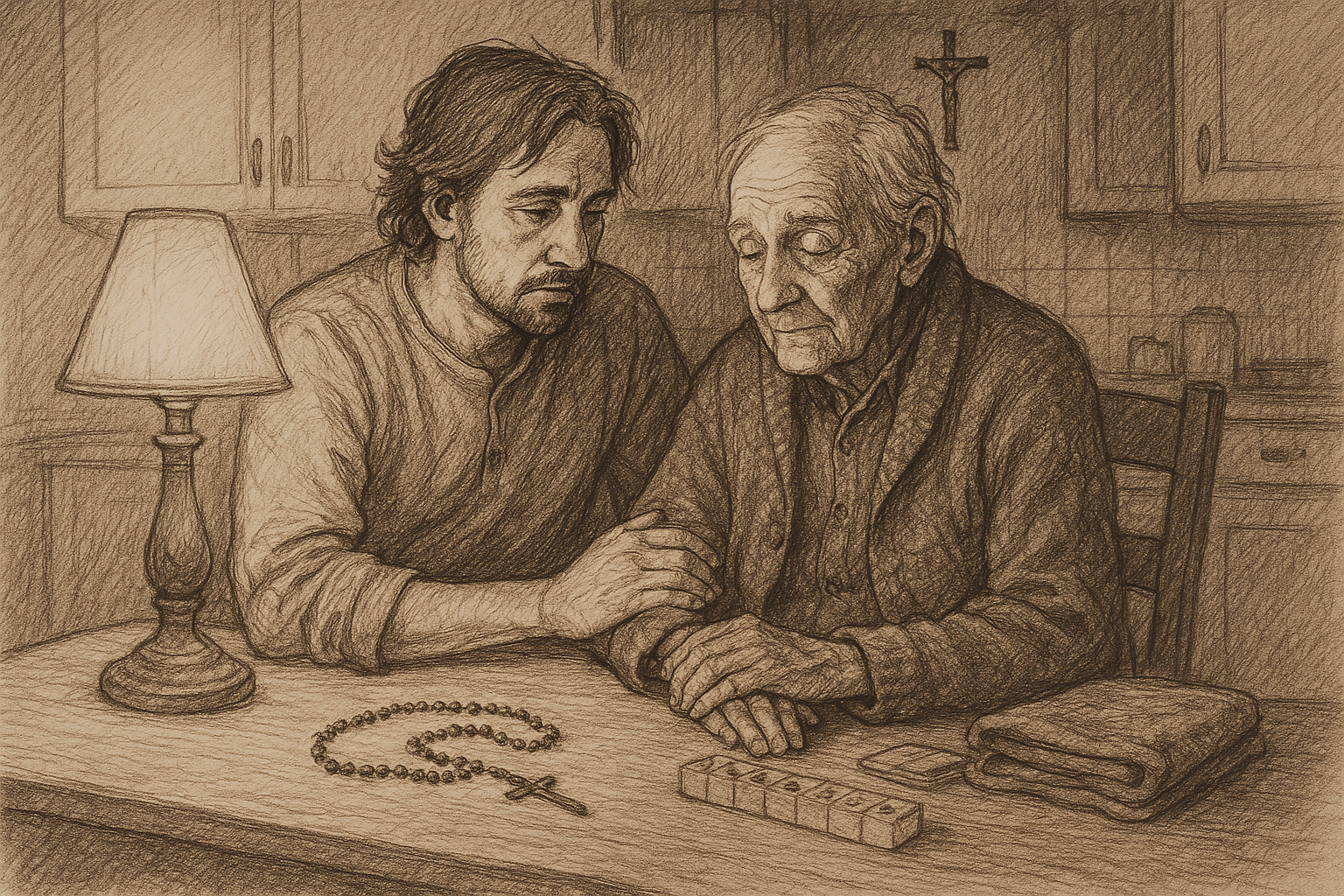
In the ordinary life of a home, forgiveness is often less about one grand reconciliation and more about a thousand small choices. A parent apologizes for speaking harshly. A child admits a lie. Siblings learn to stop keeping score. An adult son returns to a conversation that went badly years ago. A wife or husband chooses not to reopen a wound with the same bitter sentence for the hundredth time. These are small acts, but together they form the culture of a household.
St. John Paul II often spoke of the family as a place where persons are formed for love. Catholic tradition has long understood the home as a domestic church, where faith is lived before it is explained. In that light, forgiveness inside the family is not an optional virtue. It is part of what makes a home capable of bearing the name Christian.
That does not mean every family dynamic is equally healthy or safe. Forgiveness is not the same as allowing abuse to continue. Nor does mercy require that someone remain in danger. Catholic moral life is never built on false peace. It seeks truth, justice, repentance, and reconciliation when possible. Sometimes the first act of love is to establish boundaries, seek help, or tell the truth clearly. Even then, the Christian heart is called to resist revenge and to desire the good of the other, including conversion.
Forgiveness Does Not Erase Truth
One of the hardest misunderstandings about forgiveness inside the family is the idea that forgiving means forgetting, minimizing, or pretending everything is fine. Scripture never teaches that. Joseph forgives, but the story never says his brothers did not sin. The prodigal son is welcomed home, but only after he comes to himself and confesses his need. Forgiveness is not amnesia. It is truth held in the light of mercy.
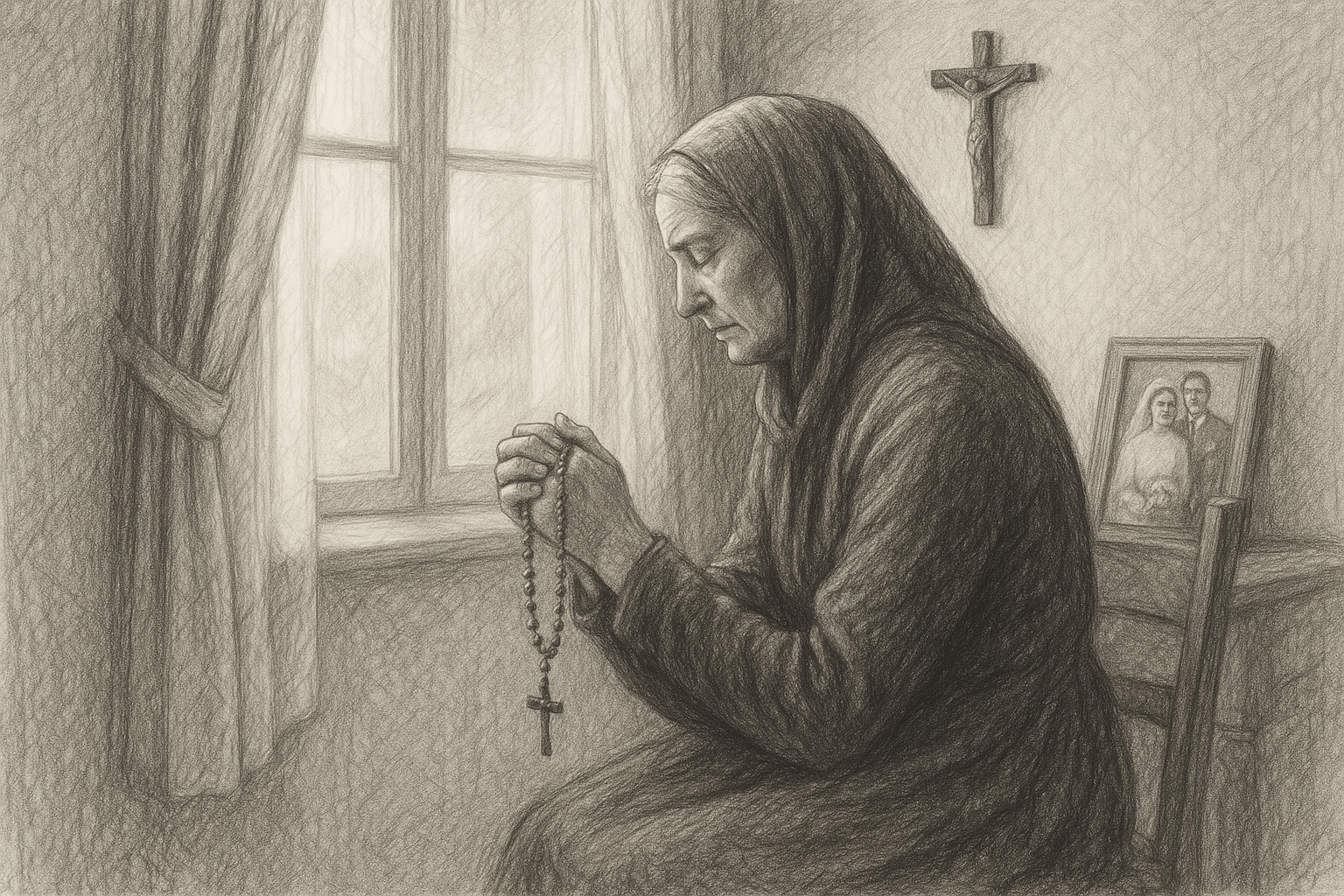
Sometimes people say, "I have forgiven, but I still hurt." That can be completely true. Wounds take time to heal. The emotions may lag behind the will. A person may choose forgiveness long before peace returns to the heart. This is not hypocrisy. It is often how grace works. The will turns first, and the feelings follow slowly.
Here the Cross becomes especially important. Christ does not forgive from a distance. He forgives from within suffering. On the Cross, He prays, Luke 23:34: "Father, forgive them, for they know not what they do." That prayer does not make evil good. It reveals that divine mercy can enter the very place where human sin seems most complete. In a family that has been marked by years of hurt, the Cross teaches that forgiveness may be costly, but it is never empty.
When apology is missing
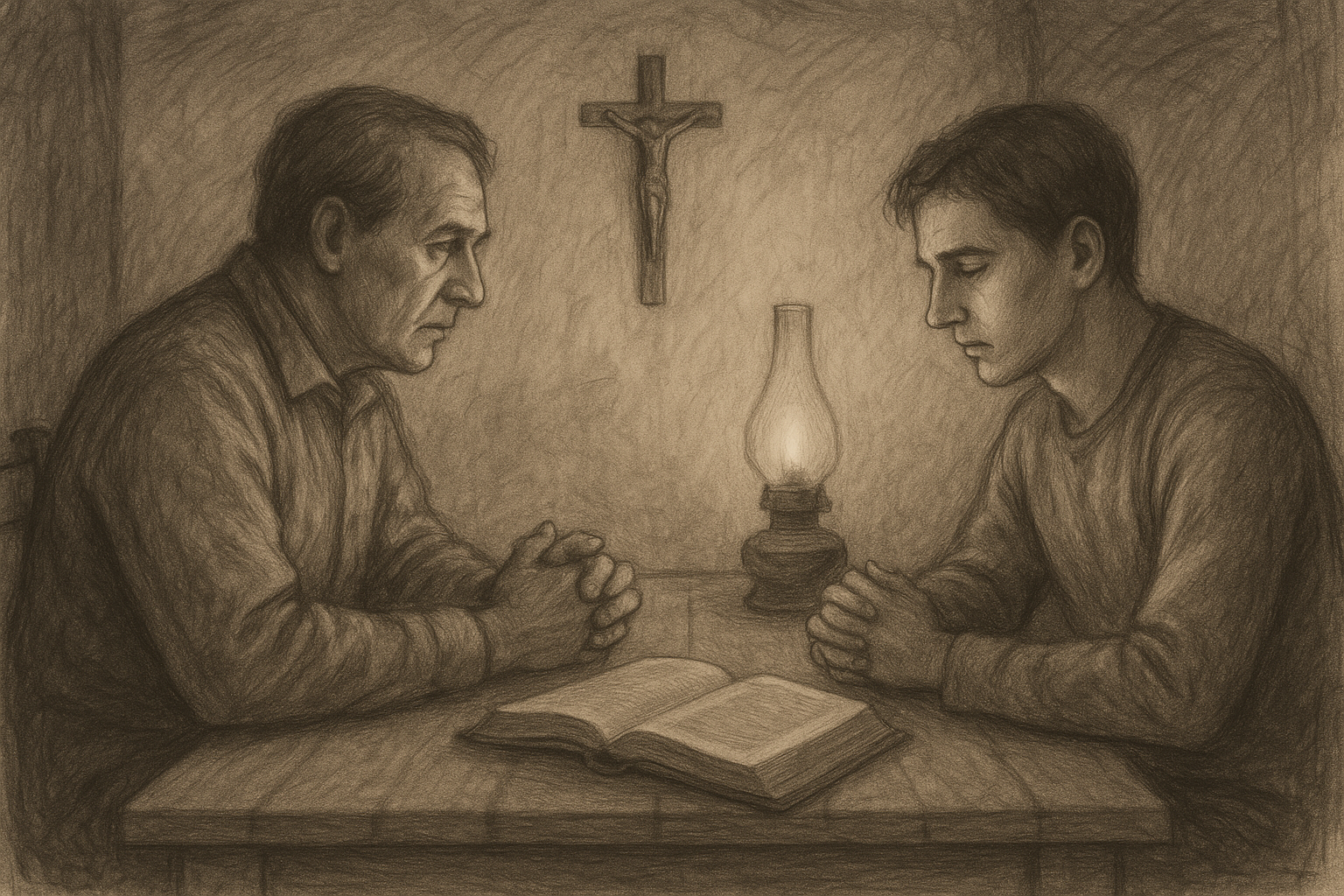
Some families are trapped because no one wants to be the first to speak. Pride keeps the wound open. One person waits for the other to apologize, while time only adds new layers of resentment. In such moments, a Christian may have to begin with a humble, limited sentence: "I want peace between us." That is not the same as denying responsibility. It is an opening toward healing.
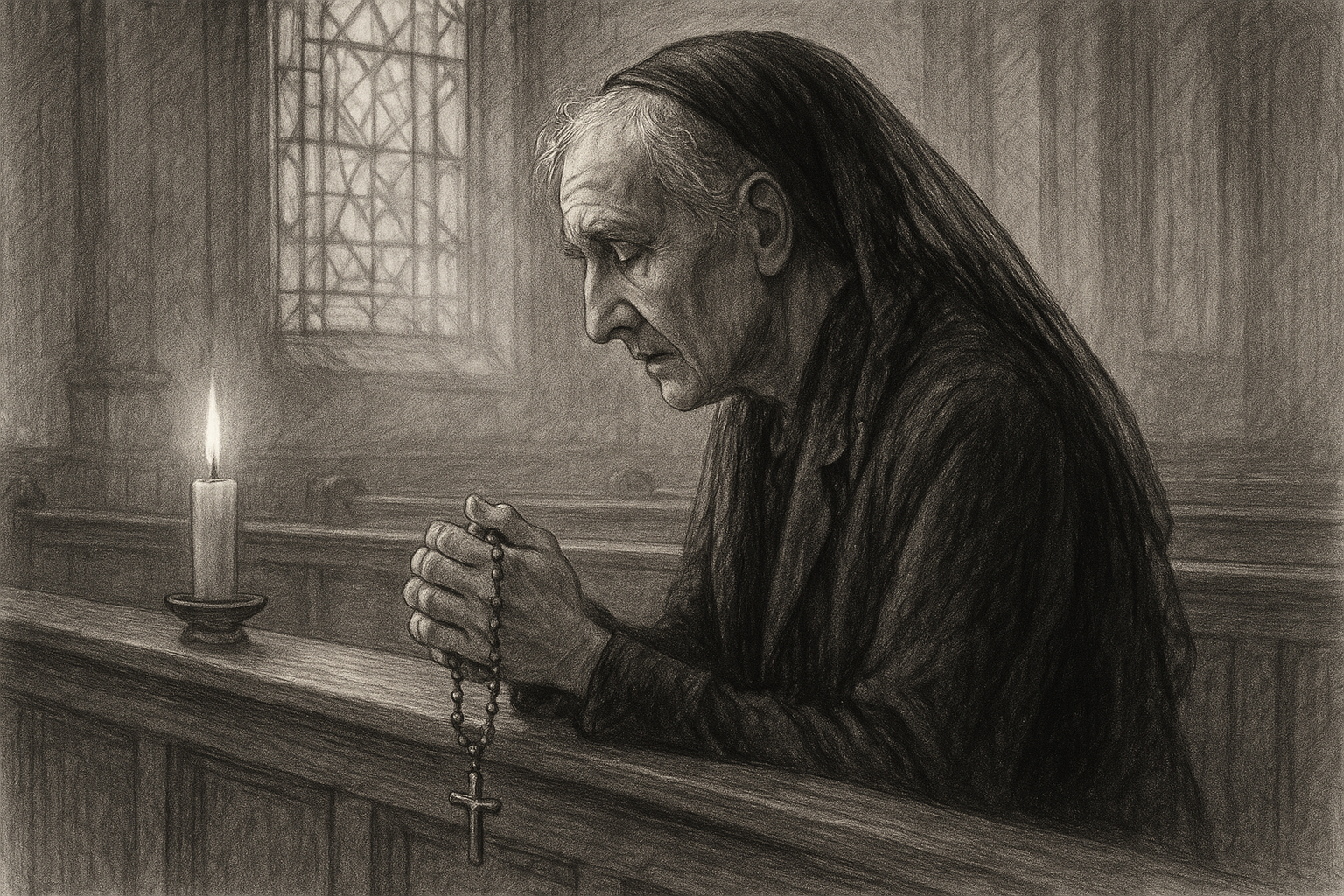
There are also cases where the other person is dead, absent, or still unwilling to admit the wrong. Even then, forgiveness remains possible before God. A person can release the desire to punish, ask the Lord to purify memory, and entrust justice to Him. This is often hidden work, known only to God. Yet hidden work can still be holy work.
Practical Habits That Make Forgiveness Possible
Families are not healed by slogans. They are helped by habits that create room for grace. A Catholic reflection on forgiveness inside the family should therefore become concrete. Consider a few practices that can open the way to mercy:
- Pray before speaking. Even a brief silence can keep a conversation from turning into another injury.
- Use honest words. Say what hurt you without exaggeration or contempt.
- Apologize specifically. A real apology names the offense and does not hide behind vague regret.
- Do not rehearse old offenses for sport. Repeating a grievance can become a way of keeping control.
- Ask for grace in prayer. Sometimes the heart must be taught by repeated acts of petition.
- Seek sacramental help. Confession and the Eucharist strengthen a Christian to live mercy in ordinary life.
These practices do not guarantee immediate reconciliation. But they dispose the heart to it. Catholic life is sacramental and embodied. Grace comes through material lives, speaking mouths, tired shoulders, shared meals, and awkward attempts to begin again. That is not a weakness in God's plan. It is often where His mercy becomes most visible.
The Parable of the Prodigal Son Still Enters Our Kitchens
The father in the parable of the prodigal son is one of the clearest images of mercy in all of Scripture. He does not wait on the road with a lecture. He runs to his son, embraces him, and restores him before the boy can offer a full defense of himself. The older brother, meanwhile, exposes another family wound: resentment at mercy given freely.
Many homes are full of both sons at once. One person longs for welcome. Another feels forgotten, overburdened, or deeply unfairly treated. Forgiveness inside the family often requires that we see ourselves in both figures. We need the Father's mercy, and we need healing from the older brother's self-righteous anger. The parable is not only about one runaway child. It is about the difficulty of loving freely when family wounds have turned love into accounting.
This is why family forgiveness cannot be reduced to mood. It is a discipline of love. A father may need to welcome. A mother may need to speak truth without bitterness. A child may need to stop clinging to a grievance. An adult sibling may need to risk the first phone call. The point is not to produce sentiment. The point is to let mercy become a habit.
Letting Mercy Become a Home Climate
Some homes are marked by tension because no one expects forgiveness to last. Every apology is treated as temporary. Every peace is assumed to be fragile. But Catholic faith offers a different possibility. Through grace, a family can become a place where mercy is not rare. That does not mean conflict disappears. It means conflict no longer has the last word.
A family that forgives is not a family without memory. It is a family that refuses to let memory become poison. It remembers enough to learn, enough to set wise boundaries, enough to guard against repeating the same sin. But it does not use memory as a weapon. It places memory under the light of Christ.
That is perhaps the deepest hope in any forgiveness inside the family reflection: not that every story will be easy, but that no story is beyond grace. Homes can be mended slowly. Old patterns can weaken. Hardened hearts can soften. The road is often long, and the work is usually hidden. Yet the Lord who forgave from the Cross still enters households through prayer, repentance, patience, and the sacramental life of the Church.
Where bitterness has become normal, mercy may begin with one quiet act. A conversation. A confession. A refusal to strike back. A decision to pray for the person who hurt you. These small beginnings are not small to God. In the family, as in the soul, He often starts with what seems fragile and makes it sturdy enough to carry love again.
Keep Reading on Lets Read The Bible
Frequently Asked Questions
Does forgiving a family member mean I have to trust them right away?
No. Forgiveness and trust are related but not identical. Forgiveness can begin before trust is rebuilt. Trust usually needs honesty, repentance, and consistent change over time.
What if the person who hurt me in my family never apologizes?
You can still choose forgiveness before God. That may mean releasing vengeance, praying for the person, and seeking peace without pretending the wound was not real. Reconciliation may not be possible, but forgiveness can still be offered in the heart.
How does confession help with forgiveness inside the family?
The sacrament of Reconciliation reminds us that we are forgiven sinners ourselves. It softens pride, strengthens humility, and helps us receive and give mercy more freely at home.