Catholic Living
Forgiving Deep Hurt Without Denying the Wound: A Catholic Path Forward
Catholic teaching on mercy, justice, and healing when the pain is real and the memory still stings
Site Admin | August 23, 2025 | 91 views
Some wounds are so deep that the word forgiveness can feel almost offensive. When a person has been betrayed, humiliated, neglected, or abused, the call to forgive may sound like a demand to erase pain before it has even been acknowledged. Catholic teaching is more serious, and more merciful, than that. It does not ask the wounded to call evil good. It does not tell anyone to become emotionally numb. It asks something harder and holier: to let grace begin the long work of freeing the heart from hatred, while truth remains intact.
The focus keyword here, forgiveness after deep hurt Catholic teaching, points to a real moral struggle. Catholics believe forgiveness is not optional for disciples of Christ, but we also know that forgiveness is not a shallow mood or a quick private decision. It is a moral act, a spiritual journey, and often a slow healing process. In the face of serious injury, the Church speaks with both clarity and patience.
What forgiveness is, and what it is not
In everyday speech, forgiveness is often confused with immediate reconciliation. But they are not the same. Forgiveness means surrendering the desire for revenge and refusing to let resentment become the master of the soul. Reconciliation means that relationship is restored, which requires repentance, trust, and safety. Sometimes reconciliation is possible. Sometimes it is not. Catholic teaching does not force them together.
Forgiveness also does not mean forgetting. Memory is part of being human, and serious wounds leave marks. A person may forgive and still remember the injury with clarity. That memory can even serve a good purpose by helping one set wise boundaries and avoid further harm. To forgive is not to act as if nothing happened. It is to say that evil will not have the final word in my heart.
Nor does forgiveness require the wounded person to instantly feel warmth toward the offender. Feelings may lag far behind the will. A person can choose forgiveness while still feeling grief, anger, fear, or sorrow. In Catholic moral life, the will matters deeply. We may ask the Lord for the grace to will the good of another, even when emotions remain raw.
Christ's command is demanding because it is real
The Lord speaks plainly about forgiveness. In the Lord's Prayer, we ask, forgive us our trespasses as we forgive. In Matthew's Gospel, Jesus deepens that petition with a sobering warning and a liberating promise: how often must I forgive. These are not small sayings for small injuries. They are given by the One who Himself endured betrayal, false accusation, abandonment, scourging, and death.
Christ does not ask anything of us that He has not first borne in His own flesh. On the Cross He prayed, Father forgive them. That prayer does not deny the injustice of the Passion. It reveals the heart of God toward sinners. Divine mercy does not ignore sin, but it reaches into sin to save. When Christians forgive, they are not making up a private philosophy. They are entering the shape of Christ's own love.
Still, Jesus never confuses mercy with approval of wrongdoing. He forgives sinners, but He also calls them to conversion. The Gospel is full of both tenderness and truth. That balance matters especially for those who have been deeply hurt, because an unhealthy approach to forgiveness can become a way of silencing victims. Authentic Catholic forgiveness never asks a person to deny abuse, remain in danger, or stop pursuing justice.
The Church's moral wisdom on serious injury
Catholic teaching recognizes the seriousness of grave harm. If a wrong has been committed, justice matters. Civil authorities may need to be involved. A harmful relationship may need distance. In some cases, the first duty is protection, not contact. Forgiveness does not cancel prudence. It does not require returning immediately to the source of danger.
The Catechism teaches that forgiveness is rooted in God's mercy and is essential to Christian life. Yet the Church also knows the difference between forgiving and excusing. Sin is sin. Abuse is abuse. Betrayal is betrayal. The moral truth must be named clearly, especially when the injured person has already been pressured to minimize what happened. A Catholic response to deep hurt should never become a cover for cruelty.
This is one reason pastoral care is so important. A priest, spiritual director, counselor, or trusted mature Catholic friend can help someone discern what forgiveness looks like in a concrete situation. The right path may include therapy, confession, prayer, support groups, or a carefully bounded process of contact or no contact. Grace does not replace wise help. It often works through it.
Forgiveness is a choice that often begins in pain
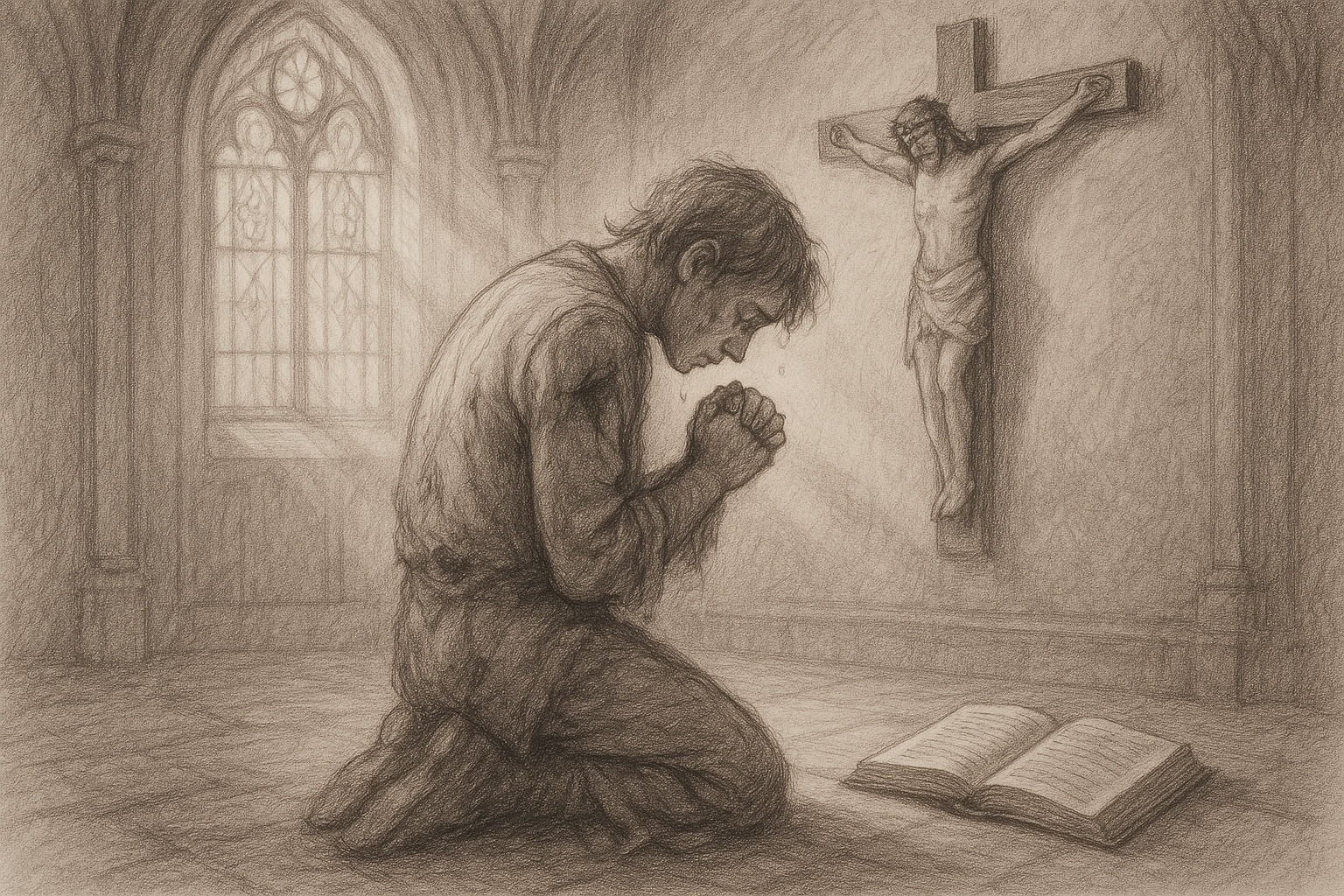
Many people imagine that forgiveness must feel generous from the start. In reality, it often begins with a simple and difficult act of the will: Lord, I do not want hatred to own me. That prayer may be spoken through tears. It may be repeated many times. Sometimes the most honest first step is not, I feel forgiven, but, I want to be open to your grace.
This is where Catholic teaching is especially consoling. The Church does not say that healing must happen instantly. She knows that human hearts are wounded by sin and that sanctification is gradual. A person may need to forgive in stages. First comes honesty about the wound. Then comes the refusal to revenge. Then comes the slow surrender of bitterness. Later, perhaps much later, comes a freer heart, able to pray sincerely for the offender's conversion.
It helps to remember that forgiveness is not a sentimental performance. It is an act of mercy shaped by the Cross. Mercy is not weakness. It is strength surrendered to God. It says that my pain is real, justice matters, and I refuse to let evil reproduce itself in me.
Forgiveness does not make the wound unreal. It places the wound in the hands of Christ, who knows both suffering and mercy.
Practical steps for the wounded heart
When the hurt is deep, abstract advice is not enough. Catholic living asks for concrete habits that can support grace over time.
- Name the wound truthfully. Before forgiveness can mature, the injury must be acknowledged without self-deception.
- Bring it to prayer often. Simple prayer is enough at first: Jesus, I give You this pain. Help me not to hate.
- Use the sacrament of Reconciliation. Confession can reveal where resentment has hardened and where mercy is needed.
- Seek help when the hurt is severe. Trauma, abuse, and chronic betrayal often require pastoral and professional support.
- Set wise boundaries. Forgiveness may be fully present even when contact must remain limited or impossible.
- Pray for the grace to will good, not harm. This can begin as a very small and difficult prayer.
It is also useful to keep the distinction between forgiveness and trust. Trust must be earned. If someone has broken trust deeply, a forgiven person may still require distance, accountability, or proof of repentance before any relationship can be rebuilt. Catholic teaching is realistic about the fragility of human promises.
Sometimes one of the most healing prayers is simply the Our Father, prayed slowly. Each petition can become a place where the heart is examined. When we say, forgive us our trespasses as we forgive, we are not pretending that forgiveness is easy. We are asking God to make us capable of what He commands.
Justice, mercy, and the refusal to let evil multiply
There is a temptation, after deep hurt, to think in extremes. One extreme says, I must forgive, so I must act as if justice no longer matters. The other says, I cannot forgive, so I must keep nursing resentment until the debt is paid in suffering. Catholic faith rejects both. Mercy and justice belong together in God, and they must be held together in our lives as well.
Justice seeks what is due. It protects the innocent, names wrongdoing, and asks for accountability. Mercy seeks the healing of the sinner and the good of the wounded. In the life of a Christian, mercy does not destroy justice, and justice does not exclude mercy. When forgiveness is authentic, it keeps open the possibility that God may transform even a guilty heart without erasing responsibility.
This balance is especially important when the wrong has come from within a family, a parish, or another trusted place. In such cases, the pain often includes shame, confusion, and the burden of silence. A Catholic response should make room for lament. The Psalms do. Jesus does. So do the saints. Bringing sorrow honestly before God is not a lack of faith. It is often the beginning of healing.
Hope for the long road
Deep hurt can leave a person feeling spiritually tired. The heart may wonder whether forgiveness is possible at all. The good news is that grace works patiently. God is not impatient with the wounded. He does not mock slow healing. He enters it. He bears it. He sanctifies it.
For some, the first sign of progress is not emotional peace but the absence of a desire to strike back. For others, it is being able to pray without bitterness for a few seconds longer than before. For others still, it is the day they realize the wound no longer defines every thought. These are real graces. Small steps matter in the life of faith.
Catholic hope does not say that every relationship will be restored or every tear removed quickly. It says that no pain is wasted when surrendered to Christ. The Crucified and Risen Lord can take what was done in darkness and begin to heal it from within. He can teach the heart how to forgive without lying, how to remember without poisoning the soul, and how to seek justice without losing mercy.
That is why forgiveness after deep hurt is not the erasure of truth. It is truth carried into the light of God. It is a difficult yes to grace, spoken in the middle of grief, and repeated until the heart learns a freedom it could never manufacture on its own.
Keep Reading on Lets Read The Bible
Frequently Asked Questions
Does forgiving someone mean I have to trust them again?
No. Catholic teaching distinguishes forgiveness from trust. You can forgive while still requiring distance, boundaries, or proof of repentance before trust is rebuilt.
Is it sinful if I struggle to forgive after being seriously hurt?
Struggling is not the same as refusing grace. The Church recognizes that deep wounds can make forgiveness slow. What matters is not pretending the pain is gone, but remaining open to God's help and refusing vengeance.
Can I forgive and still seek justice or report abuse?
Yes. Forgiveness does not cancel justice. If a wrong has occurred, especially abuse or serious harm, seeking protection, accountability, or legal reporting can be part of a faithful Catholic response.