Church History
Pius X and the Quiet Strength of a Shepherd in Turbulent Times
How a humble pope met the crisis of modernism with clarity, reverence, and pastoral courage
Site Admin | January 5, 2026 | 81 views
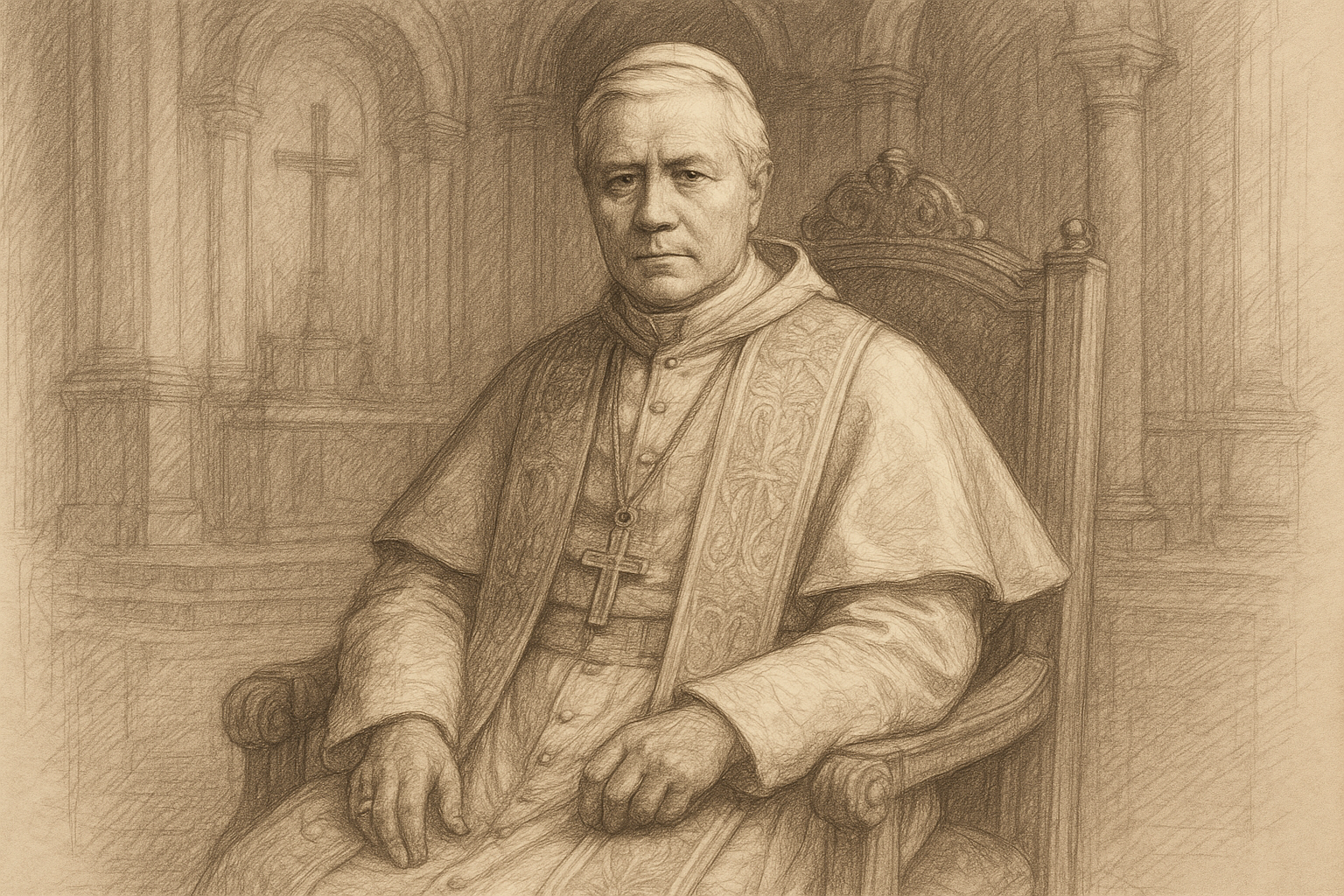
Among the great shepherds of the modern era, Pope St. Pius X holds a special place. He was not a pope of grand theories or elaborate public image. He was a pastor formed by ordinary parish life, strong in catechesis, close to the sacraments, and convinced that the Church serves souls best when she speaks the truth plainly. That is one reason Pope St. Pius X Catholic history still matters. His pontificate was shaped by a struggle that has never really disappeared: how to remain faithful when pressure builds to soften doctrine, dilute worship, and treat revelation as something that can be reshaped to fit the age.
To understand Pius X, it helps to remember the world he entered. Giuseppe Sarto became pope in 1903, at a time when Europe was changing rapidly. New philosophical systems were questioning certainty itself. Some thinkers inside the Church began to argue that dogma was less a fixed truth received from Christ and more a changing expression of religious experience. This movement came to be known as modernism. Pius X saw clearly that the issue was not simply academic. If faith becomes whatever each generation feels it should be, then revelation loses its divine character, and the Church becomes just another human institution trying to keep up.
His response was not panic. It was clarity. In 1907 he issued the encyclical Pascendi dominici gregis, which examined modernism with great seriousness. The document did not treat errors as harmless opinions. It identified the theological roots of the crisis and warned that when faith is reduced to private sentiment or historical reconstruction alone, the supernatural life of the Church is put at risk. Pius X did not invent a crisis. He named one that had already entered seminaries, publishing houses, and intellectual circles.
For Catholics today, the value of this teaching is obvious, even if the vocabulary has changed. We still live in a world that often prefers feelings to truth and personal preference to doctrine. The temptation to remake the faith is perennial. Pius X reminds us that Catholicism is not a spiritual opinion poll. It is the reception of a living revelation entrusted by Christ to His Church. As Scripture says, stand firm and hold to the traditions. That command is not nostalgia. It is fidelity.
A pope formed by parish life
Pius X was born in humble circumstances and knew the life of ordinary Catholics from within. Before the papacy, he served as a parish priest, spiritual director, bishop, and cardinal. That background shaped the entire tone of his pontificate. He was not primarily a court figure or a political strategist. He was a pastor who believed that the Church's health begins with holiness, sound preaching, worthy worship, and access to the sacraments.
That pastoral instinct is one reason he remains so readable. He did not separate doctrine from devotion. For him, truth was never a cold abstraction. It was something to be loved, prayed, and lived. He understood that a weak catechesis leads to a weak Church. If Catholics do not know the faith, they cannot defend it. If they do not receive the sacraments worthily, they cannot flourish spiritually. His reforms therefore touched real life, not just ideas.
One of his most enduring decisions was the encouragement of frequent Communion. In 1905, the decree Sacra Tridentina Synodus urged the faithful to receive Holy Communion often, provided they were properly disposed. This was a major pastoral contribution. In some places, Catholics had grown accustomed to infrequent reception of the Eucharist out of fear or scrupulosity. Pius X helped recover a more robust sacramental life by reminding the faithful that the Eucharist is food for the weak, not a prize for the already perfect.
He also lowered the age for First Communion, encouraging children to receive the sacrament once they reached the age of reason and could distinguish the Eucharist from ordinary bread. This reform was not sentimental. It reflected confidence in grace. He wanted children to meet Christ early and to be formed by His presence in the Church. That instinct remains wise. A Catholic culture that delays the introduction of children to the sacraments is often a Catholic culture that weakens its own future.
Modernism and the battle over truth
Modernism was not simply one error among many. Pius X saw it as a kind of synthesis of errors. It questioned whether miracles really happened, whether dogma could remain fixed, and whether the Church could claim to teach objective truth. Under modernist thinking, doctrine becomes a symbol of religious feeling, and revelation becomes a record of evolving human consciousness. At that point, the supernatural is no longer central. Faith becomes a personal journey detached from the authority of Christ.
Pius X judged this carefully because the stakes were high. If one accepts the modernist premise, then every major article of the Creed can be reinterpreted. The Resurrection becomes an inspiring witness rather than a real event. The sacraments become communal rituals rather than channels of grace. The Church's teaching authority becomes advisory instead of binding. Once that logic spreads, the Church may keep her language, but she quietly loses her identity.
The saintly pope was firm because he loved souls. He did not see doctrine as a cage but as a safeguard. The truth of the faith protects believers from being swept away by every intellectual trend. Catholics do not need to fear serious thought. The Church has always welcomed reason. But reason is not the same as skepticism, and historical study is not the same as unbelief. Pius X insisted that scholarship must remain within the horizon of faith, not above it as a judge that dismisses revelation.
That insight still speaks today. Many Catholics are tempted to think that intellectual credibility requires surrendering too much. Pius X shows a different path. The Church can be intellectually serious without conceding the divine origin of her faith. Indeed, she must be. As Jesus says, the truth will set you free. Freedom does not come from endlessly revising truth. It comes from receiving it.
His reform of worship and discipline
Pius X was not only a defender of doctrine. He was also a reformer of the Church's worship. In his 1903 motu proprio Tra le sollecitudini, he addressed sacred music and called for the restoration of more reverent liturgical practice. He favored chant and sacred music that served prayer rather than performance. This concern was deeply pastoral. If the liturgy is meant to raise minds and hearts to God, then its forms should reflect sacred purpose rather than worldly entertainment.
He also worked to simplify and clarify parts of the Breviary and the Roman Curia. These reforms were not flashy, but they were practical. They revealed his instinct for order in service of holiness. Pius X believed that the Church should not be cluttered by habits that obscure the essentials. Simplicity, rightly ordered, can help the faithful see Christ more clearly.
Another important feature of his pontificate was his concern for clergy formation. He knew that weak priests produce weak preaching and weak catechesis. A priest formed in prayer, doctrine, and obedience is better able to guide souls. For that reason, Pius X's era offers a sober lesson: the renewal of the Church begins with formation that is serious, prayerful, and faithful to the Magisterium. No strategy can replace sanctity.
In every age, the Church needs shepherds who will love souls enough to tell the truth, and truth enough to defend the sacraments that nourish those souls.
The pastoral side of doctrinal firmness
Some people imagine that firmness in doctrine must be cold or harsh. Pius X proves otherwise. His firmness flowed from pastoral charity. He knew that a shepherd who fails to warn his flock does not spare them harm. His duty was to guard the deposit of faith, not to negotiate it. Yet he did not treat the faithful as problems to be managed. He wanted them to receive the rich gifts the Church already possessed.
This balance matters because Catholics today often face a false choice. They are told to be either kind or faithful, either merciful or clear. Pius X shows that true charity includes both. The Church is most merciful when she gives people the truth that can save them. Mercy without truth becomes sentimentality. Truth without mercy becomes hard. The saintly pope refused that split.
His own spiritual life also mattered. He was known for humility, simplicity, and detachment from worldly acclaim. That personal holiness gave weight to his decisions. Catholics are more willing to trust pastoral authority when it appears joined to prayer and integrity. Pius X was not a theorist issuing warnings from a distance. He was a shepherd living the Church's burdens from within.
There is a striking lesson here for Catholic life in any century. Orthodoxy is not merely a defensive posture. It is the form that love takes when the truth is under pressure. If the faith is a gift from God, then guarding it is an act of gratitude. If the sacraments are real encounters with Christ, then reverence is not optional. If the Creed is true, then it deserves our full assent, not our selective approval.
What Catholics can still learn from him
Pius X remains relevant because the problems he faced have not vanished. Catholics still live amid confusion about doctrine, worship, and authority. We still hear appeals to update the faith by setting aside whatever seems too demanding. We still face the temptation to treat religion as a matter of inner experience alone. Pius X helps us answer all of this with a steady Catholic mind.
- Love doctrine because it protects communion with Christ. Doctrine is not a burden added to the Gospel. It is the Church's faithful way of preserving what Christ revealed.
- Value frequent sacramental life. Pius X recovered confidence in the Eucharist as spiritual nourishment for ordinary believers, not just the elite.
- Teach children early and clearly. A strong Catholic future depends on solid catechesis, especially in the family and parish.
- Reject the idea that truth must keep changing to remain credible. The faith can be expressed in new ways, but it cannot be reinvented without being damaged.
- See reverence as part of evangelization. Sacred worship teaches the soul how to adore.
These lessons are not abstract. They shape how Catholics pray, parent, preach, study, and worship. They also shape how the Church speaks in moments of confusion. Pius X reminds us that the answer to doctrinal drift is not anger but fidelity. The answer to confusion is not novelty but holiness. The answer to spiritual weakness is not lowering the standard of truth but raising our confidence in grace.
His feast day invites gratitude for a pope who understood that the Church does not belong to the age. She belongs to Christ. That conviction gave his pontificate its courage. It can give ours the same. When Catholics today return to the clarity, sacramental depth, and pastoral seriousness that marked Pius X, they do not step backward. They step closer to the heart of the Church's mission, which is to keep the faith intact and hand it on with love.
Keep Reading on Lets Read The Bible
Frequently Asked Questions
Who was Pope St. Pius X in Catholic history?
Pope St. Pius X was pope from 1903 to 1914. He is remembered for defending Catholic doctrine against modernism, encouraging frequent Communion, lowering the age for First Communion, and promoting reverence in worship.
What was modernism, and why did Pius X oppose it?
Modernism was a set of ideas that tended to reduce doctrine to changing human experience and to question the fixed truth of revelation. Pius X opposed it because he believed it threatened the supernatural character of the faith and the Church's teaching authority.
Why does Pope St. Pius X still matter to Catholics today?
He still matters because the pressures he faced, such as relativism, weak catechesis, and casual worship, continue in new forms. His example calls Catholics to fidelity, sacramental life, clear teaching, and reverence.