Church History
Pope Nicholas I and the Serious Work of Guarding the Church
A ninth century pope who faced corruption, conflict, and confusion with a clear sense of duty
Site Admin | December 26, 2025 | 82 views
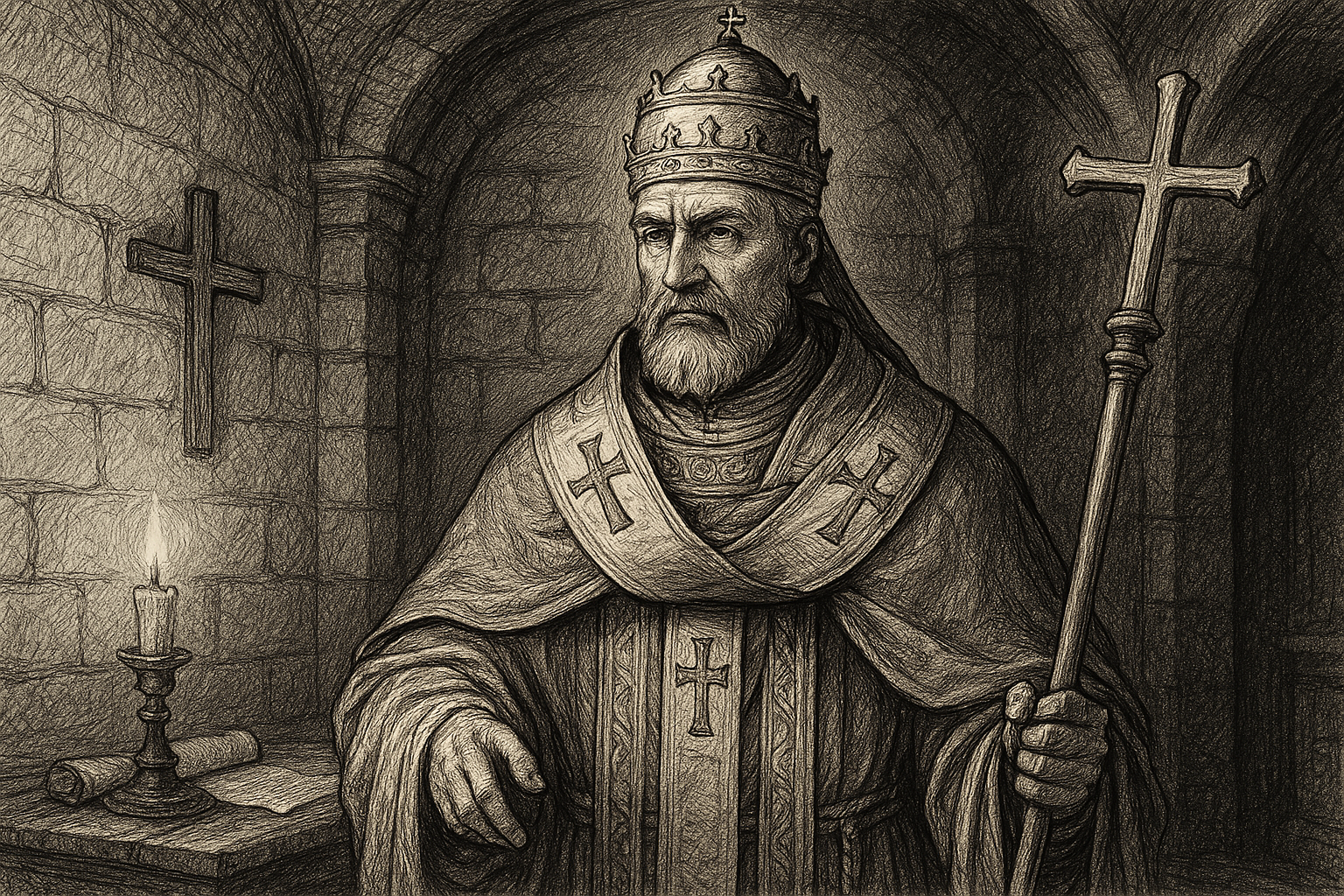
Pope Nicholas I lived in the ninth century, but he does not feel remote. His world was shaped by fragile kingdoms, shifting alliances, and tensions between civil rulers and the Church. Bishops were sometimes pressured by kings. Marriages could be treated like political bargains. Clergy discipline was uneven. In that setting, Nicholas became pope in 858 and quickly showed that he believed the office of Peter was not a ceremonial honor but a grave responsibility.
That is one reason Pope Nicholas I Catholic history still deserves attention. He was not perfect, and no pope is a saint by administrative skill alone. Yet he understood something essential: the Church does not stay healthy by drifting with power, custom, or convenience. She stays healthy when shepherds are willing to defend the truth, correct abuses, and protect the dignity of souls.
A pope formed in a difficult age
Nicholas I was born into a world where the legacy of Charlemagne still shaped Europe, but the unity of that world was weakening. The papacy had to navigate not only spiritual questions but also political pressure from rulers who often saw bishops and churches as parts of their own system. In many places, church life was deeply entangled with civil power. That made governance complicated and, at times, dangerous.
In such a climate, a pope could either become timid or overbearing. Nicholas tried to be neither. He believed that the successor of Peter had a real duty to guard doctrine, correct injustice, and act when local bishops failed to uphold discipline. He was especially attentive to the rights of the faithful, including those who were mistreated by powerful clergy or rulers. His papacy showed that strong governance in the Church is not about control for its own sake. It is about service to truth and charity.
He defended marriage as more than a private arrangement
One of the areas most closely associated with Nicholas I was marriage. In his time, noble families and rulers often treated marriage like a matter of convenience, inheritance, or diplomacy. That meant spouses could be discarded, pressured, or manipulated. Nicholas resisted this tendency and insisted that marriage is not merely a social contract that the powerful may rearrange at will.
This mattered because the Church has always defended marriage as a covenant ordered toward fidelity and the good of spouses and children. Nicholas's interventions were not sentimental. They were pastoral and moral. He recognized that when marriage is weakened, the entire social order suffers. Children are harmed, the weak are exposed, and rulers learn to treat human relationships as tools.
For Catholics today, this is still recognizable. The temptation to reduce marriage to personal preference or temporary satisfaction has not disappeared. Nicholas I reminds us that the Church speaks of marriage with seriousness because she is protecting something sacred. Fidelity is not old fashioned sentiment. It is justice rooted in truth.
He confronted powerful clergy when necessary
Nicholas is remembered for standing firmly in disputes involving bishops, especially when a bishop's authority was being used badly or when bishops themselves were acting unjustly. He did not assume that rank guaranteed innocence. If a cleric had abused office, he could be corrected. If a local church court failed to act justly, Rome might need to intervene.
This is important because it reveals a Catholic principle that is easy to forget: authority in the Church is real, but it is always accountable to the faith once handed down. Leadership is not ownership. Office is not a personal possession. A bishop or pope serves Christ and the Church, not himself.
Nicholas's willingness to intervene also shows that mercy and justice are not enemies. When a victim is ignored, mercy is not served by silence. When a scandal is hidden for the sake of convenience, the Church is not protected. She is wounded. Nicholas's example suggests that a shepherd sometimes has to disturb peace in order to restore it.
He strengthened the idea that Rome had a real pastoral role
One of the most notable features of Nicholas's papacy was his strong sense of the Roman See's responsibility for the universal Church. He believed the pope had the duty to preserve communion, settle disputes, and defend orthodoxy. That did not mean local churches were unimportant. It meant that local authority needed a wider anchor when pressures became too strong.
Today, Catholics may take for granted that the pope serves as a visible sign of unity. In Nicholas's age, that claim had to be clarified and defended in practice. He acted with confidence because he believed the office came from Christ through Peter. That conviction is reflected in the New Testament witness to Peter's role among the apostles, especially in passages such as You are Peter, and on this rock I will build my Church and I have prayed for you that your faith may not fail.
Still, Nicholas did not treat Rome as a place of arbitrary power. The point of the papacy, as he understood it, was service to communion and fidelity. A pope must be a guardian, not a mere administrator. That distinction remains valuable in every age.
His legacy speaks to modern Catholic life
Pope Nicholas I Catholic history matters today because his papacy highlights concerns that are still with us. Catholics continue to face confusion about authority, pressure to compromise, and the temptation to imagine that peace is more important than truth. Nicholas suggests otherwise. Peace without justice is fragile. Unity without fidelity is shallow. Reform without reverence is unstable.
There are at least three lessons that emerge from his example.
1. Truth must be protected even when it is inconvenient
Nicholas did not seem interested in popularity. He believed the Church should speak clearly when marriage, discipline, or authority was being distorted. That is a needed reminder in any age, including our own, when people often prefer soft answers to difficult ones. Catholics are not called to seek conflict, but neither are they called to pretend that serious moral questions are merely matters of taste.
2. The weak deserve real defense
Much of Nicholas's work made sense because he understood how easily the weak can be crushed by the powerful. A bishop, king, or noble could dominate a person with little practical resistance. The Church, if she is faithful, must become a place where the weak can find protection. This is part of the biblical concern for justice that runs through the prophets and the Gospel, where Christ identifies himself with the vulnerable and calls his disciples to serve them.
3. Authority is meant to build communion
Nicholas defended papal authority not as a trophy, but as a means of preserving unity in truth. That is a timely lesson for Catholics who sometimes view authority only through the lens of politics. In the Church, authority is meant to gather, clarify, and heal. When it is used well, it helps believers remain in communion with Christ and one another.
The Church does not become strong by becoming less Catholic. She becomes strong by becoming more faithful.
His world was different, but the pattern is familiar
It is easy to say that the ninth century was too different from ours to matter. In some ways, that is true. We no longer live in a Carolingian political order, and the legal disputes Nicholas faced were shaped by institutions far removed from modern life. But the underlying patterns remain familiar. Power still tempts people to bend the truth. Moral teaching is still resisted when it conflicts with desire. The vulnerable still need advocates.
That is why saints and great popes matter. They show us that fidelity is possible in complicated times. Nicholas did not solve every problem in the Church. No pope can do that. But he did help establish a pattern of papal responsibility that Catholics can still recognize: defend the faith, protect the innocent, respect the order Christ gave to his Church, and do not confuse weakness with humility.
His life also reminds us that governance in the Church is not a distraction from holiness. It is one of the places where holiness is tested. A faithful shepherd must know when to be patient, when to warn, and when to act. Those are not separate from prayer. They arise from prayer.
In the end, Pope Nicholas I remains significant because he refused to separate doctrine from discipline, or truth from pastoral care. He believed the Church must be governed as a living body, not managed as a convenience. That conviction may seem severe to modern ears, but it is part of the mercy Christ gives to his Church. A flock is safest when the shepherd takes the danger seriously.
For Catholics who want a model of steady courage, Nicholas offers a sober and useful example. He did not belong to an easy age, and he did not offer easy answers. He trusted that the Church belongs to Christ, and that conviction gave him the freedom to act with clarity when clarity was needed most.
Keep Reading on Lets Read The Bible
Frequently Asked Questions
Who was Pope Nicholas I in Catholic history?
Pope Nicholas I was a ninth century pope known for defending Church discipline, marriage, justice, and the authority of the Roman See in a time of political pressure and ecclesial conflict.
Why is Pope Nicholas I still important to Catholics today?
He matters because he shows how the Church can remain faithful when rulers, culture, or internal weaknesses threaten truth and order. His papacy offers a model of firm but pastoral leadership.
What was one of Pope Nicholas I's major concerns?
He was especially concerned with protecting marriage, correcting abuses among clergy, and preserving the unity and integrity of the Church under the authority of Peter's successor.