Church History
Pope Nicholas I and the Hard Work of Keeping the Church United
A close look at one of the ninth century's most forceful popes and the pressures that shaped his long struggle for order, discipline, and fidelity.
Site Admin | December 25, 2025 | 84 views
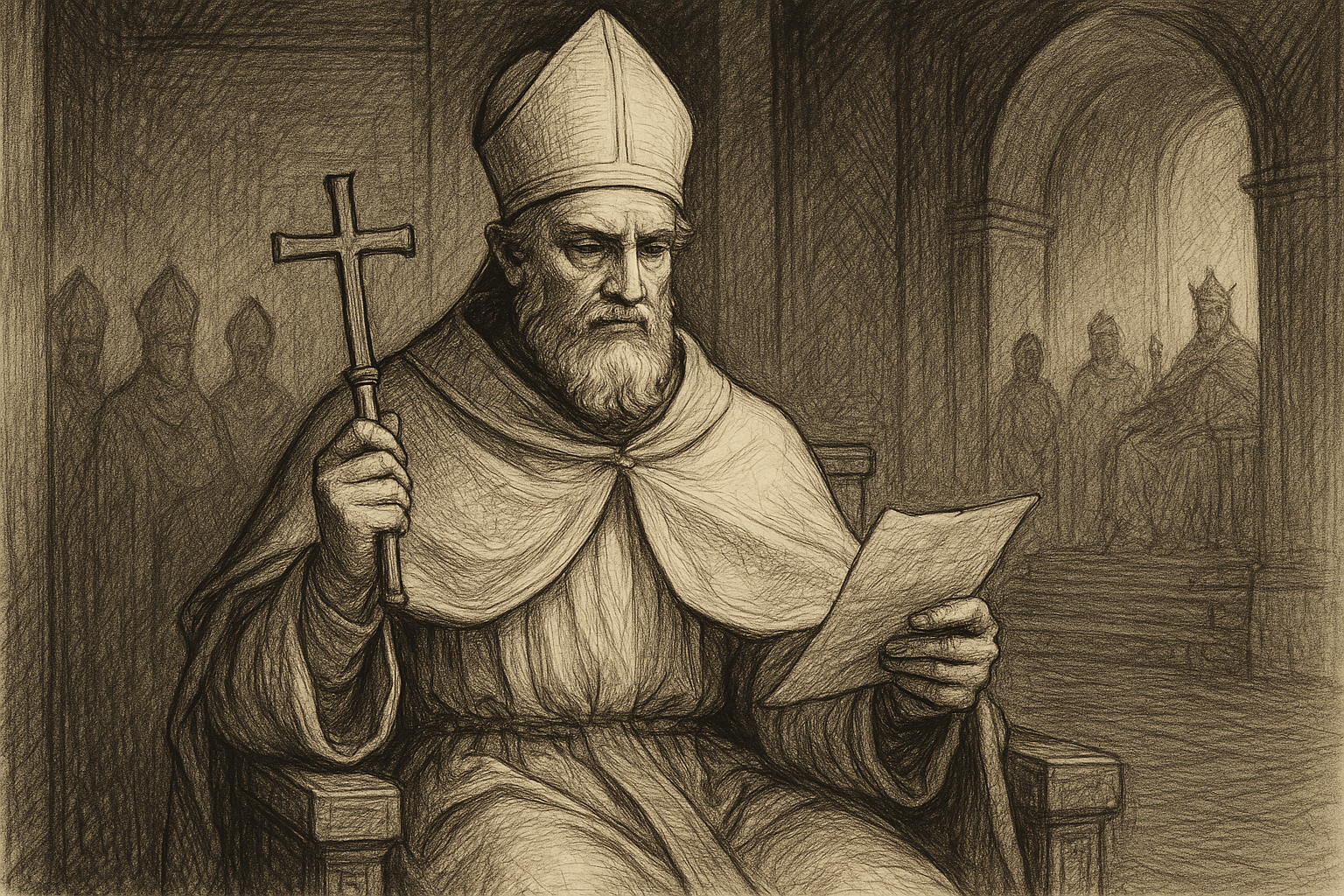
In the long sweep of Pope Nicholas I history, the ninth century can feel remote at first glance. Yet the Church Nicholas inherited was facing problems that still sound familiar in different forms: confusion about authority, pressure from powerful rulers, moral disorder among clergy, and Christians looking to Rome for clarity when local leaders failed them. Nicholas I became pope in 858 and served until 867, during a period when the papacy was being tested not only by theology, but by governance itself.
He is often remembered as one of the strongest popes of the early medieval period. That strength was not simply a matter of temperament. Nicholas believed that the pope had a real responsibility to guard the unity of the Church, defend the innocent, correct abuses, and speak plainly when doctrine or discipline was being threatened. In a century when bishops and kings often blurred the line between spiritual office and political power, that conviction mattered deeply.
A Church caught between holiness and pressure
To understand Nicholas I, it helps to picture the world around him. The Carolingian Empire had inherited much of western Europe after the age of Charlemagne, but that political unity was fragile. Local rulers wielded enormous influence over bishops, while bishops themselves could become entangled in court politics. The Church was not free from human ambition, and the weakness of civil order often spilled into ecclesial life.
Rome still possessed immense symbolic authority, but the papacy in the ninth century was not yet the highly centralized institution later ages would know. Its claims were real, yet often contested in practice. Nicholas stepped into this setting with a firm sense that the See of Peter was not merely one bishopric among others. He saw it as a pastoral office with a duty to intervene when justice failed.
That conviction helps explain the tone of his pontificate. Nicholas was not a detached administrator. He was a shepherd who thought the Church had to be governed with both mercy and backbone. In a letter attributed to the concerns of his reign, he insisted that ecclesial leadership must serve truth, not convenience. His actions repeatedly show that he meant it.
The pope who answered the hard cases
Many of the most important events tied to Nicholas I involve disputes that reveal how he understood papal authority. He did not spend his reign on abstract statements alone. He was drawn into cases where the faith, marriage, clerical discipline, and episcopal justice were all at stake.
The case of Lothair II
One of the best-known controversies involved King Lothair II of Lotharingia. Lothair wanted to set aside his wife, Theutberga, and unite himself with another woman, Waldrada. The matter was not merely private. It involved the moral order of Christian marriage, the credibility of ecclesial discipline, and the willingness of bishops to resist royal pressure.
Nicholas refused to allow the marriage to be dissolved through manipulation or intimidation. He defended Theutberga and rejected the attempt to force a union that the Church could not recognize as legitimate. This was not an isolated marital dispute. It became a major test of whether the Church would bow to political power when that power sought to redefine a sacramental bond for convenience.
The conflict became so intense that Nicholas excommunicated two archbishops who had supported Lothair's position. That was an extraordinary step, but it reflected Nicholas's conviction that bishops could not simply serve as agents of a king's will. Their first obedience belonged to Christ and the Church.
The Photian controversy
Nicholas also became involved in the conflict surrounding Photius in Constantinople. After tensions in the Eastern Church led to the deposition of Patriarch Ignatius and the elevation of Photius, Nicholas examined the matter and rejected the legitimacy of the change. The dispute quickly moved beyond a local controversy and became one of the great episodes in the strained relationship between East and West.
It is important to be careful here. The separation between the Eastern and Western Churches had not yet hardened into the full schism that later centuries would know. Still, Nicholas's role shows that questions of jurisdiction, canon law, and episcopal legitimacy were already growing sharper. He believed Rome had a duty to judge such cases, not because the pope was a worldly ruler, but because communion required a center of reference.
This is one reason Pope Nicholas I history remains so significant. His pontificate shows an early, forceful articulation of papal responsibility in disputes that crossed diocesan and even imperial lines.
Action in the Frankish Church
Nicholas also intervened in broader concerns about bishops and clergy in the Frankish kingdoms. He supported ecclesial discipline, defended the rights of lower clergy in certain disputes, and resisted the idea that local power could override canonical order. He was deeply concerned that bishops act as true shepherds rather than as officials protecting their own status.
At times this made him unpopular among powerful men. Yet the fact that his interventions were resisted does not make them less revealing. Nicholas had a clear sense that corruption could not be ignored simply because it was socially expensive to confront. If the Church was to remain credible, someone had to speak for justice.
What made Nicholas's leadership distinctive
Nicholas I was not known for novelty. He was known for clarity. He worked from a strong belief in the inherited structure of the Church and in the pope's role as guardian of that structure. What made him distinctive was the energy with which he applied those principles to real situations.
He understood that governance in the Church is not a side issue. It is part of the Church's mission. Good governance protects doctrine, sustains charity, and prevents the strong from crushing the weak. Bad governance allows confusion to spread and gives the appearance that truth can be negotiated by force.
His letters and interventions show several recurring concerns:
- the dignity and permanence of marriage;
- the responsibility of bishops to act justly;
- the pope's right and duty to intervene in major disputes;
- the need to resist secular pressure when it distorts Christian order;
- the importance of discipline as a service to unity, not its enemy.
These themes do not belong only to the ninth century. They remain recognizably Catholic. A Church that forgets discipline eventually loses tenderness too, because mercy detached from truth becomes sentimentality, while truth detached from mercy becomes severity. Nicholas tried, in his own hard age, to hold both together.
The man behind the office
It can be easy to reduce Nicholas I to a set of controversies. But a pope is not merely a collection of decisions. He is also a Christian formed by prayer, tradition, and the demands of office. Historical records do not give us the intimate spiritual diary we might wish for, but they do show a man who treated the papacy as a grave responsibility.
He worked in an era when the resources of the papal office were limited compared with later centuries. Communication was slow. Enforcement depended on persuasion, alliances, and the willingness of local leaders to cooperate. Yet Nicholas did not use those constraints as an excuse for silence. He pressed his case because he believed the faith of ordinary Christians depended on it.
There is something deeply Catholic about that instinct. The Church is not preserved by wishful thinking. She is preserved by grace, yes, but grace ordinarily works through real people who take responsibility, tell the truth, and accept the cost of doing so. Nicholas understood that the shepherd cannot be afraid of the wolf simply because the wolf is powerful.
When Nicholas defended marriage, corrected bishops, and resisted royal manipulation, he was defending more than a policy. He was defending the Church's claim that God's order is not subject to private convenience.
What modern Catholics can learn from Nicholas I
Modern Catholics may not face kings asking for divorce or emperors contesting papal judgments in the same way Nicholas did. But the underlying pressures are familiar. People still ask the Church to bend moral truth to personal desire. Leaders still face the temptation to trade conviction for peace. And Christians still need shepherds who can distinguish between compromise for the sake of charity and compromise that empties faith of its substance.
Nicholas I offers several lessons that remain useful.
Truth sometimes requires visible conflict
Many people prefer a Church that avoids confrontation. Nicholas shows that peace is not always the same as harmony, and harmony is not always the same as truth. Sometimes fidelity requires dispute, especially when the vulnerable would otherwise be abandoned.
Authority must serve communion
Nicholas did not treat authority as a prize. He treated it as a burden placed on him for the good of the Church. That is a salutary reminder for Catholics today. In the Church, authority is only justified when it serves communion in Christ.
Marriage is not a negotiable symbol
His defense of Theutberga stands as a witness to the seriousness of marriage. Christian marriage is not merely a social arrangement or a contract that can be broken whenever desire changes. It bears witness to a covenant rooted in God's own fidelity.
Local problems can become Church-wide problems
Nicholas understood that a failure in one part of the Church can echo far beyond one place. Abuse of power, weak discipline, and doctrinal confusion rarely remain isolated. They spread when left unchecked. That insight still matters in every generation.
The broader value of Pope Nicholas I history lies in this: he reminds Catholics that the Church's visible structure is not an obstacle to holiness. It is one of the means by which holiness is protected and handed on. The papacy is not a political ornament added after the fact. It is part of Christ's provision for a Church that must remain one in faith, even when history is messy.
That is why Nicholas still deserves attention. He was not perfect, and no serious Catholic historian would treat him as a simple hero detached from his age. But he was a pope who understood the cost of governing the Church well. He believed that truth should not be surrendered to force, that justice should not be delayed for convenience, and that the unity of the Church was worth defending with courage. For modern Catholics, that is not merely an episode in history. It is a calling still worth remembering.
Keep Reading on Lets Read The Bible
Frequently Asked Questions
Who was Pope Nicholas I in Catholic history?
Pope Nicholas I was pope from 858 to 867 and became known for his strong defense of Church discipline, the authority of the papacy, and the indissolubility of Christian marriage.
Why is Pope Nicholas I important in Church governance?
He is important because he intervened in major disputes involving bishops, kings, and church order, showing that papal authority was meant to protect unity, justice, and doctrinal integrity.
What is Pope Nicholas I best known for?
He is best known for his stand in the marriage قضية of King Lothair II, his conflict with Photius in Constantinople, and his firm insistence that bishops and rulers could not override Church teaching and discipline.