Church History
Pius V and the Papacy at Its Most Demanding
A Dominican pope, a troubled century, and the patient work of Catholic renewal
Site Admin | January 1, 2026 | 74 views
A pope formed in a time of strain
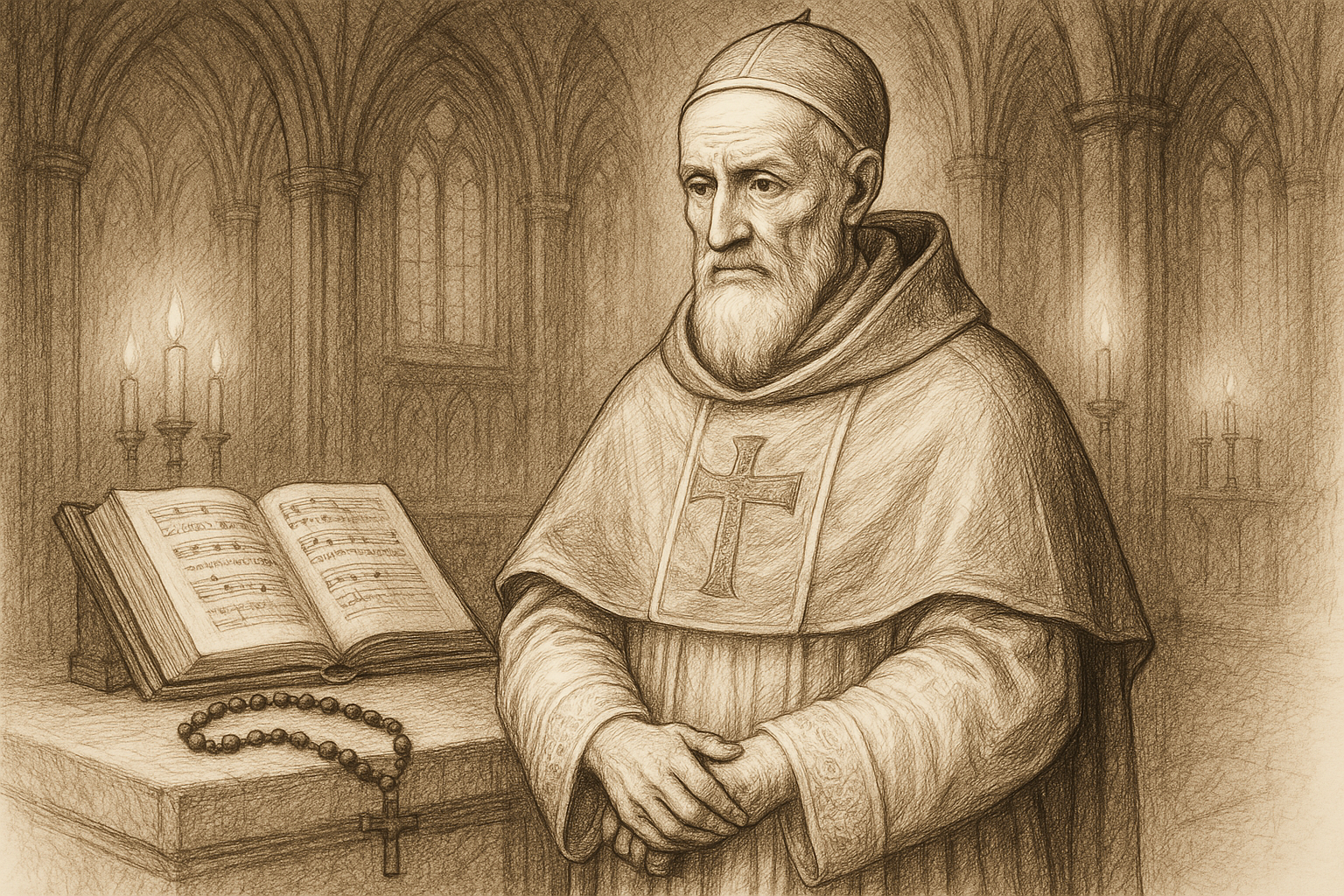
Pope St. Pius V belongs to a moment when the Church was being pressed from many sides. The Protestant Reformation had already torn apart much of Western Christendom. Catholic life also needed deep reform from within. Clergy formation was uneven, discipline had weakened in some places, and the teaching office of the Church had to respond clearly to serious doctrinal disputes. Into that difficult world came a man who was not known for polish or political ease, but for severity, clarity, and prayer.
Before his election, Pius V was Antonio Ghislieri, a Dominican friar formed by study, austerity, and a strong attachment to ecclesial discipline. He had served the Church in demanding roles and had earned a reputation for integrity. He was elected pope in 1566, only a few years after the Council of Trent had ended. That timing matters. He did not invent the Catholic reform movement, but he helped carry it forward with consistency and force. In that sense, Pope St. Pius V Catholic history is not the story of a lone reformer acting in isolation. It is the story of a pope who received a mission and pursued it with uncommon seriousness.
The Counter-Reformation needed more than argument
It is tempting to imagine the Catholic response to the Reformation as mostly a matter of theological debate. Doctrine did matter, of course, and the Church had to answer error with precision. But the reform of the Church also required visible change in life, worship, and discipline. Catholic teaching was not meant to stay on paper. It had to be embodied in bishops who resided in their dioceses, priests who preached and taught carefully, and liturgical practice that guarded reverence and unity.
Pius V understood this very well. He was a pope of implementation. The Council of Trent had clarified many disputed teachings and called for reform. Pius made sure that its decisions were not treated as abstract ideals. He worked to strengthen seminaries, promote doctrinal clarity, and encourage a more disciplined clergy. He wanted the Church to look, sound, and live like the Church she professed to be.
This is one reason he still matters. Catholics today often speak about renewal as if it were mainly a matter of new initiatives or better communication. Pius V reminds us that reform also demands obedience, patience, and the willingness to carry out hard but necessary measures. The Church is renewed not by style alone, but by truth joined to discipline.
The Roman Missal and the shape of worship
Among the most lasting actions associated with Pius V was the standardization of the Roman Missal. In 1570, he issued the Missal that helped give greater uniformity to the Latin Rite. This was not a rejection of every local liturgical tradition. The Church has always known legitimate diversity. Rather, it was an effort to protect a common worship from unnecessary confusion at a time when doctrinal and liturgical fragmentation threatened ecclesial unity.
The deeper point is this: worship forms belief. Catholic liturgy is never just a practical arrangement for getting people into a room and through a service. It is an act of the Church, a participation in the worship of Christ himself. When the liturgy is treated casually, the faithful can begin to lose a sense of the sacred. When it is treated with care, it teaches reverence before a single word of preaching is heard.
Let all things be done decently and in order 1 Corinthians 14:40.
Pius V did not reduce worship to legalism. He sought order because order serves devotion. Modern Catholics, whatever liturgical form they attend, can still learn from his conviction that worship should not be governed by novelty for its own sake. The Mass is not ours to improvise. It is a gift to receive.
Teaching the faith with clarity
Pius V also oversaw the publication and use of the Roman Catechism, which helped priests teach the faith more consistently after Trent. This was crucial in an age when many people were confused by competing claims about Scripture, grace, the sacraments, and the Church. A catechism does not replace preaching or personal conversion, but it gives a stable framework for understanding what the Church believes.
That concern remains relevant. Catholics today live amid a great deal of noise. Opinions are abundant, but doctrinal formation is often thin. Many people are exposed to fragments of Catholic teaching without ever receiving its inner coherence. Pius V's age reminds us that catechesis is not optional. The faithful need more than religious inspiration. They need the mind of the Church.
His approach also shows that clarity is an act of charity. To teach plainly is not to be harsh. It is to respect the soul of the listener. Confusion may feel gentle for a moment, but in the long run it burdens people with uncertainty. Pius V knew that souls are helped by truth spoken clearly and without embarrassment.
Holiness that was not soft
It is worth saying that Pius V was not admired because he was easy to be around. Historical memory often sanitizes saints into agreeable figures, but that is not what the Church canonizes. She canonizes holiness. In Pius V's case, holiness included firmness, personal austerity, and a serious sense of responsibility before God.
He was known for simplicity of life and concern for discipline. Such traits can sound severe to modern ears, but the virtue underneath them is self-mastery. A pope who expects order from others must first live under order himself. This is one reason his witness is powerful. He did not ask the Church to practice what he ignored. He sought to embody the reform he promoted.
There is a spiritual lesson here for ordinary Catholics. We often wait for the Church to become more convincing before we begin to live faithfully ourselves. Pius V reverses that logic. He shows that renewal begins in persons who take the faith seriously in their own lives. A stronger Church is built by converted hearts, disciplined habits, and habits of prayer that do not depend on comfort.
His place in the wider history of Catholic defense
Pius V is also remembered for his role in defending Christendom during a time of military and political threat. The great Christian victory at Lepanto in 1571 occurred during his pontificate, and the feast of Our Lady of the Rosary grew in connection with that event. Catholics should be careful not to turn history into legend or reduce complex events to slogans. Yet the larger point remains: the pope's age was one in which religion, politics, and survival were deeply entangled.
He understood that Catholic life could not be protected by private devotion alone. Public life mattered. Nations, rulers, and laws shaped the conditions in which the faith could flourish or decline. That does not mean Catholics should romanticize power. It means they should remember that the Church lives in history, and history can either serve or obstruct the good of souls.
For present-day Catholics, this offers perspective. The Church is not sustained by nostalgia, nor is she preserved by worldly influence alone. She is protected by God's providence, but that providence often works through courageous leaders, faithful clergy, and ordinary believers who refuse to surrender the truth.
What Catholics can still receive from Pius V
Pope St. Pius V Catholic history remains useful because it shows reform at work in the real world. He did not live in a clean or simple age. He served the Church under pressure, with limited time, real enemies, and imperfect instruments. Even so, he pursued renewal with patience and resolve. That is a lesson for every age.
Catholics today can take at least three practical lessons from him.
- Take doctrine seriously. The faith is not a private opinion or a cultural label. It is a coherent truth handed on by the Church.
- Take worship seriously. Reverence in liturgy is not a decoration. It forms the soul and teaches the faithful how to adore God.
- Take discipline seriously. Conversion is not only emotional. It also involves habits, restraint, and fidelity in ordinary duties.
These lessons are not dramatic, but they are enduring. They speak to parish life, family life, priestly life, and the life of anyone trying to remain Catholic in an age that rewards distraction.
A saint for people who want renewal without confusion
Pius V is not the saint of easy solutions. He is the saint of seriousness. He reminds Catholics that the Church is renewed when she is more fully herself, not when she becomes vague in the hope of sounding welcoming. In his life, clarity and charity were not enemies. They belonged together.
That may be the most important reason he still matters. He tells the Church, quietly but firmly, that fidelity is not outdated. It is the condition for true renewal. And when Catholics recover that truth, they begin to see that reform is not first a program. It is a conversion of mind, worship, and life before God.
In that sense, the legacy of Pius V is not locked in the sixteenth century. It remains alive wherever Catholics choose reverence over looseness, doctrine over confusion, and steady obedience over religious fashion.
Keep Reading on Lets Read The Bible
Frequently Asked Questions
Why is Pope St. Pius V important in Catholic history?
He helped carry out the reforms of the Council of Trent, strengthened Catholic discipline, supported clearer teaching, and promoted a more unified Roman liturgy during a time of crisis.
Did Pope St. Pius V create the Tridentine Mass?
He did not create the Roman Rite from nothing. He issued the 1570 Roman Missal that standardized the liturgy of the Latin Church and protected unity after Trent.
What can Catholics learn from Pope St. Pius V today?
They can learn that reform requires clarity, discipline, reverent worship, and personal holiness. His life shows that renewal in the Church begins with fidelity to the faith.