Church History
Pope Innocent III and the Weight of a Ruling Papacy
A look at the pope who stood at the center of medieval Christendom, and the lessons his reign still offers Catholics today.
Site Admin | December 30, 2025 | 92 views
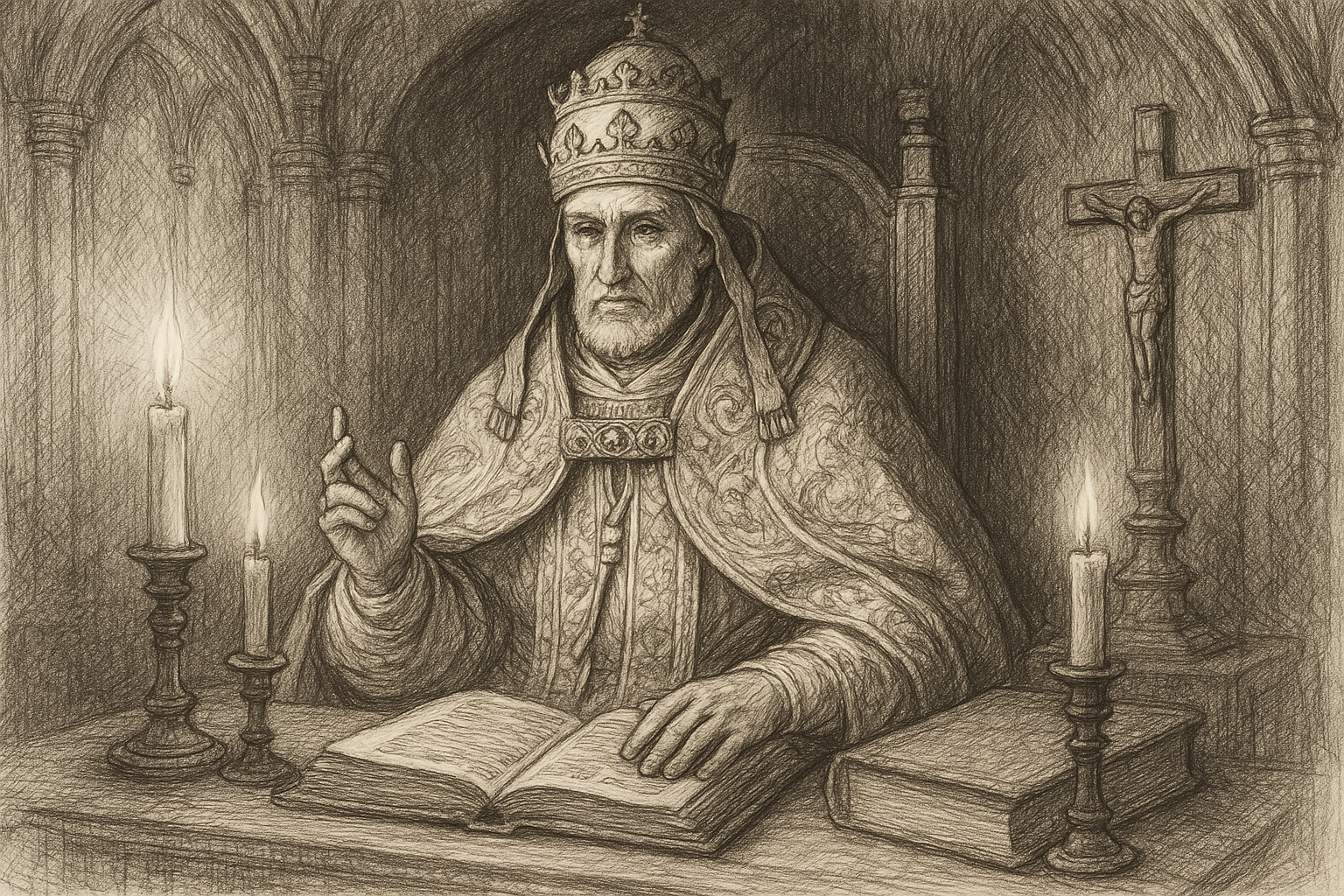
Pope Innocent III remains one of the most consequential figures in medieval Church history. He was elected pope in 1198, at a time when Europe was marked by political fragmentation, crusading zeal, reforming energy, and deep tensions between spiritual and temporal power. To study him is to see the papacy at one of its most visible and influential points in the Middle Ages.
That influence was not merely political. Innocent III was a serious theologian, a disciplined administrator, and a pope who believed that the Church must act with clarity in order to protect the faith and guide souls. He did not create the papacy, but he exercised it with a boldness that still draws attention. His legacy invites Catholics to think carefully about authority, reform, and the demands of Christian leadership.
The world Innocent III inherited
Innocent III was born Lothair of Segni and educated in the schools of Paris and Bologna, two centers that shaped medieval learning. By the time he became pope, the Church had already been wrestling for generations with questions about reform, discipline, and the relation between the pope and secular rulers. The wounds of earlier conflicts were still visible.
The late 12th century was not a calm era. Kings and emperors frequently pressed against the freedom of the Church. Local clergy often needed correction. Heretical movements were spreading in some regions. At the same time, many faithful Catholics looked to Rome for guidance and stability. Innocent stepped into that world with a strong sense that the papacy must serve not itself, but the unity and purity of the Church.
His papacy unfolded in a period when Europe still understood itself in explicitly Christian terms. That did not mean Christian life was simple or uniformly holy. It meant, however, that the pope's decisions could shape not only ecclesiastical life but the wider political order. Innocent knew this and used the papal office with remarkable confidence.
A pope with a clear sense of office
One reason Pope Innocent III Catholic history continues to matter is that he understood the papacy as a real pastoral responsibility, not a ceremonial honor. He saw the pope as the servant of the Church's unity and the guardian of doctrine and discipline. In practice, this meant he involved himself in disputes among bishops, monarchs, religious orders, and cities when he judged that the faith or the common good required it.
That kind of papal activity can seem distant to modern readers, but it was rooted in a medieval conviction that the Church is one body and that visible unity matters. Innocent believed that when disorder threatened the Christian people, the pope could not remain passive. His letters and decisions show a man convinced that authority must be ordered to truth and charity.
At the same time, his style of governance reminds Catholics that authority is never merely abstract. It must be exercised concretely, sometimes in administrative detail, sometimes in public teaching, and sometimes in painful correction. The pope was not above the Church in a worldly sense, but he was charged with serving her communion.
His theological and pastoral priorities
Innocent III is remembered not only for his administrative reach but also for the doctrinal clarity of his reign. His era saw increased attention to sacramental life, clerical discipline, and the need for sound teaching. He supported important measures that strengthened ecclesial order, including the Fourth Lateran Council in 1215, one of the most significant councils of the Middle Ages.
That council addressed a wide range of matters, from the Eucharist to confession to the reform of clergy life. Its teaching on transubstantiation gave precise language to the Church's faith in the real presence of Christ in the Eucharist. It also called the faithful to annual confession and communion, reinforcing a more disciplined sacramental life.
These developments matter because they show that doctrine and pastoral practice belong together. Innocent did not treat theology as an ivory tower exercise. He understood that clear teaching shapes Christian living. A people who know what the Church believes are better able to worship rightly, repent honestly, and remain united in truth.
He also supported new religious movements when they were orthodox and disciplined, recognizing that the Holy Spirit raises up new forms of service within the Church. The approval of the Franciscans in his era is often noted as a sign of that discernment. Innocent was not opposed to renewal. He was opposed to confusion.
Strength, reform, and the limits of power
To appreciate Innocent III honestly, Catholics should resist easy praise and easy criticism. He was not a saint in the sense of perfect judgment, nor was he a simple authoritarian caricature. He acted within a medieval world in which the Church and political society were deeply intertwined. Some of his interventions were prudent, others were controversial, and some later developments showed the limits of the methods available to him.
That complexity is part of why his reign still deserves attention. The Church often lives through difficult historical conditions. Leaders must act in imperfect circumstances, and even sincere efforts can produce mixed results. Innocent's papacy shows both the strength of clear leadership and the danger of overextending it.
He believed strongly in the defense of orthodoxy, and he supported crusading initiatives that were deeply bound up with the world of his age. Here too Catholics must read history carefully. The Middle Ages approached such matters differently than modern Christians do, and not every historical decision can be praised without reservation. Yet even where modern readers feel discomfort, history can still teach something important: zeal without conversion can harden into force, while authority without humility can become spiritually costly.
When leadership is strong, it can protect the flock. When it forgets its limits, it can also reveal how much the Church depends on grace rather than human control.
What Catholics can learn from Innocent III
Innocent III matters today because he forces Catholics to think seriously about authority in the Church. The Catholic faith is not a private spirituality detached from visible structure. Christ founded a Church with offices, sacraments, and real bonds of communion. Yet those structures only bear fruit when they are used in a spirit of service.
One lesson is the importance of doctrinal clarity. Innocent lived at a time when heresy and confusion threatened the faith of ordinary believers. He responded by strengthening teaching and discipline. Catholics today still need that clarity. A loving Church does not leave people adrift in ambiguity when the truth can be known.
A second lesson is the need for reform to begin at the center and move outward. Innocent knew that corruption in leadership weakens the whole body. Reform is not a slogan. It is a discipline. It requires prayer, intellectual seriousness, personal conversion, and a willingness to submit human preferences to the demands of the faith.
A third lesson is the importance of discernment in power. Innocent had immense influence, but influence is not holiness. Catholics can admire his energy and administrative skill while also remembering that the Church is healthiest when power remains ordered to service. The pope is not a worldly prince in the modern sense. He is the visible sign of communion, called to strengthen brothers and sisters in the faith.
Finally, Innocent reminds Catholics that history is lived in tension. The Church is holy, but her members live in time, with real limitations. God can work through an energetic pope, a humble friar, a council, or a simple act of obedience. Medieval history is not merely a record of institutions. It is also a testimony to the way grace operates through human agency, often in ways that are impressive, flawed, and unforgettable at once.
Why his papacy still draws attention
Modern Catholics may encounter Innocent III first through a textbook summary of papal power, but that is only part of the story. He matters because he represents a moment when the papacy was asked to do much more than speak from afar. It had to govern, correct, define, negotiate, and defend. That burden revealed both the necessity and the danger of strong leadership in the Church.
His pontificate also remains useful because it shows how deeply medieval Catholic life was organized around sacramental and doctrinal unity. The Church was not an optional association. She was the visible family of faith through which people learned the Gospel, received grace, and understood their place in a Christian society. Innocent believed this with all the seriousness of his age.
For Catholics today, that seriousness is worth recovering in a purified form. We do not need to imitate every policy of the medieval papacy, but we do need the convictions that made reform possible: that truth matters, that offices are given for service, that discipline protects freedom, and that the Church must be one in faith and worship.
Innocent III was a man of his century, and he should remain there in many respects. Yet the questions his reign raises are still ours. How should authority serve communion? How do leaders defend truth without losing humility? How does the Church remain visibly one in a divided world? The answers begin not in politics but in faithfulness, and that is why Pope Innocent III Catholic history continues to reward careful reading.
The Middle Ages are far behind us, but the Church still lives with the same Lord, the same sacraments, and the same call to ordered charity. Innocent's papacy reminds us that leadership in the Church is always a grave trust, and that its true measure is whether it helps souls draw nearer to Christ.
Keep Reading on Lets Read The Bible
Frequently Asked Questions
Who was Pope Innocent III in Church history?
Pope Innocent III was the pope from 1198 to 1216. He became one of the most influential medieval popes, known for strong leadership, doctrinal clarity, and major reforms in the life of the Church.
What is Pope Innocent III best known for?
He is best known for the height of papal influence during his reign, his role in the Fourth Lateran Council, his support for Church reform, and his involvement in the political and religious affairs of his age.
Why should Catholics study Pope Innocent III today?
Catholics can learn from his concern for unity, doctrine, and discipline, while also reflecting carefully on the limits of human power. His papacy offers both encouragement and caution for anyone who thinks about leadership in the Church.