Church History
Pope Innocent III and the Burden of Leading Christendom
A look at one of the most influential pontificates of the Middle Ages, where reform, conflict, and spiritual authority met.
Site Admin | December 29, 2025 | 95 views
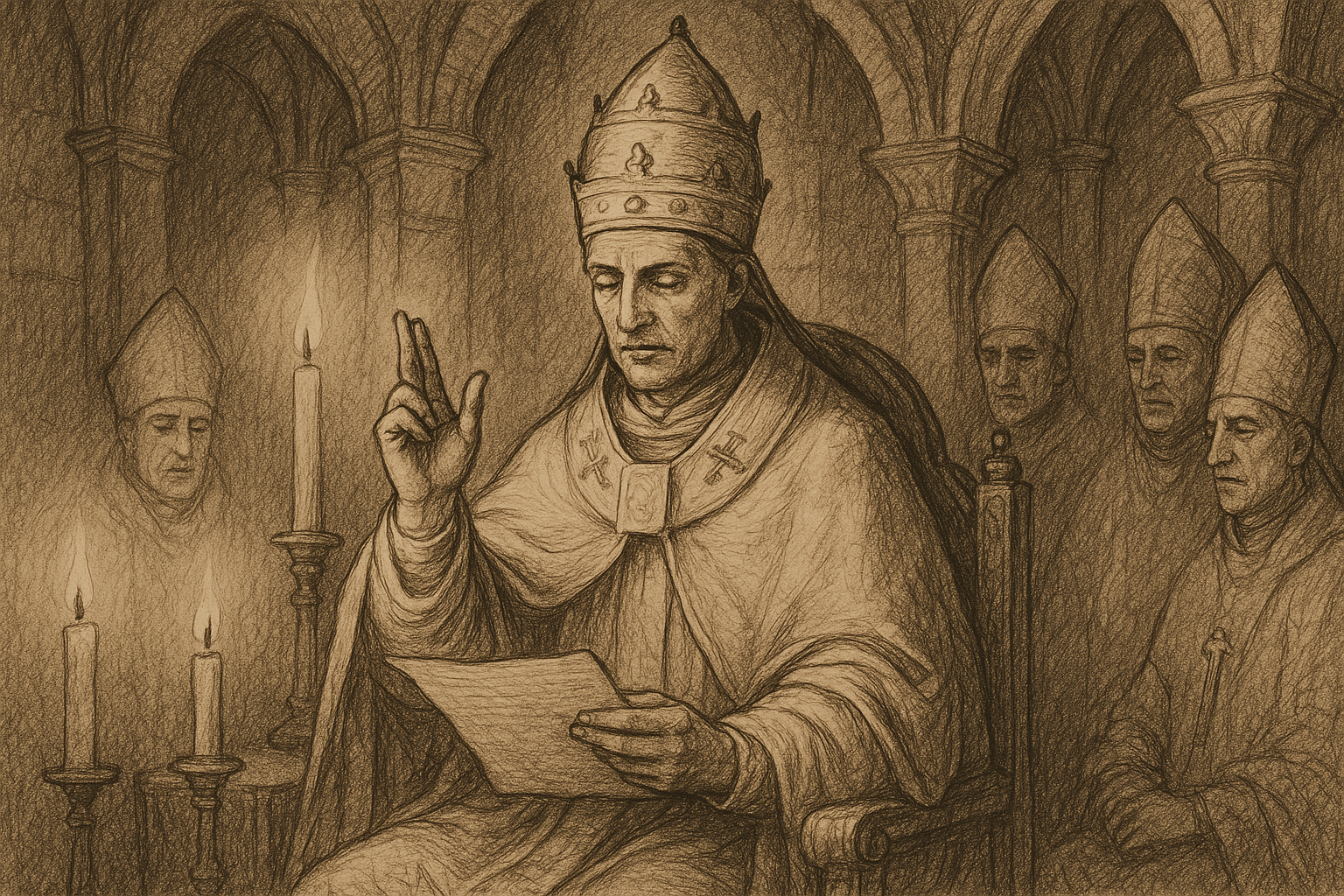
Few medieval popes exercised as much influence as Pope Innocent III. His pontificate came at a moment when the Church was expanding, Europe was changing, and the demands placed on the papacy were growing more intense by the year. To speak of Pope Innocent III history is to enter a world of emperors, crusades, reform, and the constant effort to defend the freedom of the Church while strengthening Christian life from within.
Innocent III was elected pope in 1198, when he was still a relatively young man for such a heavy office. Trained in theology and canon law, he brought unusual intellectual force to the papacy. He did not see the pope as merely a ceremonial figure or a local bishop with prestige. He believed the successor of Peter had a real responsibility for the order and health of Christendom, especially when kings, nobles, and clergy were all tempted to place their own interests ahead of the Gospel.
The world he inherited was unsettled. The Holy Roman Empire was in a period of political struggle after the death of Emperor Henry VI. Rival claims to imperial authority threatened to divide Europe. At the same time, Church discipline needed strengthening, heresies were spreading in parts of the West, and Christian efforts in the Holy Land remained painfully complicated. Innocent III stepped into this setting with a strong sense that the papacy had to act decisively, not to replace Christ, but to serve the unity and freedom of the Church under Christ's lordship.
The papacy at the center of medieval Europe
It is easy for modern readers to imagine the pope as living far from political life, but in the Middle Ages the papacy stood at the center of many public questions. Bishops, kings, abbots, university scholars, and lay rulers all looked to Rome. Innocent III understood that the pope's voice could influence major events across Europe, and he used that influence with remarkable energy.
At the same time, his papacy should not be reduced to politics. He saw governance as part of pastoral responsibility. A confused or fragmented Christendom was not merely a diplomatic problem. It was a spiritual danger. For Innocent, order mattered because souls mattered.
He worked to protect the Church from being captured by secular interests. He also insisted on reform within the Church itself, especially in the clergy. The very power of the papacy could become a temptation if it was not placed at the service of holiness. That tension, between authority and humility, shaped much of his pontificate.
Major concerns that shaped his pontificate
Relations with emperors and kings
One of the great tests of Innocent III's papacy was the imperial succession crisis in Germany. Competing claimants to the throne sought his support. Innocent became involved because the future of Europe depended in part on who would wield imperial power, and because the pope wanted to preserve the Church from domination by secular rulers. His interventions were not always simple, and they were not free from political calculation. But they show how deeply the papacy was entangled with the fate of Christian society.
His dealings with King John of England also reveal his determination to defend ecclesial freedom. When a dispute arose over the appointment of the Archbishop of Canterbury, Innocent upheld the rights of the Church against royal pressure. Eventually, John submitted and even placed his kingdom in a feudal relationship to the papacy. The episode was controversial, but it reflected Innocent's conviction that the Church could not simply be treated as a department of the state.
Church discipline and reform
Innocent III was also concerned with the internal renewal of the Church. He supported clearer discipline among clergy and greater attention to preaching, catechesis, and sacramental life. The Fourth Lateran Council, held in 1215, became the most important council of the Middle Ages and one of the great achievements associated with his name.
The council addressed a wide range of issues: the doctrine of the Eucharist, the need for confession, the moral and spiritual formation of clergy, and the importance of teaching the faithful clearly and faithfully. One of its most famous definitions described the change of the bread and wine into the Body and Blood of Christ with the term transubstantiation, a word that helped express the Church's faith more precisely. The council also insisted that Christians should confess their sins at least once a year and receive the Eucharist worthily.
These were not abstract theological concerns. Innocent knew that the Church could not endure on prestige alone. It needed living faith, proper teaching, and serious moral conversion.
Crusade and the burden of failure
Innocent III also called for the Fourth Crusade. Like earlier crusading efforts, it was meant to support Christian interests in the Holy Land. Yet the Fourth Crusade became one of the most tragic episodes in medieval Church history. The crusading force ended up attacking Constantinople, a Christian city, rather than completing its original aim. The event badly damaged relations between East and West and remains a lasting sorrow in the history of Christendom.
It would be unfair to blame Innocent for every turn of the crusade, since the military and political circumstances were complicated and many decisions were made far from Rome. Still, the failure stands as a sobering reminder that even sincere religious aims can be distorted by human weakness, ambition, and confusion. For Catholics, this part of Pope Innocent III history is a reminder that zeal alone is not enough. Right intention must be joined to prudence, discipline, and fidelity.
The Fourth Lateran Council and its lasting importance
If one event defines Innocent's legacy more than any other, it is the Fourth Lateran Council. The council gathered bishops from across Christendom and set a standard for Catholic life that would influence the Church for centuries. Its decrees touched doctrine, liturgy, discipline, and Christian teaching in practical ways.
Three features stand out in particular:
- Doctrinal clarity: The council clarified the Church's faith in the Eucharist and other central truths at a time when confusion could easily spread.
- Sacramental seriousness: By requiring annual confession and emphasizing worthy reception of the sacraments, the council helped frame the Christian life around repentance and grace.
- Pastoral responsibility: Bishops and priests were reminded that teaching the faith clearly was not optional but essential.
For modern Catholics, the council shows that authentic reform is not a vague call for improvement. It has content. It names truths, corrects abuses, and places worship and doctrine back at the center.
What kind of pope was Innocent III?
He was not gentle in every diplomatic encounter, and he could be forceful in defense of what he believed the Church required. Yet he was not merely a political strategist. The surviving picture of Innocent III is of a man who thought deeply about the responsibilities of office and the salvation of souls. He wanted the Church to be strong because he believed weakness could invite disorder, scandal, and doctrinal drift.
At the same time, his life reminds us that high office does not remove the need for humility. The medieval papacy carried enormous responsibilities, but the pope remained a servant under Christ. The power exercised by Innocent III was meant to protect the faith, not to become an end in itself. That remains a challenge for every Christian leader, in every age.
Keep Reading on Lets Read The Bible
Frequently Asked Questions
When was Pope Innocent III pope?
Pope Innocent III was elected in 1198 and reigned until 1216. His pontificate is often remembered as one of the most powerful and influential in medieval Church history.
Why is the Fourth Lateran Council important?
The Fourth Lateran Council in 1215 clarified Catholic teaching, strengthened discipline, and emphasized the sacraments, especially confession and the Eucharist. It became one of the most important councils of the Middle Ages.
What is Pope Innocent III best known for?
He is best known for his strong leadership of the papacy, his involvement in major European political disputes, his support of reform, and his role in calling the Fourth Lateran Council.