Church History
Pope Gregory VII and the Painful Work of Reform
How a fierce eleventh century pope helped clarify the freedom of the Church, the seriousness of holiness, and the cost of renewal.
Site Admin | December 28, 2025 | 80 views
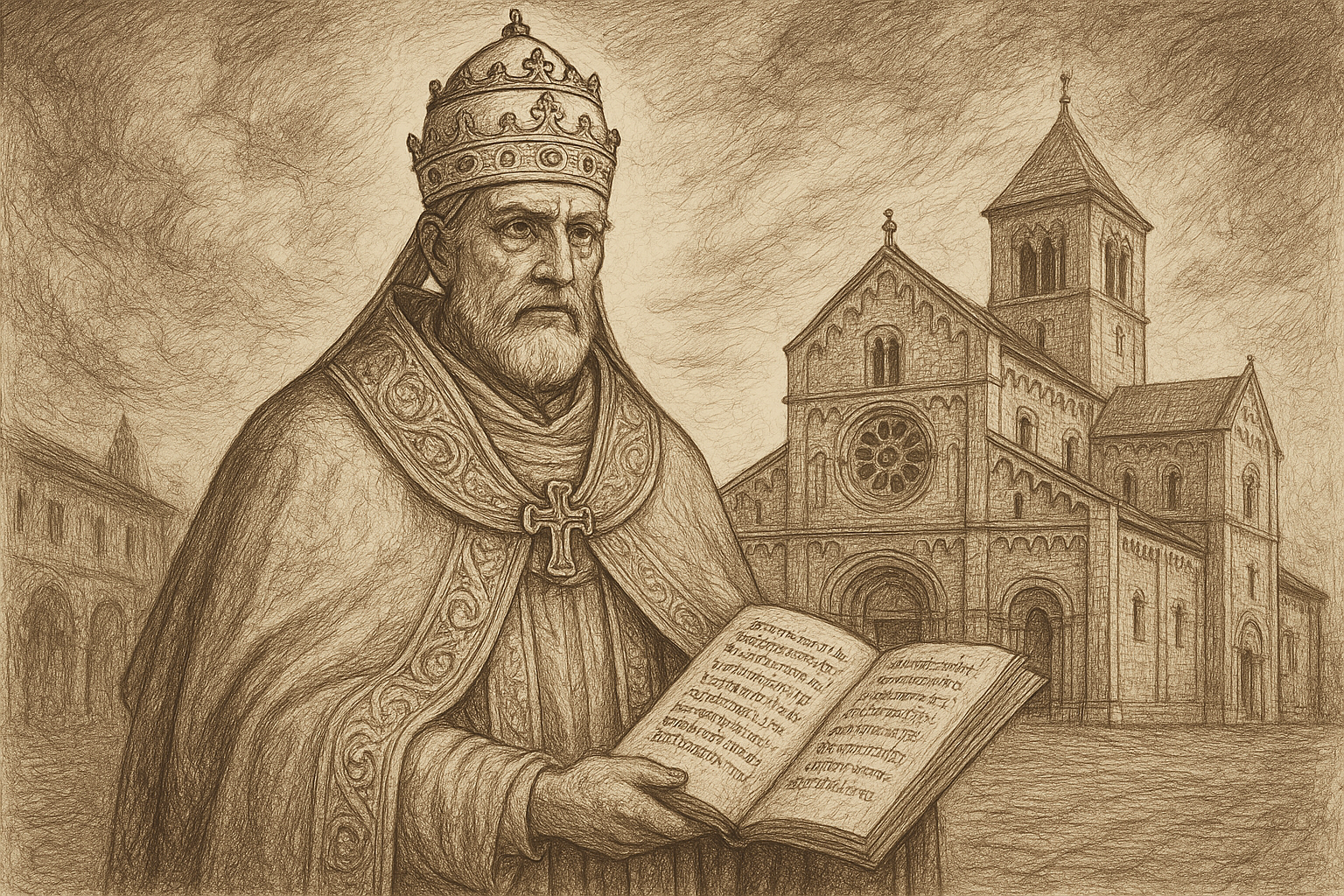
Pope Gregory VII Catholic history is not a story of easy victories or tidy lessons. It is the story of a monk turned pope who believed that the Church could not be renewed by slogans, sentiment, or political convenience. It had to be purified in truth. It had to be governed with integrity. And it had to remain free to serve Christ rather than the shifting ambitions of rulers.
Born Hildebrand of Sovana, Gregory entered the public life of the Church during a time of deep disorder. By the eleventh century, the papacy had suffered from weak leadership, local power struggles, and serious abuses in the appointment of bishops and abbots. Clerical life in many places had grown lax. Simony, the buying and selling of sacred offices, damaged trust and scandalized the faithful. In that setting, reform was not a luxury. It was a necessity.
Gregory VII became pope in 1073, after years of service in the Roman Curia and close involvement with earlier reform efforts. He did not invent the need for renewal, but he gave it a strong and unmistakable center. He believed that the Church, though made up of sinners, belonged to Christ and therefore could not be managed like a private estate. This conviction shaped his actions, his conflicts, and his legacy.
The Church Gregory Inherited
To understand Gregory VII, it helps to remember that the eleventh century was not a calm age. Europe was marked by overlapping loyalties between kings, nobles, bishops, and local lords. Church offices often carried lands and political power, so secular rulers frequently tried to control who received them. That practice, known as lay investiture, blurred the line between spiritual authority and worldly control.
At the same time, the Church itself was calling for reform from within. Monastic movements, especially those associated with Cluny, helped rekindle a desire for prayer, discipline, and moral seriousness. Gregory emerged from this world of reforming zeal. He was not acting alone. He stood within a broader Catholic effort to restore the integrity of Church life.
The problem was not simply administrative. It was spiritual. If bishops could be purchased or placed by political favor, then the sacramental and pastoral life of the faithful would be weakened. If priests lived contrary to their vocation, the witness of the Church would be obscured. Gregory saw that reforming structures without reforming hearts would never be enough.
What Gregory VII Stood For
Gregory is often remembered for the famous Dictatus Papae, a collection of papal propositions associated with his pontificate. It reflected his conviction that the Roman Pontiff had a unique responsibility in governing the Church and defending her freedom. Whatever one does with the exact literary history of the text, its basic concern is clear: the papacy should not be reduced to a tool of princes.
His leadership also pressed hard against simony and clerical marriage practices that had become contested in different places. His reform program was strict, and at times severe. Yet its purpose was not merely discipline for its own sake. Gregory wanted the clergy to live in a way that made their ministry credible. He wanted the Church to look like what she professed to be.
Above all, Gregory defended the Church's liberty. In Catholic thought, this does not mean the Church seeks power for its own sake. It means that the Church must be free to preach the Gospel, ordain ministers, celebrate the sacraments, and correct sin without being commanded by secular rulers. That principle remains important because the Church cannot serve Christ faithfully if she becomes captive to any earthly authority.
Gregory did not treat papal office as a decoration. He understood it as a real responsibility given by Christ for the good of the whole Church. His decisions sometimes stirred fierce resistance because they touched the deepest question of all: who has the right to govern the things of God?
The Clash with Henry IV
The most famous conflict of Gregory VII's pontificate was his struggle with Emperor Henry IV over lay investiture. In simple terms, the issue was whether the emperor had the right to confer spiritual authority on bishops by ring and staff. Gregory said no. That right belonged to the Church.
The dispute escalated quickly. Henry resisted. Gregory excommunicated him. Henry eventually sought reconciliation at Canossa in 1077, where he stood as a penitent before the pope. The scene has often been retold as a dramatic reversal of fortune, but it should not be reduced to theater. It revealed how serious the Church believed spiritual discipline to be.
At the same time, the conflict should not be romanticized. It caused suffering, confusion, and division. Gregory's pontificate shows that reform can be costly even when it is necessary. A Christian cannot assume that fidelity will always be received peacefully. Sometimes the defense of truth brings opposition from those who benefit from compromise.
Still, the basic issue mattered then and matters now. The Church is not a branch of the state. Bishops are not mere political appointees. The Gospel cannot be subordinated to expedience without injury to souls.
A Saintly Vision with Human Limits
Gregory VII is a powerful figure, but he is not presented by Catholic history as a flawless one. His methods were forceful, and his temperament could be uncompromising. That should not surprise us. Reformers are still human. They can be shaped by the pressures of conflict and the weight of responsibility.
Yet his severity does not cancel his importance. In fact, it makes him more instructive. Catholic reform is never merely about being softer or harsher. It is about being faithful. Sometimes faithfulness requires gentleness. Sometimes it requires firmness. Gregory's life reminds us that the Church does not grow healthier by avoiding hard questions.
His pontificate also helps Catholics avoid two opposite errors. The first is cynicism, which says that corruption is inevitable and therefore not worth confronting. The second is activism without humility, which imagines that reform can be achieved by technique alone. Gregory pushes against both. He knew that the Church must be reformed, but he also knew that the reform of the Church begins with reverence for what the Church is.
Lessons Catholics Can Still Receive
Gregory VII offers several lessons that remain practical for Catholic life today.
- Holiness cannot be separated from governance. In the Church, the way authority is exercised matters because it shapes souls.
- Spiritual office is not a commodity. The sacraments and ministries of the Church cannot be treated as prizes, favors, or possessions.
- Freedom serves mission. The Church must be free from domination so she can proclaim Christ honestly.
- Reform begins with truth. Real renewal does not come from public relations, but from repentance, discipline, and fidelity.
- Conflict is sometimes part of obedience. Not every faithful act will be popular, but popularity is not the measure of holiness.
These lessons do not belong only to bishops or historians. They reach ordinary Catholics too. Families, parishes, schools, and ministries all need the same steady principle Gregory defended: what belongs to God must be treated as sacred. When Catholics lose that sense, everything becomes negotiable. When they recover it, even difficult reforms can become acts of hope.
Why his example still feels urgent
Modern Catholics live in a different world, but the temptation to mix spiritual life with status, ideology, or convenience has not disappeared. Gregory VII reminds us that the Church cannot be renewed by becoming more like the age around her. She is renewed by becoming more fully herself.
That means speaking honestly about sin. It means respecting office without idolizing officeholders. It means accepting that true reform may unsettle people who prefer comfort to conversion. And it means trusting that Christ remains the head of His Church, even when human leaders fail.
Gregory VII did not solve every problem in his lifetime, and the Church continued to struggle long after him. But he helped establish a principle that Catholics still need to hear: the Church is strongest when she is most faithful to the Lord who founded her. That truth is not a slogan. It is a summons, and it still asks something of us.
For Catholics today, Pope Gregory VII Catholic history is not merely a chapter about medieval disputes. It is a reminder that renewal is real, that holiness has consequences, and that the freedom of the Church is worth defending because the salvation of souls depends on it.
Keep Reading on Lets Read The Bible
Frequently Asked Questions
Who was Pope Gregory VII in Catholic history?
Pope Gregory VII was an eleventh century pope, originally named Hildebrand, who became a major reformer of the Church. He is remembered for defending the Church's freedom, opposing simony, and confronting lay investiture.
What was the main issue in Gregory VII's conflict with Henry IV?
The central issue was lay investiture, or the practice of secular rulers appointing bishops with symbols of spiritual office. Gregory VII insisted that this authority belonged to the Church, not to the emperor.
Why does Pope Gregory VII still matter to Catholics today?
He still matters because he shows that reform in the Church requires truth, discipline, and freedom from secular control. His life also reminds Catholics that holiness and governance are closely connected.