Jesus and the Gospels
Hands Full Before the Master Returns
A Catholic reading of the parable of the Talents as a call to faithful stewardship, real service, and readiness of heart.
Site Admin | March 8, 2026 | 63 views
Among the Lord's parables, the Talents can be unsettling because it speaks so plainly about responsibility. Jesus does not present a safe, comforting story in which everyone is praised for trying their best. He tells of a master who entrusts goods to his servants, then returns to ask what they have done with what was placed in their hands. The message is serious, but it is also deeply hopeful. God gives. God trusts. God expects fruit.
For Catholics, the parable is best read not as a celebration of worldly ambition, but as a revelation of stewardship. The gifts we receive are not self-made achievements. They come from the Lord, who knows each person and measures by fidelity rather than by human comparison. The talents explanation begins here: what matters is not the size of the gift, but the faithfulness with which it is used.
The Gospel setting of the parable
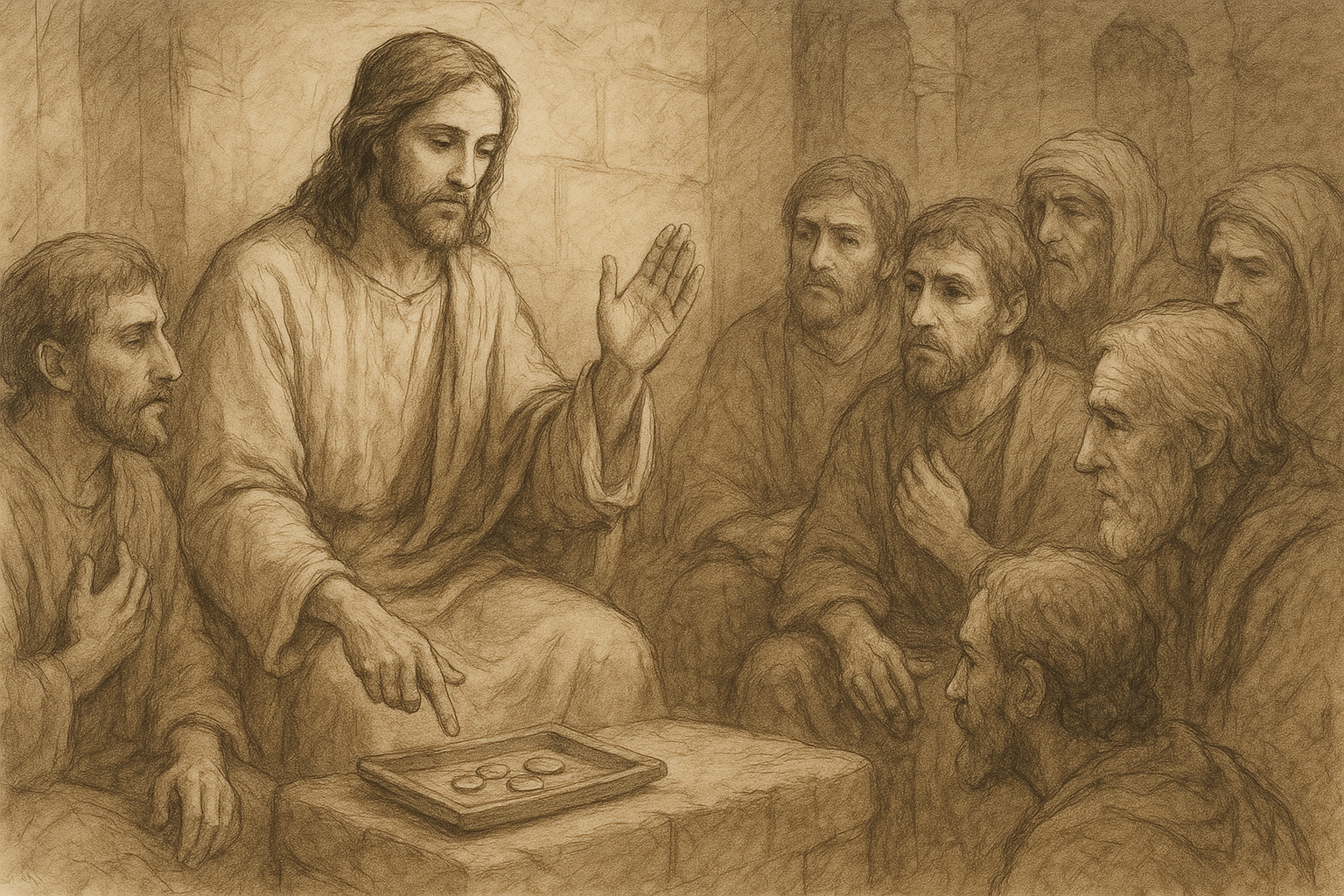
Jesus tells the parable in the context of His teaching on watchfulness and the coming judgment. In Matthew's Gospel, the story appears as part of a larger discourse about the kingdom of heaven and the master's return [[VERSE|matthew|25|14-30|Matthew 25:14-30]]. A man going on a journey entrusts money to his servants according to their abilities. One receives five talents, another two, and another one. The first two trade with what they have been given and gain more. The third buries his talent in the ground.
The quantities matter, but not in a simple economic sense. A talent was a large sum of money, so the image already suggests something weighty and precious. Yet Jesus is not chiefly teaching finance. He is teaching the kingdom. The servants are not owners. They are stewards. They receive what belongs to another, and they are accountable for it when the master returns.
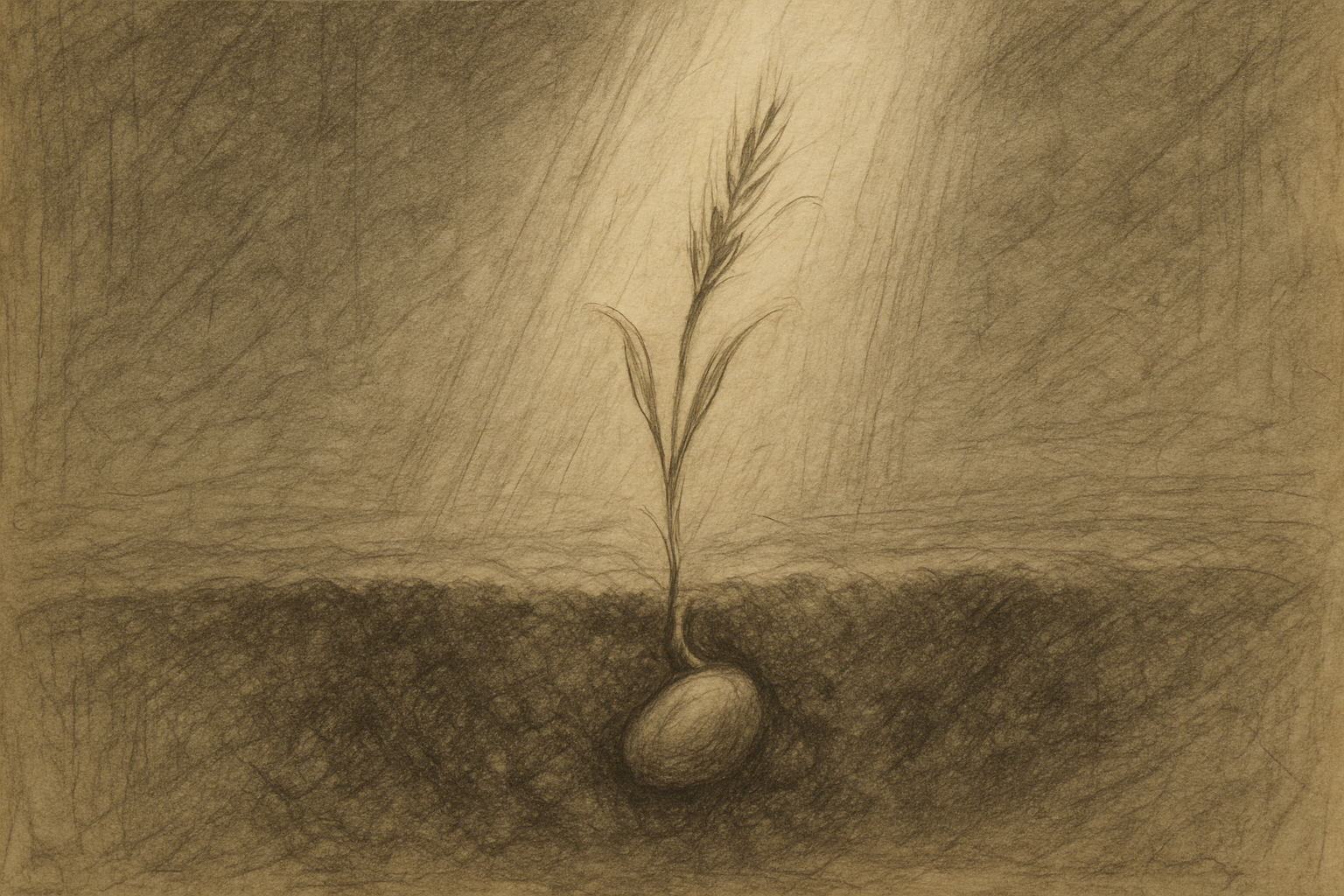
That is why the story is so piercing. The servant who buries the talent does not lose it to theft or waste. He preserves it. On a narrow reading, his action may seem cautious. But the master judges him harshly because he has lived from fear rather than trust. He has not merely avoided failure. He has refused relationship. He has treated the master's gift as a burden instead of a calling.
What Christ is teaching about God and the human person
The parable reveals something beautiful about God first of all: He gives before He asks. Before any servant has acted, the master has already entrusted his property to them. This is how grace works. The Lord does not wait for us to prove our worthiness before He blesses us. He creates, calls, equips, and entrusts. Life itself is received. Faith is received. Every gift of nature and grace is received.
It also reveals that human beings are meant to be fruitful. We are not saved to remain hidden. We are not baptized simply to preserve a private religious feeling. The Lord intends His gifts to bear fruit in charity, truth, prayer, work, and service. The first two servants do not produce the same amount, but each is praised in the same words: Well done, good and faithful servant Matthew 25:21. The master praises fidelity, not comparison.
That detail is especially important in Catholic life. It is easy to measure ourselves against others and to think that holiness belongs only to people with dramatic ministries, visible success, or obvious gifts. The parable corrects that habit. God does not ask for someone else's life. He asks for ours. He wants the grace given to us to become love offered back to Him.
Well done, good and faithful servant. Since you were faithful in small matters, I will give you great responsibilities. Come, share your master's joy Matthew 25:21.
The fear that buries the gift
The third servant gives the parable its sharpest warning. He says he was afraid, and fear led him to bury what he had received Matthew 25:25. On one level, he fears loss. On another, he fears the master himself. His words suggest a distorted image of authority: he sees the master as harsh, exacting, and impossible to please. That inner image shapes his response.
This is spiritually important. Sin often begins with a false picture of God. If we imagine Him as stingy, irritable, or suspicious, we will protect ourselves from Him. We may keep our gifts buried, our consciences guarded, and our hearts closed. We may do the minimum and call it prudence. But the parable shows that fear can become a quiet form of unfaithfulness.
For Catholics, this has particular resonance in the life of grace. A person can receive sacraments, hear the Word, and still remain inwardly hidden. The gifts of faith, time, intellect, labor, hospitality, and mercy can all be buried under shame, laziness, resentment, or indecision. Christ is not asking us to manufacture greatness. He is asking us to cooperate with what He has already placed within our reach.
Stewardship in everyday Catholic life
The talents explanation becomes concrete when we stop thinking only about money. The parable touches ordinary life because every baptized person has been entrusted with something. Parents receive the care of children. Children receive the duty of honoring parents. Priests receive souls to shepherd. Religious receive the witness of consecrated life. Lay people receive homes, workplaces, friendships, skills, and opportunities to serve. None of these are accidental.
Stewardship begins with gratitude. A grateful person recognizes that gifts are gifts. This changes the way we use time, speech, possessions, and relationships. Time is no longer treated as a possession to spend only on ourselves. Speech is no longer used casually or cruelly. Wealth, however modest, is no longer an idol or a source of fear, but a tool for justice and generosity. Even hidden suffering can be offered to God and joined to Christ.
The Church's sacramental life strengthens this outlook. In Confession, we do not pretend that nothing matters. We place our actions before God's mercy and ask for renewal. In the Eucharist, we offer what little we have and receive Christ Himself, who makes our offering fruitful. The Mass forms us to live as people who have been entrusted with a sacred reality and sent back into the world carrying it.
In this way, stewardship is not a side topic for financially minded Christians. It is a whole way of living. The talents explanation reaches into the kitchen, the office, the parish hall, the classroom, the hospital room, and the hidden routines of domestic life. Wherever God has placed us, something has been entrusted to us for the good of others and the glory of God.
Some daily places where the parable becomes real
- Using time for prayer instead of waiting for a perfect season
- Offering patient attention to family members who are easy to overlook
- Practicing honest work rather than cutting corners
- Giving alms with discretion and mercy
- Serving in parish life without needing recognition
- Developing a skill so it can bless others, not merely promote ourselves
The reward is communion, not applause
It is easy to hear the parable and reduce it to productivity. That would miss the heart of the story. The goal is not applause, competition, or self-improvement in a secular sense. The goal is communion. The faithful servants are invited into the master's joy. The reward is relationship. The talent matters because the master matters.
This is a deeply Catholic note. God does not call us to bear fruit so He can admire our achievement. He calls us to share in His life. The servant who responds faithfully is not merely successful. He is welcomed. He enters joy. The final horizon of stewardship is not utility but beatitude.
That is also why the parable is both consoling and bracing. It consoles because our smallness is not a problem when placed in God's hands. It braces us because we cannot remain indifferent. Grace is given to be received, multiplied, and returned in love. The Christian life is not passive. It is cooperative.
So the parable asks a direct question: what are we doing with what God has placed in us? Are we preserving our gifts out of fear? Are we comparing ourselves to others? Are we waiting for permission to begin? Or are we quietly, steadily offering our lives back to the Lord who gave them?
In the end, the talents explanation is not about becoming impressive. It is about becoming faithful. And fidelity often looks unremarkable from the outside. A prayer said when no one sees it. A child taught to forgive. A burden carried without complaint. A check written in secret. A task completed with integrity. A hidden act of patience. These are not small things in the eyes of God. They are the seeds of His kingdom.
When the Master returns, He will not ask whether we became famous. He will ask whether we loved what He entrusted to us, and whether we allowed His gifts to bear fruit. To hear His voice and share His joy will be enough.
Keep Reading on Lets Read The Bible
Frequently Asked Questions
What is the talents explanation in Matthew 25?
The talents explanation centers on a master who entrusts goods to his servants and later asks for an accounting. Jesus teaches that God gives gifts to be used faithfully, not hidden out of fear. The parable points to stewardship, responsibility, and readiness for the Lord's return.
Are the talents only about money?
No. While the story uses money as the image, Catholics have long read the parable more broadly. It applies to every gift God gives, including faith, time, ability, health, work, relationships, and opportunities for service.
How can Catholics live this parable today?
Catholics live the parable by receiving God's gifts with gratitude and using them in service of others. That means praying faithfully, practicing charity, serving in the Church, working honestly, giving generously, and avoiding the fear that keeps gifts buried.