Church History
Leo XIII and the Church's Steady Voice in a Restless Age
How Pope Leo XIII guided the Church through modern upheaval with intellect, prudence, and a clear social vision.
Site Admin | January 2, 2026 | 94 views
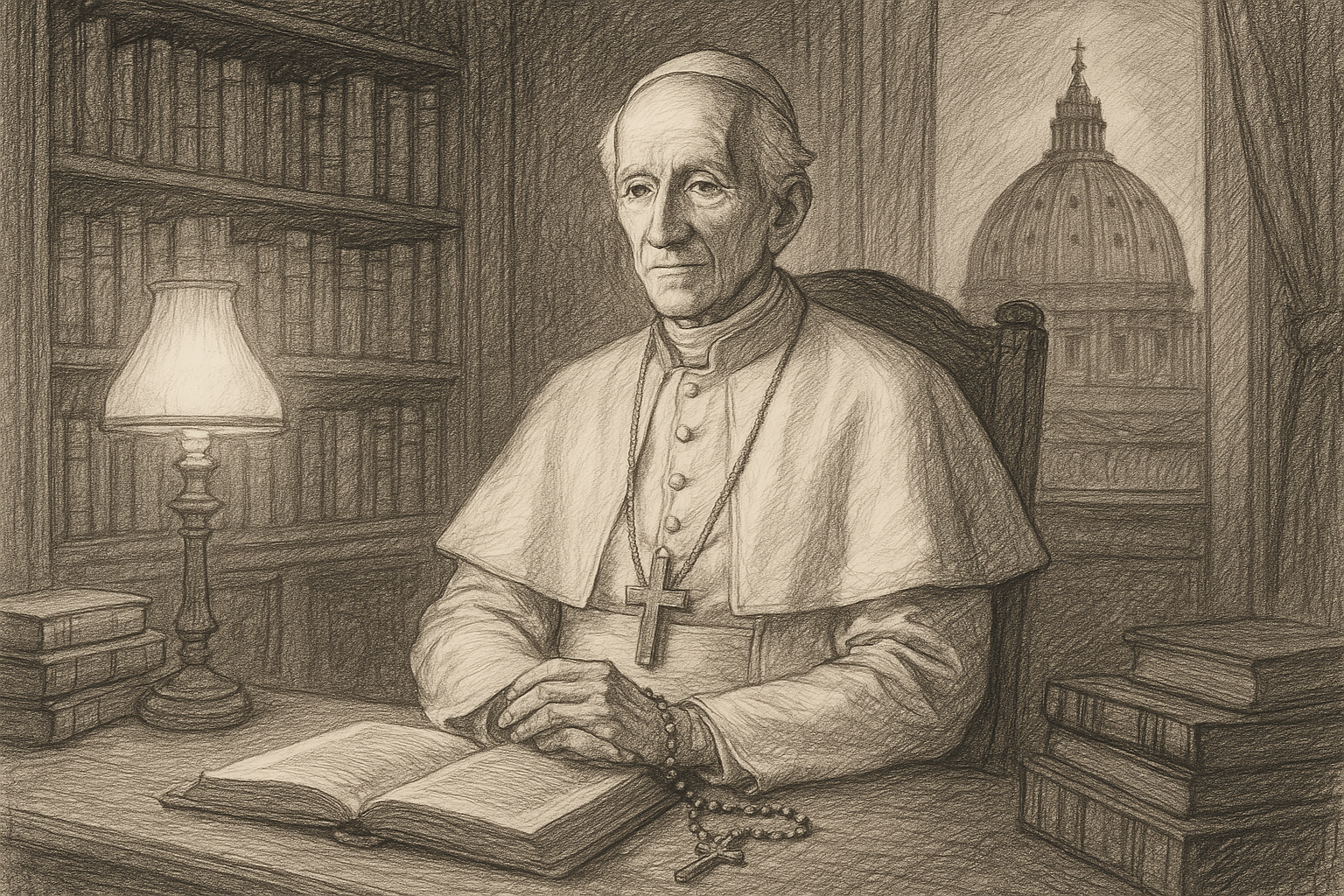
Pope Leo XIII history belongs to one of the most challenging eras in modern Church life. Born Vincenzo Gioacchino Pecci, he was elected pope in 1878 and served until 1903, making his pontificate one of the longest in history. He inherited a Church under pressure from political revolutions, new intellectual currents, and the loss of the Papal States only a few years earlier. Yet Leo XIII did not meet these troubles with panic. He answered them with patience, learning, and a deep conviction that the Church could speak to the modern world without surrendering the truths of the faith.
For Catholics today, Leo XIII is important not only because of what he faced, but because of how he faced it. He was a pope of measured strength. He did not rely on slogans or moods. He studied the age, named its dangers, and pointed the Church toward prayer, reason, social justice, and fidelity to Christ. His witness remains especially valuable in a time when many people still wonder whether the Church can remain fully Catholic and fully engaged with the modern world.
A Church in a Changed World
When Leo XIII became pope, Europe was still shaped by the aftershocks of the French Revolution and the rise of nationalism. Ancient Christian structures had been weakened or overturned. In Italy, the unification movement had stripped the pope of temporal power, and the pope now lived as a kind of prisoner in the Vatican, refusing to recognize the new political order that had absorbed the Papal States. This was not merely a political problem. It touched the Church's public standing, the pope's freedom, and the question of how Catholics should live in modern nation-states.
At the same time, the intellectual climate was changing quickly. Rationalism, secular liberalism, and materialist philosophies were all pressing their claims. Many people assumed that religion belonged to the past and that modern progress would replace Christian belief. Leo XIII saw that Catholics could not answer such claims by withdrawing into fear. They needed serious thought, disciplined faith, and confidence that truth does not fear examination.
He also faced a social world marked by industrialization, urban poverty, labor unrest, and widening class conflict. New factories created wealth for some and hardship for many others. The Church had long taught charity, but the conditions of industrial life demanded a more explicit and public response. Leo XIII became the great pope of the social question because he recognized that economic life, like political life, must be judged in the light of the moral law.
A Pope of Learning and Discipline
Leo XIII was known for his intellectual seriousness before he was known for anything else. He had served as a bishop and as papal diplomat in Belgium, where he became familiar with both the challenges of modern politics and the value of educational renewal. His background helped him see that the Church needed well-formed clergy and educated laity who could think clearly in a complex age.
One of the lasting marks of his pontificate was his encouragement of the study of St. Thomas Aquinas. Leo XIII believed that the Church should not fear reason, because reason rightly used leads toward truth. In the encyclical Aeterni Patris, he promoted Thomistic philosophy and theology as a stable guide for Catholic education and intellectual life. He did not do this out of nostalgia. He did it because he saw that the Church needed solid principles if it was to engage modern questions without confusion.
His approach was particularly wise because it combined confidence and restraint. Leo XIII did not imagine that every new idea was dangerous, but neither did he assume that novelty meant progress. He sought discernment. In this, he gave a lasting example of Catholic judgment: welcome what is true, reject what is false, and test everything against the faith handed down from the Apostles.
Rerum Novarum and the Social Teaching of the Church
The document most closely associated with Leo XIII is Rerum Novarum, issued in 1891. It addressed the condition of workers and the moral problems created by industrial society. This encyclical is often described as the foundation of modern Catholic social teaching, and for good reason. It offered a principled response to both ruthless capitalism and socialist collectivism.
Leo XIII defended the dignity of labor, the right to private property, the legitimacy of wages sufficient for a decent life, and the duty of employers to treat workers justly. He also rejected the socialist idea that private property should be abolished. His argument was not simply economic. It was theological and moral. Human beings are made in the image of God, and social arrangements must respect that dignity.
The encyclical also affirmed the importance of family life, since work and wages affect not only individuals but households. Leo XIII understood that the family is not a private hobby of religion. It is a fundamental society, and when labor conditions damage family stability, the harm spreads throughout the culture.
For Catholics now, Rerum Novarum remains important because it shows that the Church does not reduce justice to ideology. She does not side uncritically with the market or with the state. She asks instead whether economic life honors the person, strengthens the family, and serves the common good. That approach is still needed wherever human beings are treated as tools rather than persons.
The Papacy, the Modern State, and Catholic Life
Leo XIII also worked to steady the Church's relationship with modern political life. He sought practical ways to help Catholics participate responsibly in public affairs without compromising principle. In Italy, he gradually eased certain restrictions in order to protect the Church's interests and to encourage Catholic engagement with society. He did not solve every political problem of his day, but he showed that the Church can remain steadfast without becoming politically trapped.
This balance mattered because many Catholics were being asked to choose between faith and public life. Leo XIII resisted that false choice. He knew that Christ claims every part of life, including citizenship, work, and education. At the same time, he understood that the Church must not be absorbed by any political ideology. Her mission is higher than party loyalty, even while she speaks to the conscience of nations.
His prudence appears in the way he handled difficult questions without abandoning doctrine. He gave Catholics a model of engagement that was neither passive nor combative. It was mature. It trusted that truth can endure patient witness better than theatrical gestures.
Renewal of Devotion, Scripture, and Mission
Leo XIII's pontificate was not only about ideas and social problems. He also encouraged Catholic devotion and biblical renewal. He promoted the Rosary with remarkable consistency, issuing many encyclicals on the subject and inviting the faithful to turn to Our Lady with confidence. This was not a sentimental side project. He saw Marian prayer as a source of spiritual strength for families and nations alike.
He also encouraged Catholic biblical scholarship, while insisting that Scripture be read within the living tradition of the Church. In an age when Scripture was often studied in ways that detached it from faith, Leo XIII wanted Catholics to know that the Bible is both divine revelation and a living part of the Church's worship and teaching.
His care for mission was equally important. The nineteenth century was a time of expanding missionary activity, and Leo XIII supported efforts to bring the Gospel to the nations. He recognized that the Church is not a European institution alone. She is universal, sent to proclaim Christ to every people.
The Tone of His Pontificate
What makes Leo XIII especially memorable is the tone of his leadership. He was not a pope of spectacle. He was a pope of ordered thought and steady purpose. He could be firm, but he was not harsh for its own sake. He believed that the Church should answer confusion with clarity and anxiety with truth.
That tone is itself a lesson. In every age, Catholics face the temptation to overreact. Some want to retreat from the world entirely. Others want to adjust the faith until it fits current opinion. Leo XIII showed a better way. He listened carefully, taught clearly, and trusted the long wisdom of the Church.
His papacy also reminds us that historical influence is often measured over time. Some of his work bore fruit immediately, especially Rerum Novarum. Other aspects of his teaching prepared the way for later developments in Catholic thought. He helped shape a Church that could speak with confidence in the twentieth century, not because she chased relevance, but because she remained anchored in truth.
What Modern Catholics Can Learn from Leo XIII
Modern Catholics can learn several things from Leo XIII history.
- Do not fear serious thought. Faith grows stronger when Catholics study well and think with the Church.
- Defend human dignity in public life. Work, wages, property, and family life are moral concerns, not merely technical ones.
- Stay rooted in tradition while engaging the present. Leo XIII did not abandon the past, but he also did not hide from the challenges of his own day.
- Use patience as a strength. He showed that steady teaching can be more effective than loud reaction.
- Keep devotion and doctrine together. His promotion of the Rosary and his intellectual work belonged to the same Catholic vision.
For readers trying to understand the modern Church, Leo XIII offers a useful pattern. He was not perfect, but he was deeply capable, prayerful, and aware of the needs of his time. He helped Catholics see that social questions, philosophical questions, and spiritual renewal are all connected. A society weak in justice will also grow weak in faith, and a faith that does not shape public life becomes thin and easily ignored.
In the end, Leo XIII's witness is a reminder that the Church need not choose between tradition and engagement. She can proclaim Christ clearly, think carefully, and serve the world without becoming captive to it. That is part of why Pope Leo XIII history still deserves attention today.
Keep Reading on Lets Read The Bible
Frequently Asked Questions
Why is Pope Leo XIII so important in Church history?
He is important because he led the Church through the challenges of modern political change, industrial society, and intellectual upheaval, while strengthening Catholic teaching in each area.
What is Leo XIII best known for?
He is best known for the encyclical Rerum Novarum, his promotion of Thomistic philosophy, and his strong support for the Rosary and Catholic renewal.
How did Leo XIII influence Catholic social teaching?
He gave the Church a clear framework for thinking about labor, wages, property, family life, and the common good in a way that respects human dignity and rejects both socialism and exploitation.