Jesus and the Gospels
Mary Magdalene at the Tomb: The First Witness of Easter Morning
A Catholic reading of the Gospel scene where grief, faith, and mission meet at the empty tomb
Site Admin | January 27, 2026 | 82 views
Among the many figures who appear in the Easter Gospels, Mary Magdalene stands out with particular clarity. She is not presented as a distant observer or a secondary detail. She is there at the tomb, near the place of death, when the first light of the Resurrection begins to break. The Gospels show her watching, returning, weeping, speaking, and finally being sent. In that movement from grief to announcement, the Church has long seen a powerful pattern of discipleship.
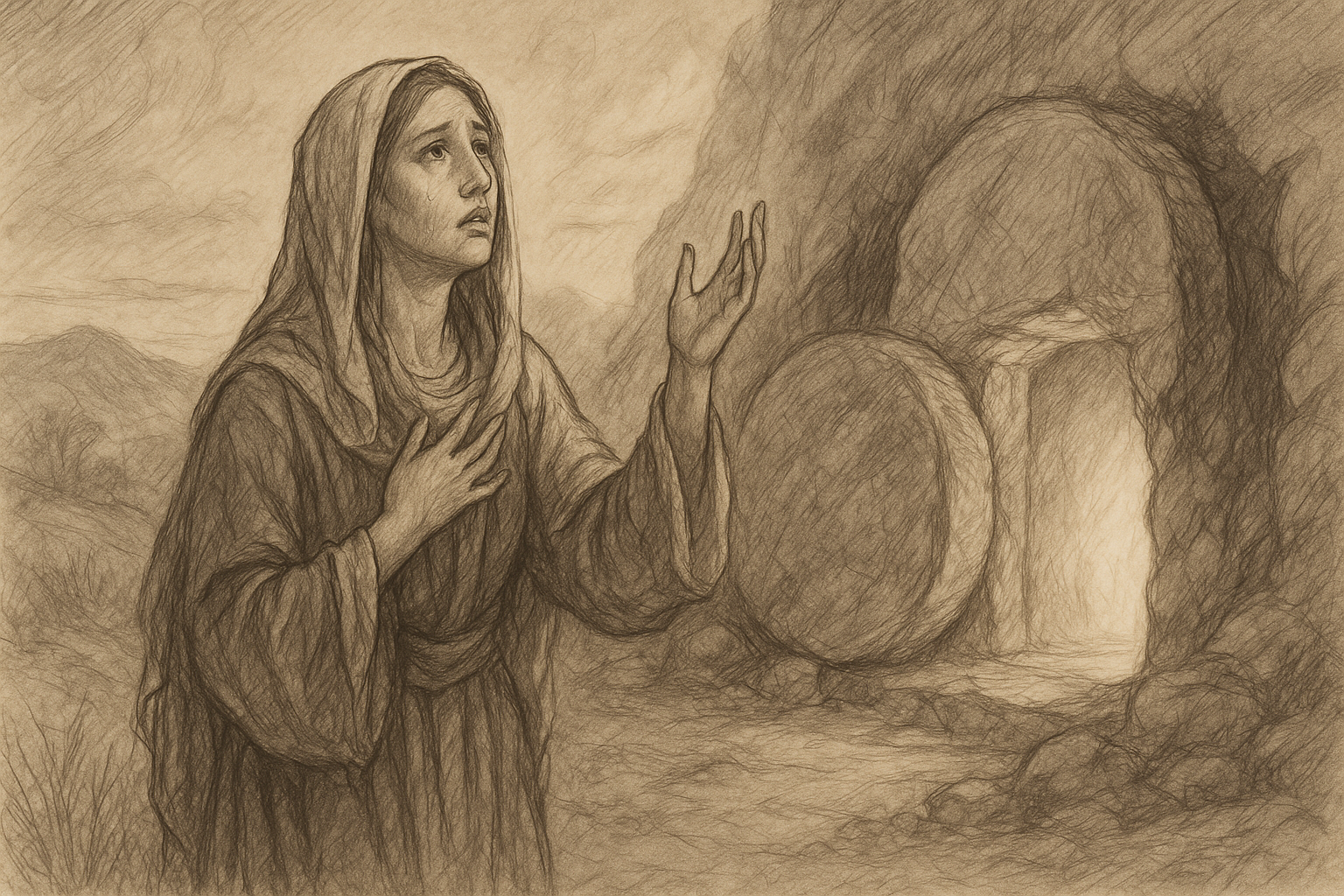
The scene is simple, yet it carries deep meaning. Mary Magdalene comes to the tomb while it is still dark in one account, and at dawn in another. She finds the stone moved away, speaks with the angels, and then encounters the risen Jesus himself. At first she does not recognize him. Then he speaks her name, and everything changes. The moment is brief, but it is one of the most beautiful in the New Testament. It shows that the risen Christ does not remain a remote idea. He meets a real person in real sorrow and sends her to speak to the brethren.
The Gospel scene in its biblical setting
The Resurrection accounts in the four Gospels are not identical, but they are harmonious. They tell the same saving event from different angles, each with its own emphasis. Mary Magdalene appears in all four traditions tied closely to the events of Easter morning. In John, she comes to the tomb while it is still dark and runs to tell Peter and the beloved disciple John 20:1. In Matthew, she is among the women who come to see the tomb and later meet the risen Lord Matthew 28:1 Matthew 28:9. In Mark, she is named among those who first receive the angelic message that Jesus has risen Mark 16:1 Mark 16:6. In Luke, she is among the women who report the empty tomb and the angelic message to the apostles Luke 24:1 Luke 24:10.
This is important because the Gospels do not present Mary Magdalene as a symbolic placeholder. They present her as a witness. She is part of the historical fabric of the Resurrection narratives. The Church does not ask us to believe in an abstract Easter mood. She asks us to believe that the tomb was empty, that Jesus was raised, and that chosen witnesses encountered him in body and spirit. Mary Magdalene stands close to the center of that witness.
The Fourth Gospel gives the most extended account of her encounter. After Peter and the beloved disciple leave, Mary remains outside the tomb, weeping John 20:11. She looks into the tomb, sees the angels, then turns and sees Jesus, though she does not yet know it is him John 20:12 John 20:14. When he speaks her name, she recognizes him and answers with love John 20:16. Jesus then sends her with a message to his brethren John 20:17.
Why Mary Magdalene remains so significant in Catholic memory
Catholic tradition has often honored Mary Magdalene because she embodies a striking combination of repentance, fidelity, and bold witness. The Church has long associated her with the women disciples who followed Jesus faithfully, and in the liturgical life of the Church she is remembered as an apostle to the apostles. That title is not a casual compliment. It points to the fact that she receives and carries a message entrusted to others by Christ himself.
Her importance also rests on the way she stays near when others scatter. The Gospels do not give us a polished portrait of spiritual success. They show human beings under strain. Some flee. Some doubt. Some only partly understand. Mary Magdalene remains close to the place of loss. She comes to anoint, to mourn, and to be near the body of the Lord. Love often looks like this in Scripture. It perseveres even when it does not yet understand what God is doing.
For Catholic readers, this matters because discipleship is not built on insight alone. It is built on fidelity. Mary Magdalene loves Christ before she fully grasps the meaning of the Resurrection. She searches before she sees. She weeps before she rejoices. That sequence is familiar to the spiritual life. Many believers know what it is to remain faithful in the dark, to pray without immediate clarity, and to keep watch beside the tomb when the heart has not yet caught up to the promise.
What the empty tomb reveals
The empty tomb is not merely a dramatic setting. It is a sign. It tells us that Jesus has truly passed through death and is no longer confined by it. The body that was laid in the tomb is not stolen, erased, or transformed into an idea. The Resurrection is bodily and real, though glorified beyond ordinary experience. The Church confesses that Christ rose on the third day, not as a metaphor but as an act of divine power that changed history.
Mary Magdalene encounters this truth in stages. At first, the empty tomb troubles her. Then the angels ask the question that reveals the mystery at the center of Easter: Why are you weeping? The question is not because grief is foolish. It is because grief is about to be answered. The Lord whom she seeks is alive. The place of burial is no longer the place of final meaning. What looked like absence is revealed as the threshold of divine victory.
There is also a pastoral tenderness in the way the Resurrection is disclosed. Jesus does not appear first to the powerful, nor does he make his first Easter appearance in a public square. He meets a faithful woman in tears. He lets her speak. He lets her look. He lets her misread the moment until he is ready to reveal himself. This fits the Gospel pattern of Christ drawing near to the humble and the searching heart.
Mary Magdalene's encounter at the tomb reminds us that Easter begins not with human triumph, but with a divine initiative that meets sorrow and turns it toward mission.
The meaning of being called by name
One of the most moving details in the Gospel of John is the moment when Jesus simply says, Mary John 20:16. Recognition comes through the voice of the Shepherd calling one of his own. This is not only a private detail. It carries a spiritual lesson for every Christian.
God does not save us as faceless strangers. He knows his people personally. The risen Jesus speaks in a way that pierces confusion and awakens memory. Mary Magdalene had likely heard his voice before. Now, in the light of Resurrection, the voice reveals the speaker. The same Lord who taught, healed, and suffered now lives, and his living presence is known in relationship.
This has deep implications for prayer. Many people imagine prayer as our effort to locate God. The Gospel scene suggests something richer. Prayer is often the place where we learn to recognize the One who has already come near. We may begin in tears, in confusion, or in silence, but Christ is not absent from those moments. He is able to speak within them. When he calls by name, the soul recognizes itself in relation to him.
Mary Magdalene's reply is also important. She turns and responds with devotion. The Gospel preserves her movement of heart before it preserves any polished explanation. In other words, love comes first. Theology matters, but so does the personal response of the believer who has encountered the living Lord. The Resurrection is not only something to analyze. It is Someone to adore.
From weeping to witness
Jesus does not leave Mary Magdalene in private consolation. He sends her. He tells her to go to his brethren and announce what she has seen John 20:17. This is one of the clearest signs that Easter creates mission. The Resurrection is not the end of the story but the beginning of proclamation.
That movement from sorrow to witness is spiritually rich. Mary does not become a witness because she has everything sorted out. She becomes a witness because she has been met. Christian testimony is often strongest when it rises from lived encounter rather than from detached argument alone. The Church always needs people who can speak honestly about what the Lord has done. Mary Magdalene's witness begins in tears, but it ends in joy and commission.
There is also a lesson here about the dignity of women in the economy of salvation. Christ chooses to reveal himself to women and to entrust them with news for the apostolic band. The Gospels are not shy about this detail. They present it as part of the surprise and mercy of God. Those whom the culture might overlook are often the ones who receive the first light of Easter.
For Catholics, this does not lessen the apostolic ministry of Peter and the Twelve. Rather, it shows the breadth of God's action. The Resurrection gathers all the disciples into the same mystery of grace. Some lead. Some announce. Some remain in prayer. Some return to the tomb. All are drawn by the same risen Lord.
Practical lessons for prayer and discipleship
Mary Magdalene at the empty tomb offers several concrete lessons for Christian life.
- Remain near Jesus even in darkness. Mary comes while it is still dark. Sometimes faith begins not with clarity, but with presence.
- Do not despise tears. Her grief is not a sign of failure. It is the place where the Lord meets her.
- Listen for your name. The risen Christ speaks personally. Regular prayer helps the heart grow attentive to his voice.
- Let encounter become mission. Mary is sent as soon as she recognizes Jesus. A true meeting with Christ tends toward witness.
- Trust that God can transform misunderstanding. Mary initially thinks Jesus is the gardener. The Lord is patient with imperfect perception.
These lessons are especially useful in seasons of spiritual dryness or sorrow. Many believers know what it means to keep looking for the Lord while feeling unsure where he is. Mary Magdalene shows that such seeking is not wasted. The risen Christ is able to meet sincere love even before that love understands what is happening. The search itself can become a form of readiness.
Her example also helps us approach Easter with greater realism. Easter joy is not denial of Good Friday. It is the passage through it. Mary does not skip grief. She walks through it. The Lord does not ask her to pretend that the tomb was never real. He reveals that death has been defeated precisely where death seemed most final.
Mary Magdalene and the life of the Church
The Church continues to read Mary Magdalene's witness at Easter because it speaks to every age. In every generation, believers stand before tombs of one kind or another: losses, fears, habits of sin, broken relationships, unanswered prayers. The Gospel does not tell us to deny those tombs. It tells us to bring our hearts to them in hope.
Mary Magdalene reminds us that faith is often loyal before it is triumphant. She is there because she loves Jesus. That love is purified and rewarded by an unexpected revelation. The same Lord who called her by name calls the Church in every Mass, every Scripture reading, every act of repentance, and every work of mercy. The Resurrection is not sealed in the past. It remains living and active in the life of grace.
To meditate on Mary Magdalene at the empty tomb in the Gospel is to learn how Christian discipleship begins and begins again. We come seeking. We wait. We weep. We listen. Then Christ speaks, and the heart knows that the tomb is no longer the last word. The Lord is risen, and he sends those who love him to tell the world what they have seen.
Keep Reading on Lets Read The Bible
Frequently Asked Questions
Was Mary Magdalene the first person to see the risen Jesus?
In the Gospel of John, Mary Magdalene is the first to encounter the risen Lord directly, and she is sent to announce the Resurrection to the disciples. The other Gospels also show her among the first witnesses at the tomb.
Why does Jesus tell Mary Magdalene not to cling to him?
Jesus is not rejecting her love. He is teaching her that his risen presence is not to be possessed in a merely earthly way. He is leading her from recognition to mission and from visible closeness to faith in his glorified life.
What does Mary Magdalene teach Catholics about prayer?
She shows that prayer can begin in grief, searching, and silence. Her story encourages Catholics to stay near Christ, listen for his voice, and let an encounter with him become witness to others.