Prayer and Devotion
Offering Pain to God Without Pretending It Is Small
A Catholic look at redemptive suffering, daily prayer, and the quiet strength of entrusting hardship to Christ.
Site Admin | December 14, 2025 | 92 views
When suffering becomes part of prayer
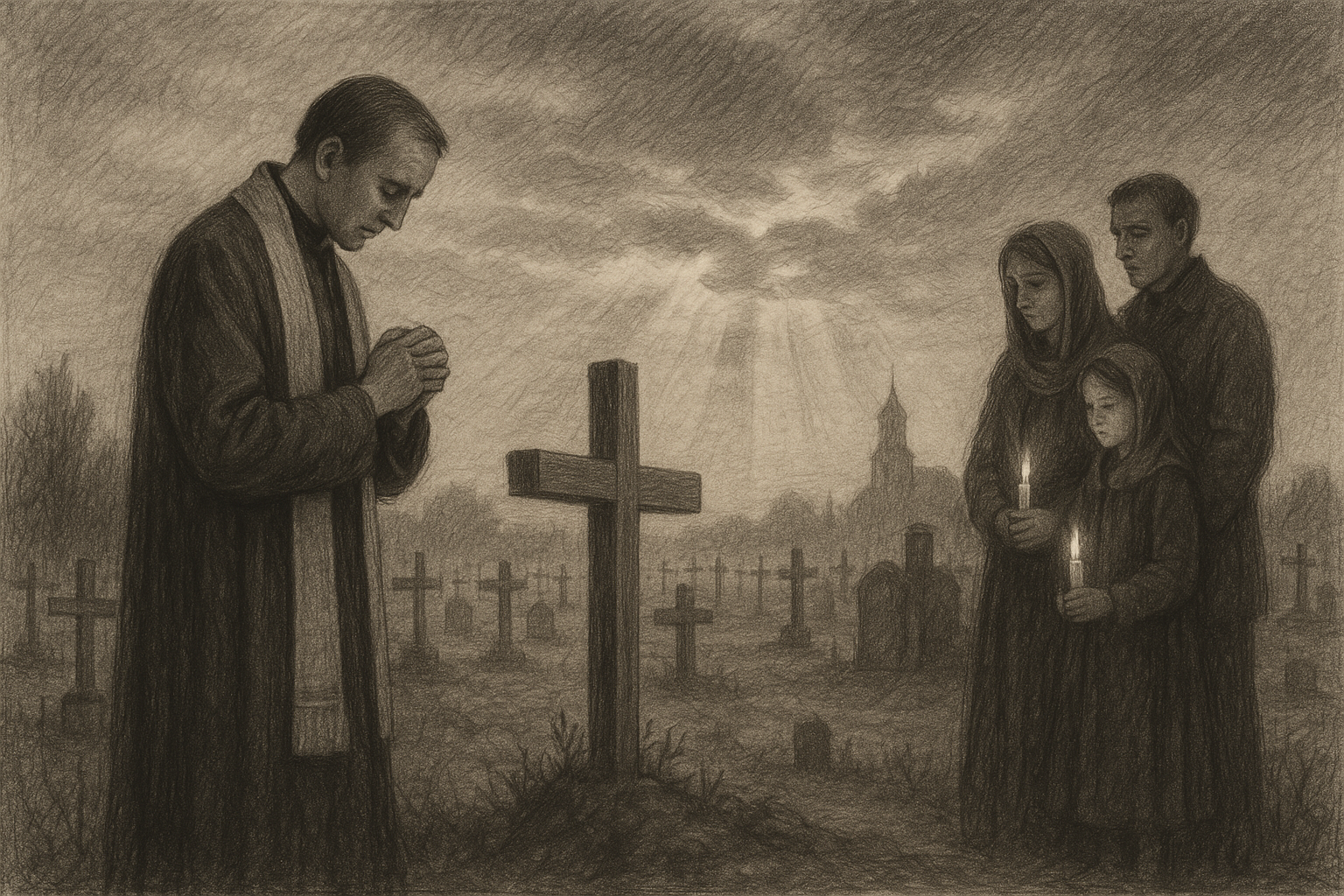
Most people do not need to be convinced that suffering is real. Illness, grief, family strain, disappointment, loneliness, anxiety, and physical pain already press themselves into daily life. The harder question is what to do with that suffering once it arrives. Catholic faith does not ask a person to pretend pain is harmless or to smile through wounds that are truly heavy. It asks something more demanding and more hopeful: to bring suffering before God and offer it to Him.
That is the heart of offering suffering to God explained in Catholic life. It means uniting what hurts us to the sacrifice of Jesus Christ, trusting that nothing surrendered in love is wasted in His hands. This is not a technique for escaping sorrow. It is a way of praying inside sorrow, with the crucified and risen Lord at the center.
The Church has long taught that human suffering, joined to Christ, can become spiritually fruitful. The mystery is not that pain is good in itself. Pain remains an enemy in many respects, a sign that something is disordered or broken in our fallen world. Yet Christ entered that brokenness, carried the Cross, and transformed suffering from within. A Catholic does not worship pain. A Catholic brings pain to the One who redeemed it.
The biblical pattern of offering what wounds us
Scripture does not hide suffering from view. The Psalms are full of lament, complaint, trust, and surrender. Again and again, the faithful cry out to God from distress rather than after it has disappeared. That pattern matters. Prayer is not only praise when life is calm. It is also a turning toward God when the soul is under pressure.
Saint Paul gives perhaps the clearest statement of this mystery: Colossians 1:24. Paul is not claiming that Christ's sacrifice was insufficient. Rather, he is speaking of the believer's participation in Christ's own saving work, by grace, in a real though dependent way. The Christian life is not passive spectatorhood. It is communion.
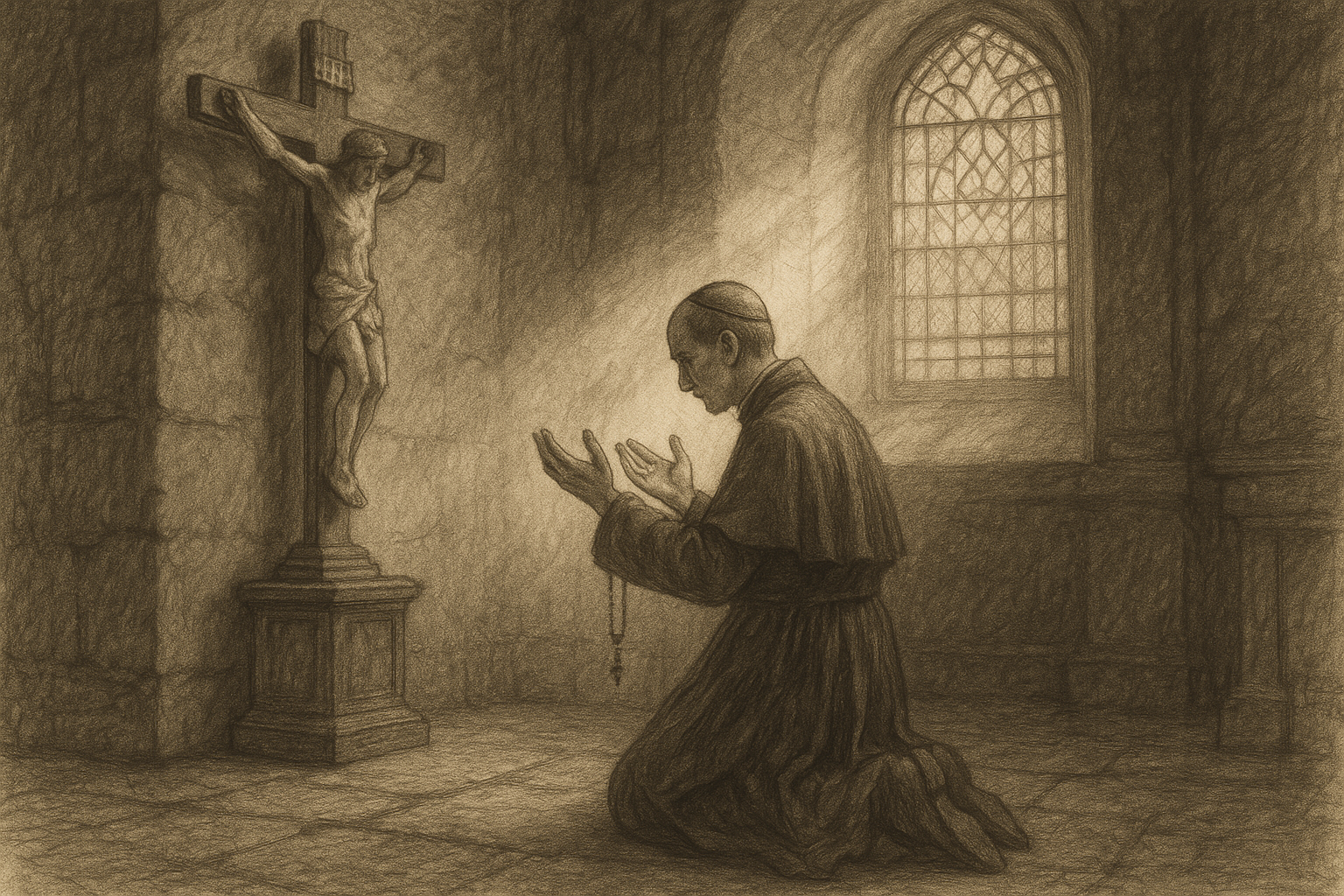
Jesus Himself offers the deepest pattern of all in Gethsemane and on Calvary. In His agony, He prays honestly, not my will, but Yours be done. That prayer is not resignation in the cold sense. It is filial trust under extreme distress. At the Cross, the Son does not escape suffering from a distance. He enters it. For Catholics, this makes every offering of suffering a participation in Christ's own self-gift.
To offer suffering is not to call evil good. It is to place what is evil, painful, or unwanted into the hands of the God who can bring grace even from the Cross.
What the Church means by redemptive suffering
In Catholic language, people often speak of redemptive suffering. The phrase can sound abstract, but its meaning is simple enough. Because Jesus has united Himself to human suffering through the Passion, our sufferings can be joined to His and offered for love of God, for the good of others, and for our own purification.
This does not mean a Christian should seek out pain or refuse legitimate help. Medicine, counseling, rest, justice, and compassion all matter. The Church never teaches that a person must welcome abuse, neglect treatment, or remain in unsafe conditions in order to be holy. Rather, when suffering cannot be instantly removed, it can still be made meaningful through prayer and sacrifice.
Saints throughout history have lived this truth with remarkable steadiness. Many embraced hidden suffering in ordinary life: chronic illness, demanding labor, misunderstood obedience, family burdens, or spiritual dryness. Others endured martyrdom. Their witness does not romanticize pain. It shows that grace can dwell where the world sees only loss. A suffering soul, united to Christ, may become intercessory in a quiet but real way.
The Catechism teaches that Christ invites His disciples to take up their cross and follow Him. That invitation does not erase individuality or dignity. It does not demand emotional numbness. It simply places suffering where it belongs, inside discipleship. The Cross is not an interruption of Christian life. It is often the very place where Christian love becomes most clear.
A brief Catholic history of offering suffering
The practice of offering suffering to God is not a modern devotional trend. Its roots reach into the early Church, where martyrs and confessors saw their trials as union with Christ. Early Christians prayed with an acute sense that Christ's Passion was not merely remembered in the liturgy but mystically shared by His people.
As Christian spirituality developed, monks, religious, and lay faithful continued to speak of suffering as a path of purification and deeper charity. The saints learned to interpret pain not only as something to endure, but as something that could be prayed through. Medieval devotion, especially around the Passion, helped believers contemplate Jesus' wounds and see their own sorrows in relation to His.
In more recent centuries, Catholic devotion has often emphasized the value of daily offerings. Simple prayers, repeated with sincerity, became a way for ordinary believers to begin the day by giving God whatever would come: labor, fatigue, family stress, misunderstanding, illness, and grief. This was never meant to reduce deep suffering to a slogan. Rather, it gave the faithful a language of surrender that fit the rhythms of ordinary life.
Saints such as Thérèse of Lisieux, who embraced the hidden hardships of convent life, and John Paul II, who spoke often of human suffering in relation to love and dignity, show that this tradition is not narrow or sentimental. It is broad enough to include the very young and the very old, the healthy and the ill, the active and the confined.
How offering suffering changes prayer
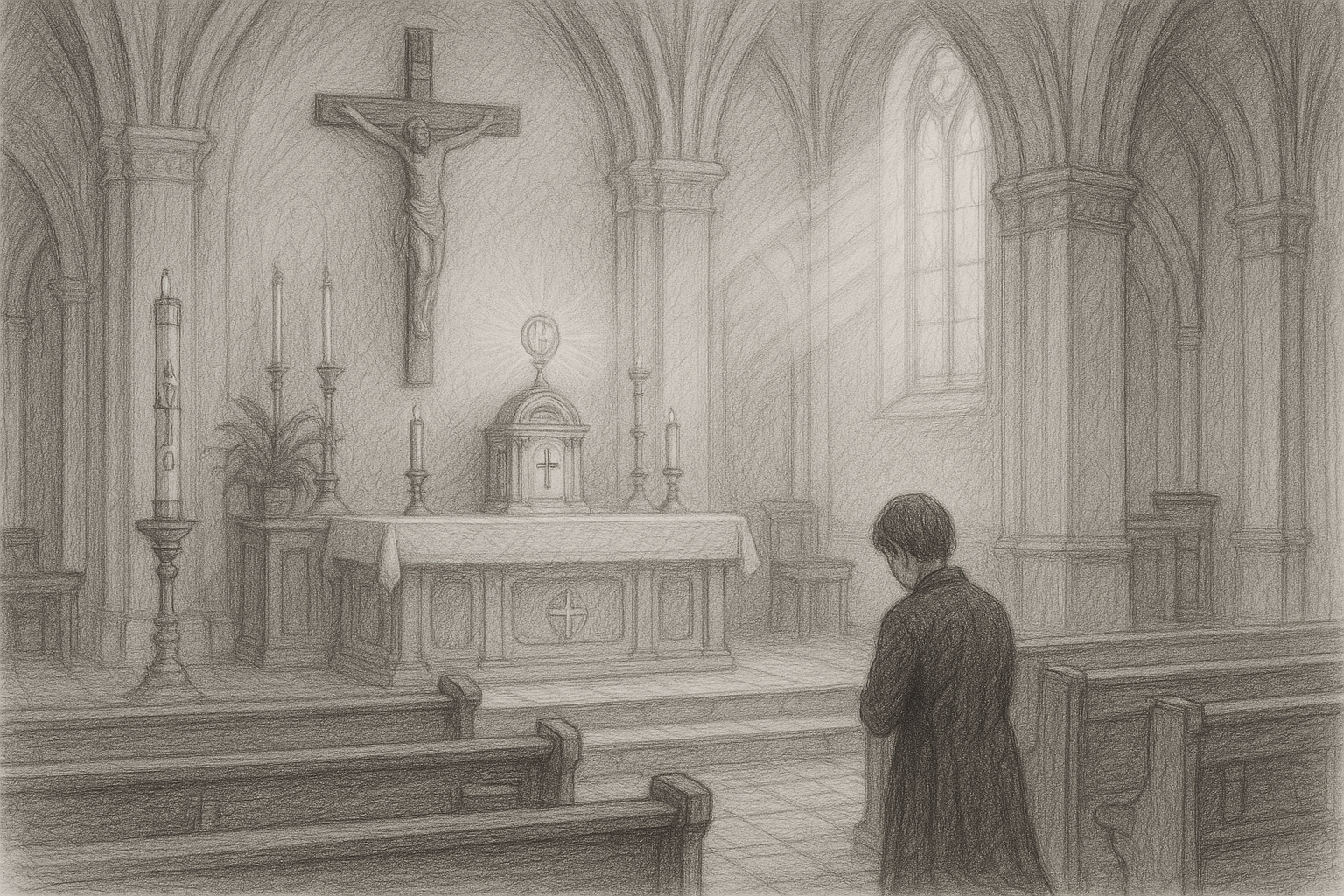
When suffering is offered to God, prayer becomes less about control and more about communion. A person no longer comes to God only with requests for relief, though those requests remain good and necessary. One also comes with the burden itself. That changes the tone of prayer from transactional to relational.
Offered suffering can deepen humility. It reminds us that we are not self-sufficient. It can deepen compassion, because a person who suffers with Christ may become gentler with the pain of others. It can deepen patience, not as passive resignation, but as a steady refusal to let suffering define the whole meaning of life. And it can deepen hope, because the soul learns that God is present even when circumstances are unresolved.
There is also a hidden freedom here. If every unpleasant thing must be avoided at all costs, life becomes ruled by fear. But if even suffering can be brought to God, then nothing is spiritually barren. That does not make pain desirable. It makes grace possible everywhere.
Practical ways to offer suffering in daily life
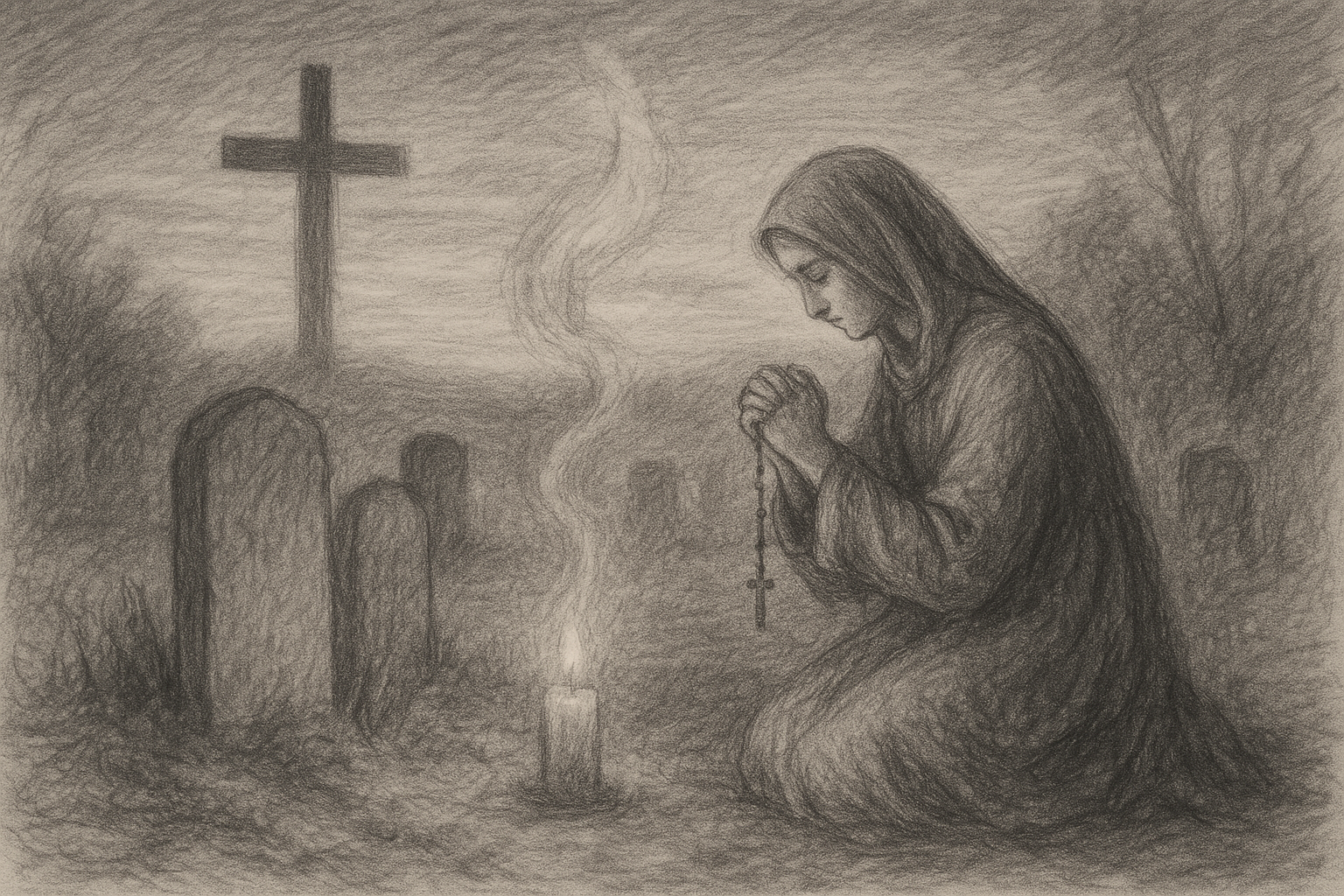
Many Catholics want to know how to do this in a concrete way. The practice does not require elaborate words. It begins with honesty. Name the suffering before God. Speak plainly, without trying to make it sound noble.
- When you wake up in pain, say,
Keep Reading on Lets Read The Bible
Frequently Asked Questions
Does offering suffering to God mean Catholics should avoid medicine or emotional support?
No. The Church does not teach that people must refuse legitimate care. Offering suffering to God is a spiritual act, not a rejection of medicine, counseling, rest, or practical help. Christians should seek wise treatment while also bringing their pain to prayer.
What if I feel angry or confused when I try to offer my suffering?
That is common and not a failure. Honest prayer can include anger, fear, grief, and confusion. The Psalms show that lament belongs in prayer. Even a simple, imperfect act of trust counts as an offering when it is directed to God.
Can suffering be offered for other people?
Yes. Catholics often unite hardship to Christ and offer it for the conversion of sinners, the needs of family members, the Church, or the souls in purgatory. This should always be done with humility, remembering that Christ alone saves, while we are invited to cooperate with His grace.