Sacraments and Liturgy
Slow Reading, Living Prayer: Lectio Divina in the Catholic Tradition
A Catholic introduction to sacred reading that listens for God's voice, receives the Word with faith, and lets Scripture shape prayer and daily life.
Site Admin | September 27, 2025 | 90 views
Lectio Divina Explained as Prayerful Listening
Among the Church's treasures, lectio divina stands out because it is so simple and so demanding at once. The phrase means holy reading, but in practice it is much more than reading. It is a prayerful listening to God who speaks through his word. The goal is not to master Scripture as a text for study alone, but to receive it as a living word addressed to the believer and to the Church.
For Catholics, this is not a private invention or a modern technique. It belongs to a long Christian habit of approaching Scripture with reverence, patience, and trust. Lectio divina explained in the Catholic way is less about performing a method perfectly and more about placing oneself before the Lord with an open Bible, a quiet heart, and a willingness to be changed.
That openness matters because the word of God is never ordinary. The Letter to the Hebrews says, the word of God is living and active Hebrews 4:12. It does not merely inform. It illuminates, judges, consoles, and calls. When Catholics practice lectio divina, they make space for that living word to reach them.
Where This Way of Prayer Comes From
The Church's tradition of sacred reading developed over centuries. Early monks and other Christians read Scripture slowly, often aloud, returning again and again to the same passage so that it might sink into the mind and heart. In the monastic world, this rhythm of reading and prayer helped form a life centered on God rather than distraction. Scripture was not treated as a book to consume quickly, but as food to savor.
This is one reason lectio divina has remained so fruitful. It resists hurry. It asks for attention. It teaches that prayer is not only speaking to God, but also being addressed by him. The Psalms offer a natural model for this kind of prayer. Again and again, Israel listens, remembers, and responds. Speak, Lord, for your servant is listening 1 Samuel 3:10 is the posture lectio divina seeks to cultivate in every age.
The Church does not present lectio divina as a replacement for liturgy, doctrinal teaching, or biblical study. Rather, it complements them. Sacred reading helps the Christian receive what the Church proclaims at Mass, and it disposes the soul to live in harmony with the Gospel.
The Spiritual Meaning of Sacred Reading
At its heart, lectio divina is about encounter. Catholics believe the Scriptures are inspired by the Holy Spirit and belong to the life of the Church. This means that when the believer comes to the Bible in faith, he is not coming to an isolated page, but to a word that belongs to Christ and is fulfilled in him. Jesus himself taught that the Scriptures bear witness to him John 5:39.
That is why lectio divina is never merely self-reflection. The question is not only, What do I think about this passage? The deeper question is, What is the Lord saying to me, and how should I respond? A passage may expose sin, stir gratitude, deepen trust, or invite a concrete act of charity. Sometimes it gives consolation. Sometimes it brings holy discomfort. In either case, the soul is being trained to listen.
This manner of prayer also draws the believer into humility. We do not control the word of God. We receive it. We do not force a passage to yield instant results. We allow it to work in us over time. As the prophet Isaiah says, God's word does not return empty but accomplishes what he sends it to do Isaiah 55:11. Lectio divina trusts that promise.
The Classic Four Movements of Lectio Divina
The traditional practice is often described in four movements, though different teachers may name them slightly differently. The most common pattern is lectio, meditatio, oratio, contemplatio. These are not rigid compartments. They are a gentle path that helps the mind and heart move from hearing to response.
1. Lectio, or reading
Begin by reading a short passage of Scripture slowly and attentively. Choose a Gospel passage, a psalm, or the day's Mass readings. Read it once, then again. Notice a word, phrase, or image that stands out. Do not rush to analyze everything. Let the text speak on its own terms.
It can help to read aloud, since hearing the word engages the body and slows the mind. If a word or phrase keeps drawing attention, pause there. The point is not quantity, but receptivity.
2. Meditatio, or meditation
After reading, ponder the passage. Ask what it reveals about the Lord, about his saving work, or about your own life. You are not inventing meaning, but receiving it in faith. Meditation may include remembering related Scripture, considering the example of the saints, or noticing where the text touches your present needs.
For example, when Jesus says, Come to me, all who labor and are heavy laden, and I will give you rest Matthew 11:28, a person may reflect on the burdens he carries and the kind of rest Christ alone can give. Such meditation is not abstract. It listens for application.
3. Oratio, or prayer
When the passage has awakened an insight or an ache, speak to God from that place. This may be praise, repentance, gratitude, petition, or quiet surrender. A psalm often becomes the language of oratio because the psalm itself teaches the soul how to pray.
In this stage, the Bible is no longer only something we read. It becomes conversation. The believer answers the Lord who has spoken first. This is one reason lectio divina is so fitting for Catholics, whose life of prayer is always meant to be responsive, ecclesial, and Christ-centered.
4. Contemplatio, or contemplation
Contemplation is not a performance or an emotional peak. It is a simple resting in God's presence. After reading, pondering, and praying, the soul remains with the Lord in quiet trust. Sometimes there are no words. Sometimes there is only peace, longing, or patient attention. That silence is not empty. It is receptive.
Many Catholics find this stage difficult because they expect prayer to always feel active. Lectio divina teaches otherwise. The Lord is not limited to what we can say. As Scripture reminds us, be still, and know that I am God Psalm 46:10.
How to Practice Lectio Divina at Home
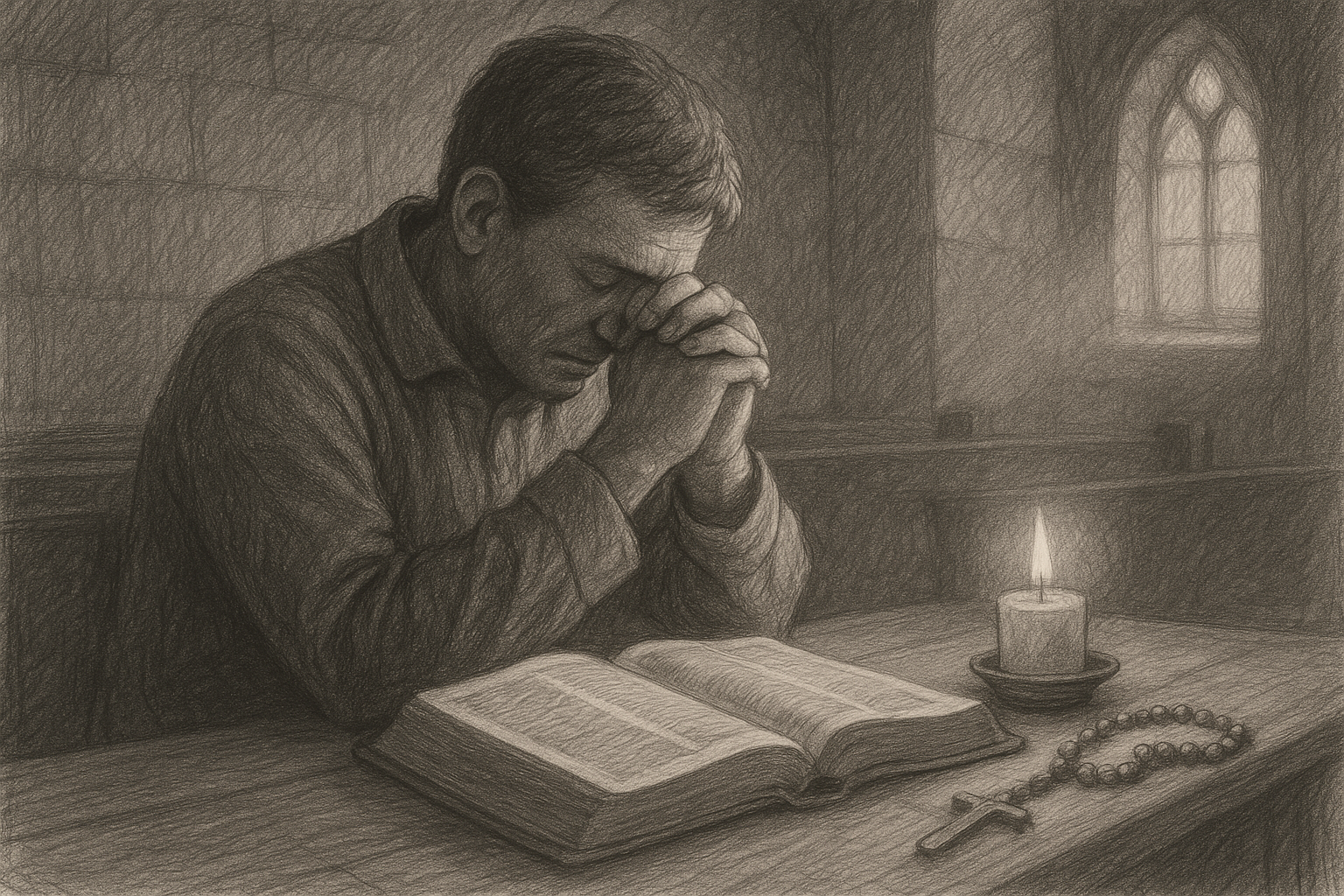
You do not need a special room or elaborate materials. A Bible, a few quiet minutes, and a willing heart are enough to begin. Still, a simple structure helps keep the practice from becoming vague or hurried.
- Choose a passage, preferably not too long. A Gospel story, a psalm, or the Gospel reading from Mass is a good place to start.
- Come quietly before God. Make the sign of the cross and ask the Holy Spirit to guide your prayer.
- Read the passage slowly one or two times. Notice any word or phrase that lingers.
- Reflect on what the passage reveals about God and what it asks of you.
- Speak honestly to the Lord in prayer.
- Rest in silence for a few moments, without forcing results.
- End with a prayer such as the Our Father, a decade of the Rosary, or a simple act of thanksgiving.
It is often wise to keep sessions brief at first. Ten or fifteen minutes done faithfully is better than an ambitious plan that collapses under pressure. Consistency matters more than intensity. Over time, the habit of sacred reading deepens the soul's capacity to recognize the Lord's voice.
Some Catholics prefer to use the daily Mass readings, since these are already given by the Church and connect personal prayer to the liturgy. That can be especially fruitful during seasons such as Advent or Lent, when the liturgical year naturally shapes the themes of prayer.
Common Mistakes to Avoid
Lectio divina is simple, but it can be misunderstood. One mistake is treating it like a biblical puzzle to solve. Another is turning it into a vague exercise in self-soothing. Catholic sacred reading is neither academic reduction nor private projection. It is a disciplined encounter with the Lord in his word.
Another danger is impatience. Many people think they have failed if they do not receive an immediate insight. Yet the fruit of lectio divina often emerges gradually. The passage returns later in the day, or the next week, and suddenly it sheds light on a decision, a temptation, or a sorrow. The seed has been planted.
It is also important to remain rooted in the Church. Scripture is best read within the faith of the Church, not detached from it. The liturgy, the sacraments, the Catechism, and sound spiritual direction all help keep prayer centered on Christ rather than on personal preference.
Lectio divina does not ask us to escape the world. It trains us to hear God clearly enough to live in the world with greater fidelity.
Why It Belongs Near the Eucharist
For Catholics, sacred reading and Eucharistic worship belong together. The same Lord who speaks in the Scriptures gives himself in the Eucharist. The liturgy proclaims his word and then feeds the faithful with his body and blood. Lectio divina prepares the soul to receive that gift with more awareness and love.
This is why many saints and spiritual writers insist that Scripture should not be separated from prayer or from sacramental life. The Christian does not read the Bible as a detached observer. He reads as one who belongs to Christ, who hears the word in the Church, and who is sent out to live what has been heard. Be doers of the word, and not hearers only James 1:22.
When lectio divina is practiced faithfully, it can make the Sunday readings more vivid, confession more sincere, and daily obedience more concrete. It also teaches a kind of interior poverty, a readiness to be led. That is a grace worth asking for again and again.
If you are beginning, do not worry about doing it perfectly. Bring the passage, bring your attention, and bring your need. The Lord knows how to meet souls that come to him slowly. In that quiet meeting, Scripture stops being merely read and begins to be received as a word for the present hour.
Keep Reading on Lets Read The Bible
Frequently Asked Questions
How is lectio divina different from ordinary Bible study?
Ordinary Bible study often focuses on historical context, literary structure, and doctrinal clarity. Lectio divina is a prayerful way of reading that seeks to hear God's personal address in the text and to respond in prayer and silence. The two can work together, but they are not the same thing.
Can I practice lectio divina with any Bible passage?
Yes, though many Catholics begin with the Gospels, the Psalms, or the daily Mass readings. Short passages are usually best because they allow time for slow reading, reflection, and prayer without rushing.
How long should lectio divina take?
There is no strict rule. A brief, faithful session of 10 to 20 minutes can be very fruitful, especially for beginners. Over time, some people spend longer, but consistency matters more than duration.