Jesus and the Gospels
The Vineyard at Dusk: What Jesus Was Teaching About Grace
A close look at the parable of the workers in the vineyard, where generosity, justice, and the gift of grace meet.
Site Admin | March 10, 2026 | 86 views
The parable that troubles our sense of fairness
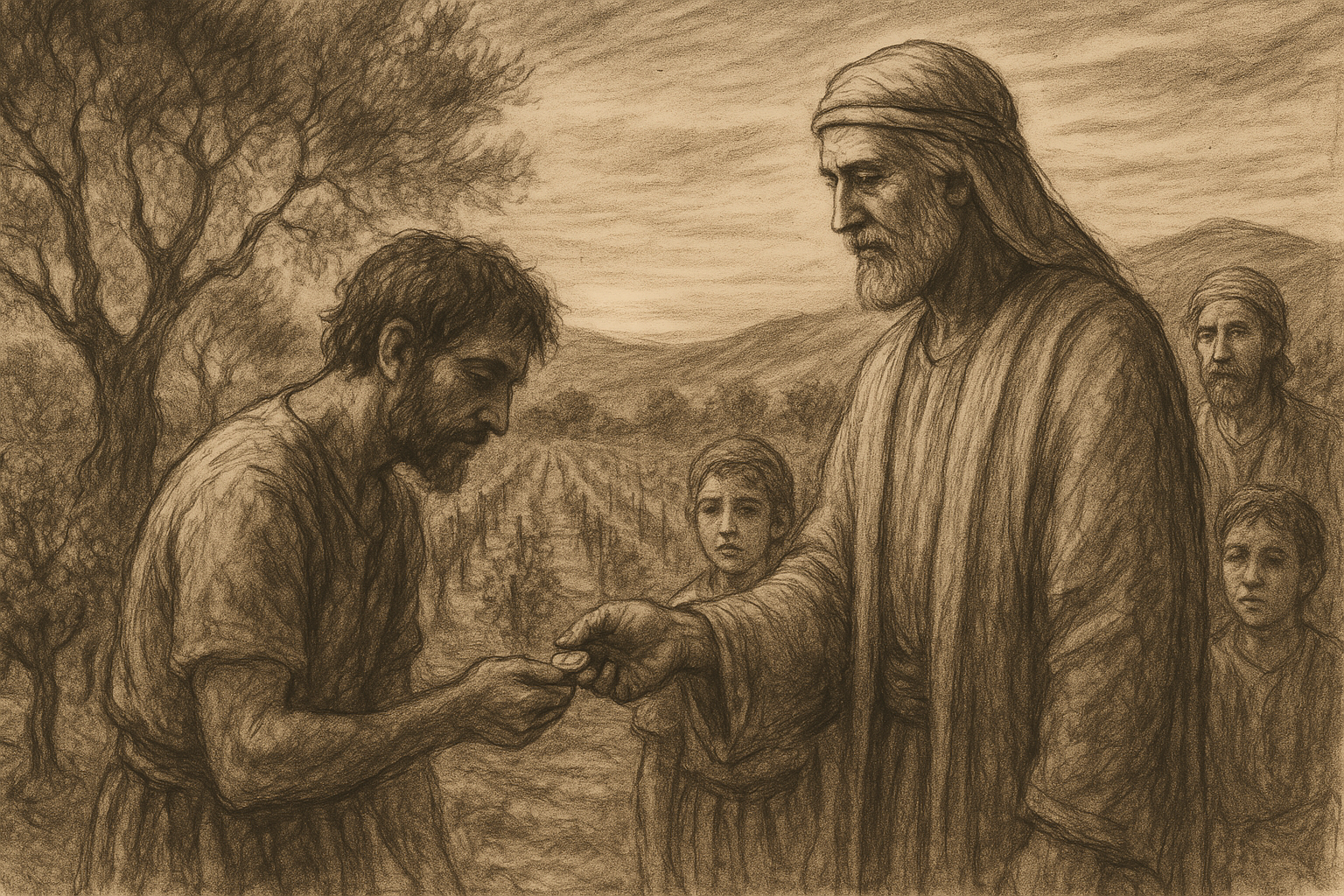
Few of Jesus' parables are more likely to stir an immediate reaction than the story of the workers in the vineyard. A landowner goes out early in the morning to hire laborers, then returns at different hours throughout the day. At the end, he gives those who worked only one hour the same wage he gives to those who bore the heat of the day. The first workers complain, and the landowner answers with calm authority: he has done them no wrong, for he paid the agreed wage. Then he asks a question that reaches deeper than economics: Is your eye envious because I am generous? Is your eye envious because I am generous?
That line is the heart of the parable. Jesus is not offering a labor policy for every workplace. He is teaching about the Kingdom of God, where grace does not operate like a salary, and where divine generosity cannot be measured by human comparison. The workers in the vineyard explanation begins here: the story is not first about contracts, but about the freedom and goodness of God.
Where the parable sits in Matthew's Gospel
In Matthew's Gospel, the parable appears after Jesus' encounter with the rich young man and Peter's question about what the disciples will receive for leaving everything behind. Peter asks, What then shall we have? What then shall we have? Jesus speaks of thrones, judgment, and reward, and then immediately tells the parable of the vineyard. That placement matters. The Lord is addressing the human habit of thinking in terms of rank, payoff, and comparison.
The setting also echoes the world of the Old Testament, where the vineyard often represents Israel and God's care for His people. The image would have been familiar to Jesus' hearers. A vineyard requires labor, patience, pruning, dependence on weather, and trust in the owner. It is a fitting image for the Kingdom, where God is not merely a distant observer but the one who calls, sends, and provides.
Matthew also presents the parable as part of a larger theme: the last shall be first, and the first last the last shall be first, and the first last. That reversal is not about humiliating the diligent or praising laziness. It is about the way God's mercy unsettles human status systems. In the Kingdom, the measure is not who can claim superiority, but who receives everything as gift.
What the landowner actually does
The landowner in the parable behaves in a way that seems strange until we remember that he is not meant to be an ordinary employer. He goes out repeatedly, even in the late afternoon, and still finds men standing idle in the marketplace. When asked why they are there, they answer, Because no one has hired us Because no one has hired us. That detail is easy to overlook, but it matters. These are not lazy men refusing work. They are waiting for a chance.
By giving all of them a full day's wage, the landowner shows that he is not calculating worth in the usual way. He is giving according to his generosity, and he is giving enough for each household to live. In the world of Jesus, a denarius was the ordinary daily wage for a laborer. The fact that the latecomers receive it does not mean the early workers were cheated. It means the owner has chosen to be lavish with mercy.
This is where the parable begins to open toward Catholic understanding. Grace is not a bonus paid after performance is tallied. Grace is the undeserved gift by which God calls us into life with Him. No one can claim to have put God in his debt. Even our faithful labor in the vineyard is itself made possible by prior grace.
Fairness, justice, and the generosity of God
Modern readers often hear this parable and think first about fairness. That reaction is understandable. Human society depends on justice, honesty, and clear obligation. Scripture does not dismiss those concerns. The landowner does not break his promise. He pays what was agreed. The grievance of the early workers is not that they were denied justice, but that someone else received mercy.
Here the parable exposes a spiritual danger: resentment when God is good to others. The complaint is not really about the wage. It is about comparison. The workers say, in effect, that their own burden should entitle them to more. But the Kingdom of God is not a competition in which the first to arrive earns a higher place in the Father's heart. The generous sharing of the owner reveals a truth that can be hard for sinners to accept: God's goodness toward one person does not diminish His goodness toward another.
This has close ties to Catholic life. The Church teaches that salvation is pure gift, and yet human beings are also called to cooperate with grace. Both are true. We really do labor, repent, pray, and persevere. But none of that makes us independent of God. Our fidelity is response, not self-creation. We are workers in the vineyard only because the Lord has first gone out to call us.
The parable reminds us that in the Kingdom, the gift is not smaller because it is shared. God does not run out of mercy.
Grace does not follow our clocks
One of the most consoling features of the parable is also one of its most unsettling: some workers are called late in the day, yet they still receive a full share. Many Catholics have seen how this speaks to the mercy of God in the sacramental life and in conversion. Some people are baptized as infants and live for decades within the Church. Others come later, perhaps after years of wandering. Some turn to Christ near the end of life. The timing is different, but the gift is the same in its deepest source: God gives Himself.
This does not mean that the length of one's faithful life is irrelevant. A life spent in steady service is a real blessing, and holiness ripens through long obedience. But the ultimate reward is not a wage earned by length of service. The reward is communion with God. That is why the parable can comfort the repentant sinner and also test the heart of the lifelong believer.
It also speaks to the mystery of those whom God brings back after long absence. The elder brother in us wants to ask whether their welcome is excessive. The Gospel answers that the Father's joy is not excessive. It is fitting. When a soul is reclaimed, heaven rejoices. The Church does not lose anything when mercy is lavished on another. She sees more clearly what she herself has received.
What the parable teaches about daily Catholic life
The workers in the vineyard explanation becomes practical when we ask how this story shapes ordinary discipleship. It does so in several ways.
- It corrects envy. We often compare ministries, parish roles, spiritual gifts, and even sufferings. The parable teaches us to bless rather than resent the gifts given to others.
- It purifies our motives. We do not serve God only to be seen or rewarded. We serve because He is worthy and because belonging to Him is already a gift.
- It encourages patience. Some people seem to reach holiness quickly, while others grow slowly. The Lord is free to work at different hours, and He is never late.
- It comforts latecomers. Those who return to confession after years away can hear in this parable the generous heart of Christ, who welcomes and restores.
- It calls us to gratitude. Every Mass, every sacrament, every answered prayer is grace before it is achievement.
In parish life, envy can surface in subtle forms. Someone notices that another family is praised, another ministry grows, another person seems especially gifted. The parable asks us to step back and remember that the vineyard belongs to the Lord. We are not competing heirs but grateful laborers. One person's blessing is not a loss for another.
The same truth helps in personal holiness. A Catholic who has prayed faithfully for years may look at a new convert with admiration or suspicion. But the Church is widest at the point where grace has room to surprise us. The late-hour worker is not an intruder. He is a sign that salvation is gift from beginning to end.
The Kingdom of God is generous, not stingy
Jesus' parable also reveals something about the heart of the Father. The owner of the vineyard is not careless, and he is not unfair. He is free. He gives from his own goodness. That freedom is essential to the doctrine of grace. If God owed us salvation, then mercy would become a transaction. But if salvation is a gift, then gratitude becomes the proper human response.
Catholic tradition speaks often of merit, but always in relation to grace. Any true merit in the Christian life is itself the fruit of God's prior action in us. The parable guards us from two errors at once. It rejects presumption, because no worker can boast before the master. And it rejects despair, because no one is too late to be welcomed when the Lord calls.
That balance is especially important when we think about the Church's mission. The Gospel is not only for the early faithful, the religiously trained, or those who seem spiritually productive. It is for the latecomer, the tired sinner, the uncertain seeker, and the person who has stood in the marketplace all day wondering whether anyone will hire him. Christ still goes out, still calls, and still gives life.
Living as laborers who have been chosen
At its deepest level, the parable invites us to look not at the clock but at the Caller. The men in the marketplace do not begin by choosing the vineyard. They are sought. That is true of every Christian vocation. The priest, the parent, the catechist, the monk, the teacher, the hidden servant in an ordinary household, all are first summoned by grace. We do not enter the vineyard because we have proven ourselves worthy. We enter because the Lord has passed by and said, Go into the vineyard too Go into the vineyard too.
That sentence can become a daily prayer. Go into the vineyard too. Return to confession. Continue in prayer. Serve with honesty. Stop comparing. Trust the generosity of the Master. The final gift is not something God grudgingly hands over after extracting as much labor as possible. It is Himself. And if that is true, then the right response is not complaint but wonder.
When evening comes, the vineyard will be quiet, but the Lord who hired the workers remains unchanged. He is just, and He is generous. He calls at dawn and at dusk. He does not measure His love by our arithmetic. He gives because He is good, and that is the secret at the center of the parable: the workers receive more than wages, and the first workers were never meant to be paid in envy but in grace.
Keep Reading on Lets Read The Bible
Frequently Asked Questions
What is the main lesson of the workers in the vineyard parable?
The main lesson is that God's grace is given freely and generously, not as something earned by human comparison. Jesus teaches that the Kingdom of God does not operate like a wage system.
Does the parable mean effort and faithful work do not matter?
No. The parable does not deny the value of faithful work. It shows that even our labor for God is made possible by grace, and that the final reward is communion with Him, not a paycheck earned by rivalry.
How does this parable speak to Catholics today?
It helps Catholics resist envy, trust God's mercy, and welcome those who return late to faith. It also reminds the faithful that every vocation and every sacrament is a gift received from the Lord of the vineyard.