Prayer and Devotion
When Hunger Becomes Prayer: Fasting and the Catholic Life of Discipline
A Catholic look at how fasting shapes desire, sharpens prayer, and trains the heart for God.
Site Admin | December 6, 2025 | 77 views
Fasting Is More Than Giving Something Up
Many people think of fasting as a temporary sacrifice, a spiritual exercise reserved for Lent or special moments of repentance. That is not wrong, but it is incomplete. In Catholic life, fasting explained is not merely about emptying the stomach. It is about making space in the soul. When a person freely denies a lawful good for the sake of a higher good, the body and spirit begin to speak the same language.
Fasting matters because human beings are not disembodied minds. We pray with our whole selves, and that includes appetite, fatigue, habit, and desire. If the body is always fed on demand, the heart can become scattered. Fasting teaches restraint. It reminds us that not every impulse deserves obedience, and not every comfort should be treated as necessary. In that sense, fasting is an act of freedom.
The Church has always understood this. Christ Himself fasted in the desert before beginning His public ministry, and He assumed that His disciples would do the same. He did not say if you fast, but when you fast, and He warned against making it a performance for others. The Christian fast is hidden, sincere, and ordered toward the Father who sees in secret.
Scripture Places Fasting Beside Prayer
In the Bible, fasting is rarely a detached discipline. It appears beside repentance, intercession, discernment, and worship. The prophet Joel calls the people to return to the Lord with fasting and weeping, not because food itself is evil, but because sin has disordered the heart and the nation needs mercy. Joel 2:12 The point is not self-punishment for its own sake. The point is conversion.
In the New Testament, fasting continues to appear as a sign of readiness before God. The Church at Antioch fasted and prayed before the Holy Spirit set apart Barnabas and Saul for mission. Acts 13:2 Later, before appointing elders, they prayed and fasted again. Acts 14:23 These are small but important details. The early Church did not treat fasting as optional decoration. It was part of how the community listened for God's will.
Even more striking, Jesus connects fasting with hidden reward. In the Sermon on the Mount, He gives instruction on almsgiving, prayer, and fasting as three habits that belong together. Matthew 6:16 Fasting, then, is not isolated. It stands with mercy and prayer. The one who fasts should also give, forgive, and worship. Otherwise the practice can shrink into self-absorption.
The Church Fasts So That Desire Can Be Reordered
At the deepest level, fasting is about desire. We are always wanting something. We want relief, pleasure, control, recognition, certainty, and a thousand other satisfactions. Some of those desires are good in themselves, but they need training. The fallen human heart can become tyrannized by appetite, and when that happens, prayer becomes thin because the soul is busy feeding itself in every other way.
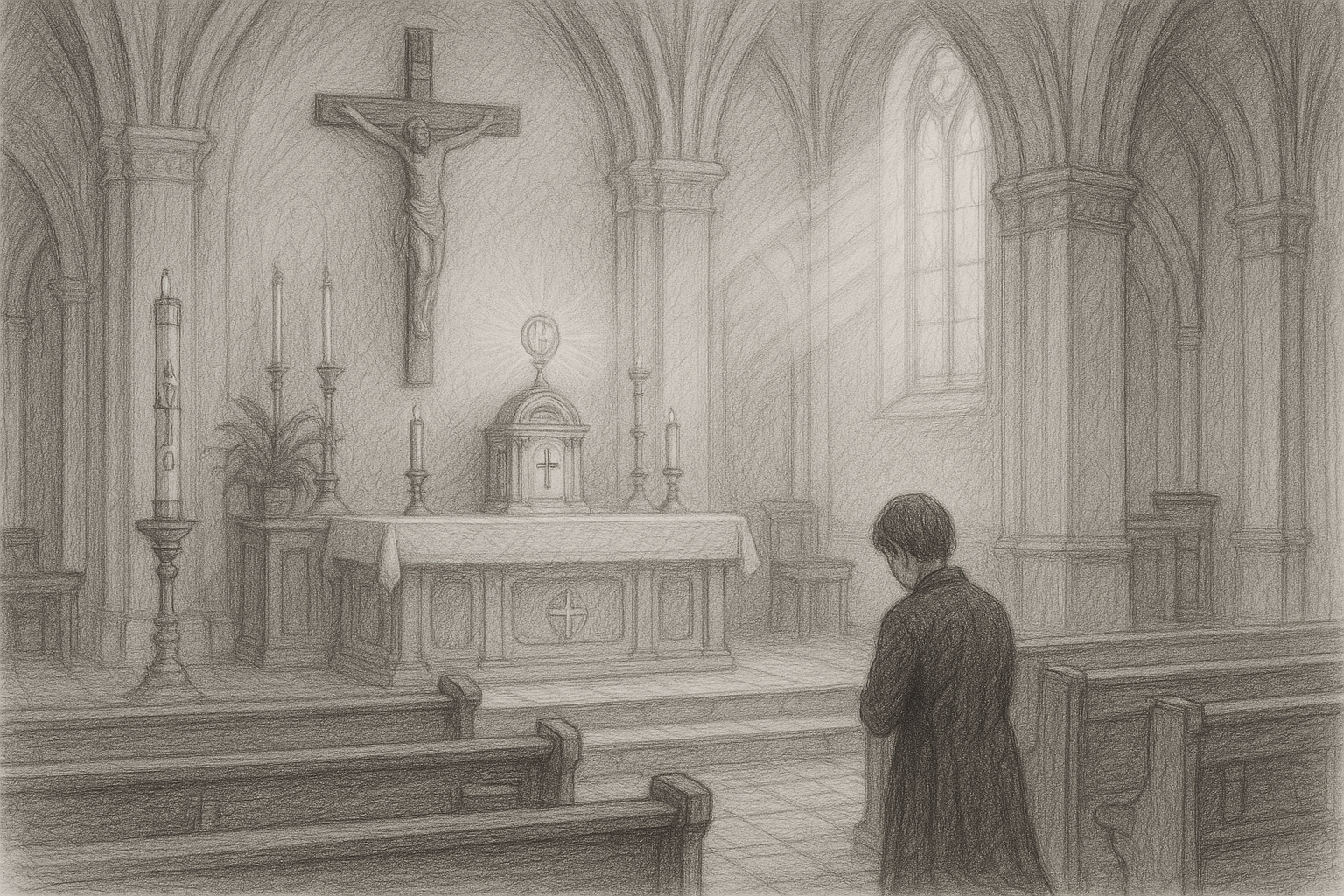
Fasting interrupts that pattern. A person who fasts discovers that hunger does not have the final word. The body can be quieted, and the silence that follows can become a place of encounter. Many Catholics know this experience in a small way during the Eucharistic fast before Mass or before receiving Holy Communion. The empty stomach is not the goal, but it is a sign. We come to the altar hungry for more than bread.
This is why fasting belongs naturally with penance. Penitence is not a gloomy obsession with failure. It is a realistic acknowledgment that the heart needs healing. When fasting is joined to confession, almsgiving, and prayer, it begins to restore order to the soul. The person learns that grace does not simply float over life. It enters ordinary habits, ordinary appetites, and ordinary meals.
Fasting does not earn God's love. It disposes us to receive the love already given in Christ. That difference matters. The Christian fast is not a transaction. It is a response.
History Shows That Catholics Have Never Treated Fasting as Optional Noise
From the earliest centuries, Christians fasted in preparation for baptism, in time of repentance, and before important decisions. The Church inherited the biblical pattern and gave it shape in the life of the liturgy. Lent developed as a privileged season of preparation for Easter, and many other days of discipline also marked the year. The details changed in different places and periods, but the spiritual instinct remained the same: if the Church is about to celebrate mystery, the heart should be readied through humility.
This history matters because modern life often treats discipline as suspicious. We are told to trust appetite, follow feeling, and avoid anything that seems restrictive. Yet Catholic tradition sees discipline differently. Discipline is not hatred of the body. It is love directed wisely. A musician practices scales for the sake of beauty. An athlete trains for the sake of endurance. In the same way, the Christian fast trains the will for the sake of communion with God.
That does not mean every historical practice should be copied without discernment. Catholics today live in different circumstances, and the Church herself gives norms that fit the present discipline of the faithful. But the underlying wisdom remains intact. Fasting has endured because it matches the truth about human nature. We are not healed by indulgence alone. We are healed by grace received in humility.
Fasting Supports Prayer by Clearing Interior Clutter
Prayer asks for attention. Yet attention is one of the most fragile things in modern life. We are surrounded by noise, constant choices, and instant access to distraction. Fasting helps by creating a small but meaningful emptiness. The body feels a lack, and that lack can become a reminder to turn toward God.
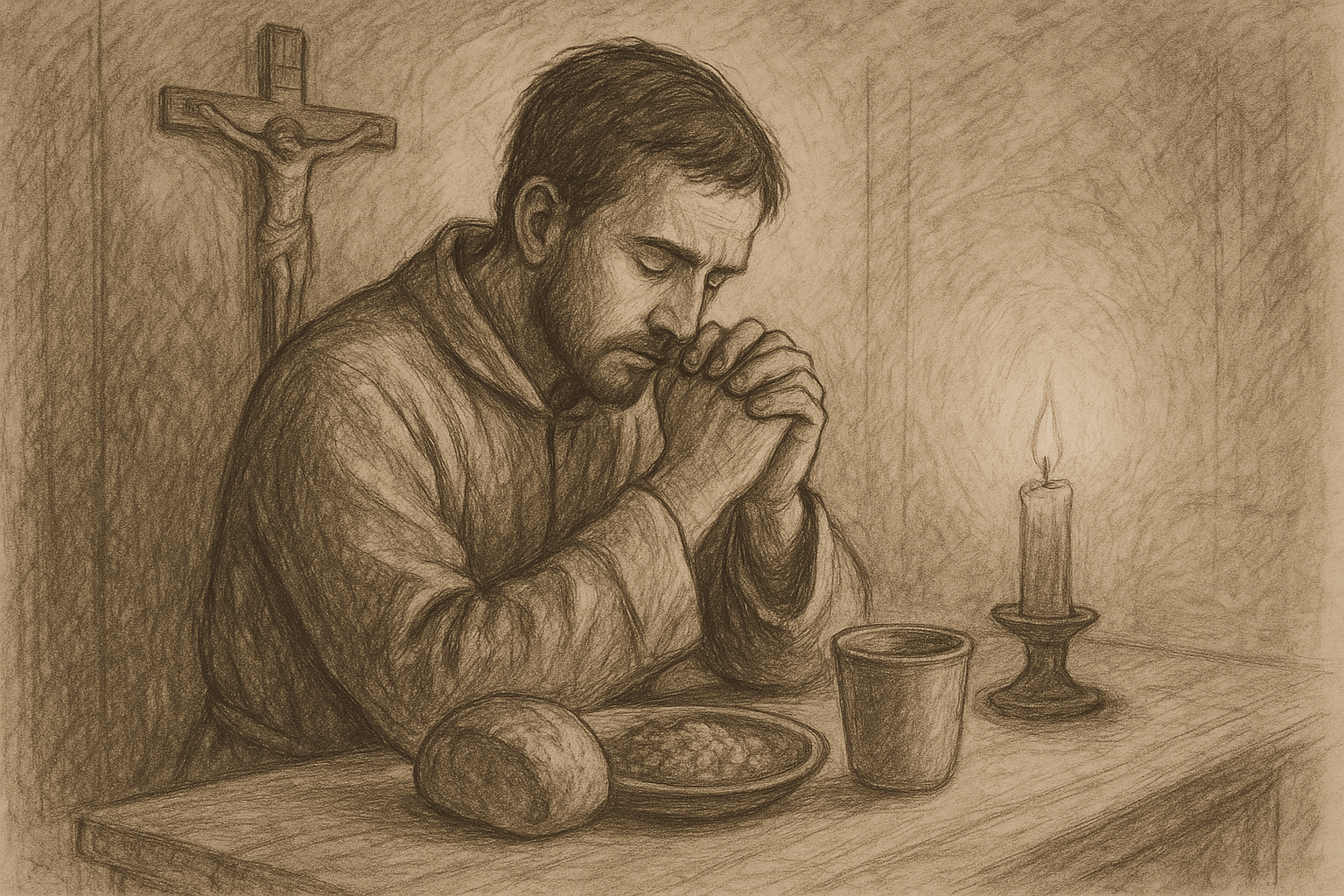
When hunger arrives during the day, it can be used as a prompt for prayer. A person might lift the heart with a short invocation, make an act of trust, or pray for someone in need. In that way, fasting and prayer become linked throughout the day rather than confined to a single devotional moment. The whole body becomes part of remembrance.
There is also a practical psychological wisdom here. When a person is fasting, impatience often reveals itself. Irritation may surface more quickly. That can be uncomfortable, but it is useful. Fasting exposes what usually stays hidden. It shows where a soul clings to comfort, control, or self-importance. Once seen, these patterns can be brought to confession, prayer, and patient self-discipline.
This is one reason fasting can deepen the examination of conscience. The person asks not only whether something was eaten, but what moved the will during the fast. Was I more charitable? More distracted? More aware of God? More compassionate toward others? Such questions turn fasting from a mere rule into a school of self-knowledge.
Practical Ways to Fast Without Making It Complicated
Catholic fasting should be serious, but it should not be theatrical. The goal is not to create a heroic image of oneself. The goal is to grow in prayer and holiness. For most people, the best fast is one that is simple, consistent, and honest.
Here are a few practical approaches:
- Keep the fast modest and sustainable. Begin with the Church's basic discipline and, if appropriate, add a small personal fast.
- Connect it to prayer. Decide in advance what prayers you will say when hunger or craving appears.
- Choose one clear intention. Offer the fast for a conversion, a family member, the sick, or a difficult decision.
- Guard against pride. Do not advertise the fast. Let it remain between you and God as much as possible.
- Practice charity alongside it. Save the cost of the meal, or use the saved time to serve someone in need.
It is also wise to remember that fasting can take different forms. Some Catholics abstain from certain foods. Others fast from snacks, alcohol, desserts, or unnecessary screen time. The tradition of bodily fasting remains distinct and important, but the broader ascetical principle is the same: learn to say no to immediate gratification so that the heart can say yes to God.
At the same time, fasting should never be treated carelessly. Those with medical conditions, pregnancy, a history of eating disorders, or other serious limitations should seek prudent guidance and not attempt harsh discipline on their own. Catholic asceticism is never meant to damage the body. It is meant to serve the love of God and neighbor in truth.
Fasting Makes Room for Mercy
One of the great misunderstandings about fasting is that it can seem severe or even self-enclosed. In reality, authentic fasting opens the heart. Hunger makes a person aware of need, and awareness of need can make one kinder. A well-practiced fast should make a Christian more patient with weakness, more attentive to the poor, and less attached to convenience.
That is why fasting belongs so naturally with works of mercy. When the belly is reminded of want, the soul can better understand the hunger of others. A person may become more generous with food, time, and attention. Fasting does not end in the self. It should widen the heart until it can receive and give more freely.
This is especially important in an age when many forms of comfort are easy to obtain, yet interior peace remains elusive. Fasting asks a direct question: what governs me? If the answer is appetite, habit, or anxiety, then the fast becomes a quiet corrective. If the answer is Christ, then the fast becomes praise.
For that reason, fasting still matters. It is old, yes, but not outdated. It is demanding, but not harsh. It is humble, but not small. In the Catholic life, fasting helps a person remember that prayer is not an escape from the body. It is the sanctification of the whole person. When hunger is offered to God, even the simple act of waiting for a meal can become an act of love.
Keep Reading on Lets Read The Bible
Frequently Asked Questions
How is Catholic fasting different from a diet?
A diet usually aims at health, appearance, or self-improvement. Catholic fasting is ordered toward repentance, prayer, and greater freedom before God. It may incidentally bring discipline to the body, but its spiritual purpose is central.
What should I do during hunger while fasting?
Use hunger as a cue to pray. Offer a short prayer, read a verse of Scripture, or remember a person in need. The goal is to connect bodily desire with love of God rather than simply endure discomfort.
Can Catholics fast in ways other than skipping meals?
Yes. While bodily fasting remains important, Catholics may also renounce sweets, alcohol, entertainment, or other lawful comforts. These practices can support prayer, though they should not replace the Church's established discipline when that discipline applies.